





Description
Product Introduction & Engineering Value
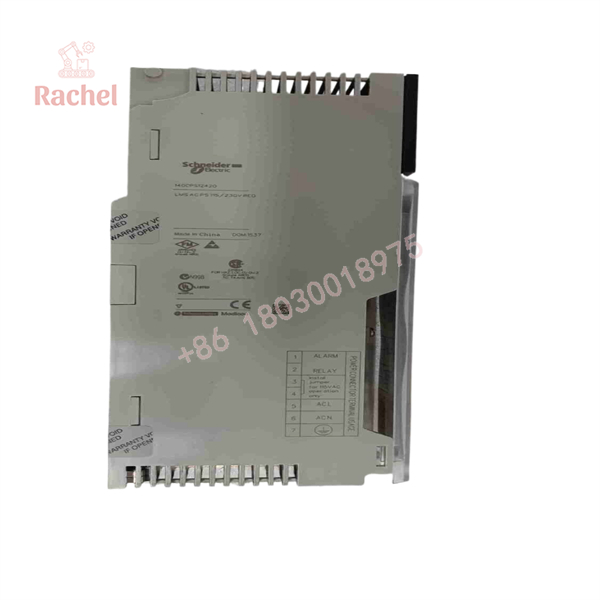
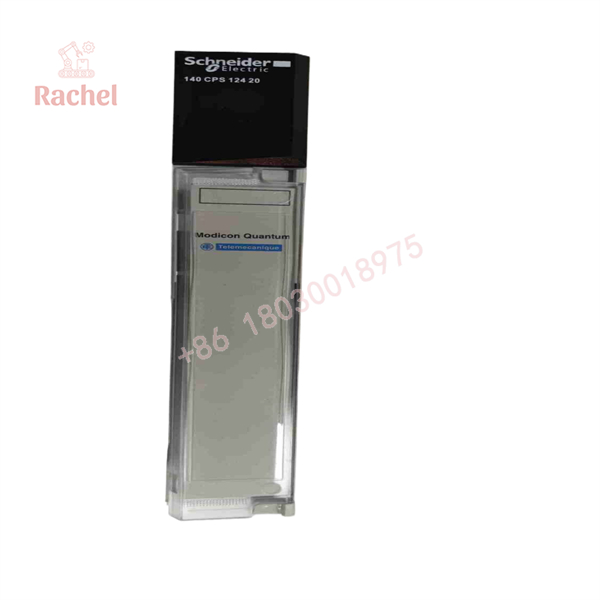
The 140CPS12420 is designed for Quantum installations where rack power availability is treated as a system-level reliability issue rather than a single-supply convenience. Its redundant architecture allows two compatible power supplies to support the rack, making it particularly relevant to process-control and safety-related Quantum installations where an individual supply failure should not immediately remove rack power.
This is an 11 A-class 5.1 VDC supply, with Schneider documentation specifying 10 A when operated in a redundant configuration. The distinction matters when calculating rack loading. The unit accepts either 115 VAC or 230 VAC input and operates from a 47–63 Hz source.
Technical Specifications
| Specification | 140CPS12420 |
|---|---|
| Manufacturer | Schneider Electric / Modicon |
| Platform | Modicon Quantum |
| Module Type | Redundant AC power supply |
| Input Voltage | 115 VAC / 230 VAC |
| 115 VAC Range | 93–138 VAC |
| 230 VAC Range | 170–276 VAC |
| Input Frequency | 47–63 Hz |
| Rated Power | 130 VA |
| Output Voltage | 5.1 VDC |
| Output Current, Standalone | 11 A at 60°C |
| Output Current, Redundant | 10 A at 60°C |
| 115 VAC Input Current | 1.1 A |
| 230 VAC Input Current | 0.6 A |
| Inrush Current | Up to 38 A at 115 VAC |
| Fuse | 2 A slow-blow |
| Operating Temperature | 0–60°C |
| Storage Temperature | -40–85°C |
| Relative Humidity | Up to 95%, non-condensing |
| Weight | Approximately 0.65 kg / 1.43 lb |
The 5.1 VDC output, 130 VA rating, 115/230 VAC input ranges, 11 A standalone rating, and 10 A redundant rating are documented in Schneider’s Quantum references and product data.
Protection and Diagnostics
The 140CPS12420 includes internal overvoltage and overload protection. A front-panel PWR OK LED provides local power-status indication, while a normally closed alarm contact provides a power-supply fault signal.
That alarm contact is particularly useful in a redundant architecture because it allows the control system or external annunciation circuit to identify a supply problem before the remaining supply is lost.
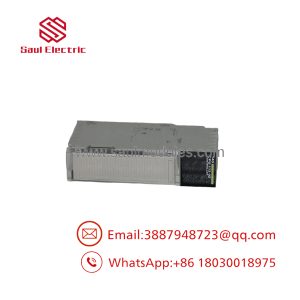
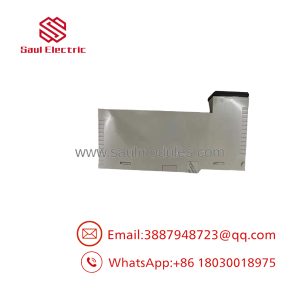
140CPS12420
140CPS12420
Field Application & the “Trench” Experience
A plant maintenance team discovers that a Quantum rack has started generating intermittent power-supply alarms. The PLC remains operational because the rack has redundant supplies, so production continues. That is precisely the point of the architecture.
The mistake would be to ignore the alarm simply because the PLC is still running.
During the next maintenance window, the team checks the two supply modules independently, verifies the alarm contacts, confirms rack loading, and replaces the suspect 140CPS12420. The rack remains powered by the redundant supply during the intervention, subject to the site’s approved maintenance procedure and the actual rack architecture.
The practical lesson: redundancy buys maintenance time; it does not eliminate the need to repair a failed supply.
Niche Application Scenarios
- Quantum safety PLC racks supporting safety-related process control
- Continuous chemical-process control cabinets where rack power interruption can trigger an extensive process shutdown
- Remote I/O control racks requiring redundant power architecture
- High-availability turbine or compressor auxiliary control systems built around legacy Quantum hardware
Schneider’s Quantum safety documentation explicitly lists the 140CPS12420 as a power-supply reference in its SIL3-certified Quantum safety architecture.
Transparency SOP: QA & Testing
A meaningful test of a surplus or refurbished 140CPS12420 should examine more than whether its PWR LED illuminates.
1. Identity check
Verify the complete 140CPS12420 part number, manufacturer label, revision, and physical condition.
2. AC-input verification
Test the unit using the appropriate 115 VAC or 230 VAC source and verify that the selected supply configuration matches the installation.
3. DC-output test
Confirm the nominal 5.1 VDC rack output under both no-load and representative-load conditions.
4. Load testing
Where suitable equipment is available, operate the supply at a controlled representative load. A no-load power-up does not adequately demonstrate an aging power supply’s condition.
5. Alarm verification
Test the power-fault alarm contact and verify that the PWR OK indication behaves correctly.
6. Redundancy test
For a two-supply installation, verify the intended redundant behavior using an approved test procedure rather than simply removing a supply under uncontrolled operating conditions.
7. Thermal observation
Run the supply long enough to observe temperature-related behavior. Power components that appear normal for five minutes may behave differently after sustained loading.
For New Surplus units, confirm that “new surplus” means unused original inventory. It should not be confused with newly manufactured OEM stock.
The Veteran’s Tech Trap Guide
⚠️ Trap #1 — Confusing 11 A with the redundant rating
The headline specification is 11 A standalone, but Schneider’s technical documentation specifies 10 A at 60°C in redundant operation. Use the correct value when calculating the rack’s power budget.
PRO TIP: Calculate the actual rack load before ordering a spare. Do not assume that replacing an 8 A-class Quantum supply with an 11 A unit automatically resolves a power-budget problem.
⚠️ Trap #2 — Treating redundancy as unlimited load sharing
Two supplies in a redundant architecture do not mean you can simply double the usable current rating. The manufacturer’s redundant operating specification must be used when determining allowable rack loading.
⚠️ Trap #3 — Replacing the wrong Quantum power-supply variant
The Quantum family contains several AC and DC power-supply models. Verify the complete reference 140CPS12420, not just “Quantum AC power supply.”
⚠️ Trap #4 — Assuming BMXCPS4002 is a drop-in replacement
Schneider identifies BMXCPS4002, a Modicon X80 100–240 VAC power supply, as the recommended replacement. However, this is a platform migration consideration, not evidence that it is a mechanical and functional drop-in replacement for an existing Quantum rack.
Lifecycle & Replacement Considerations
The 140CPS12420 is now a legacy/discontinued product. Schneider’s U.S. product page gives January 15, 2023 as the discontinuation date and December 31, 2030 as the end of standard service. Other Schneider regional pages show different local discontinuation dates, so procurement should verify lifecycle status for the applicable market.
Schneider’s official replacement recommendation is Modicon X80 BMXCPS4002, rated for 100–240 VAC input. For a running Quantum installation, however, an exact 140CPS12420 spare can be the lower-risk maintenance choice when the objective is restoring the existing architecture rather than beginning a migration project.
Dynamic FAQ
What is the 140CPS12420?
It is a redundant AC power supply module for the Modicon Quantum platform, accepting 115 VAC or 230 VAC input and producing a nominal 5.1 VDC rack supply.
What is its output current?
The specification is 11 A at 60°C when used standalone and 10 A at 60°C in redundant operation.
Is the 140CPS12420 used in Quantum safety systems?
Yes. Schneider’s Quantum safety documentation identifies the 140CPS12420 as one of the power-supply references used with the Quantum safety PLC architecture.
What is the recommended replacement?
Schneider lists the Modicon X80 BMXCPS4002 as the replacement. Engineering verification is required before treating the X80 unit as a direct substitute in an installed Quantum system.
Is New Surplus 140CPS12420 still available?
Aftermarket inventory is still being offered in categories including New Surplus, New, and Refurbished. Availability changes, so buyers should request actual-unit photographs, nameplate details, revision information, and test status before purchasing.
What warranty should I expect?
Warranty depends on the supplier and condition category. Schneider’s regional e-commerce listing currently shows an 12-month warranty for its listed product package, while independent suppliers may offer their own warranty terms. Do not treat an aftermarket warranty as an OEM warranty.

 Start Chat


