





Description
Product Introduction & Engineering Value
The 140EHC10500 is built for measurements that ordinary PLC scan-based counting cannot reliably handle. Each of its five channels can operate independently, allowing the Quantum controller to capture high-frequency pulses from proximity sensors, magnetic pickups, flow meters, speed sensors, and similar devices without depending entirely on the normal CPU scan cycle.
One specification deserves particular attention: 100 kHz applies to 5 VDC signals; 24 VDC operation is limited to 20 kHz. That distinction matters when replacing a module in an existing machine. The sensor interface and signal level should be verified before assuming the application can operate at the advertised maximum frequency.
Technical Specifications
| Parameter | Specification |
|---|---|
| Catalog Number | 140EHC10500 |
| Platform | Modicon Quantum |
| Module Type | High-Speed Counter |
| Number of Counter Channels | 5 |
| Counter Resolution | 32-bit |
| Maximum Frequency at 5 VDC | 100 kHz |
| Maximum Frequency at 24 VDC | 20 kHz |
| Counting Input Voltage | Up to 30 VDC |
| Counting Input Current | Approximately 7 mA |
| External Power Supply | 19.2–30 VDC |
| External Supply Consumption | ≤1,140 mA at 24 VDC |
| Bus Current Requirement | 250 mA |
| Counter Modes | Multiple configurable event-counter modes |
| Setpoint Functions | Parallel/serial setpoint activation; timed or latched output modes |
| Programming Environment | Unity Pro / EcoStruxure Control Expert |
| Application | High-speed pulse and event measurement |
Schneider’s user documentation states that the module contains five equivalent, independently usable counters and supports multiple 32-bit event-counter modes. The Quantum hardware reference also identifies the EHC10500 as a five-channel discrete high-speed counter intended for proximity and magnetic pickups.
Field Application & the “Trench” Experience
A production machine uses a toothed target and proximity pickup to monitor shaft speed. The existing Quantum PLC calculates speed from the incoming pulse train. During troubleshooting, the maintenance team replaces the high-speed counter module with a standard digital input card because both modules appear to provide “24 VDC inputs.”
The machine runs.
The speed calculation does not.
The problem is fundamental: a normal discrete input is governed by PLC scan timing, while the 140EHC10500 is specifically designed to count high-frequency events independently. The replacement card may see the signal but cannot necessarily perform the same timing and counting function.
The correct troubleshooting path is to verify sensor voltage, pulse frequency, signal conditioning, counter configuration, channel assignment, and the relevant EHC data structures before replacing hardware.
Niche application scenarios:
- Rotary equipment speed measurement using magnetic pickups or proximity sensors.
- Conveyor encoder/pulse monitoring where product or shaft movement must be counted at high speed.
- Flow measurement using pulse-output flow meters.
- Packaging machinery where rapid product or registration pulses must be accumulated.
- Position-related event counting where a high-frequency pulse train is converted into PLC-accessible count data.
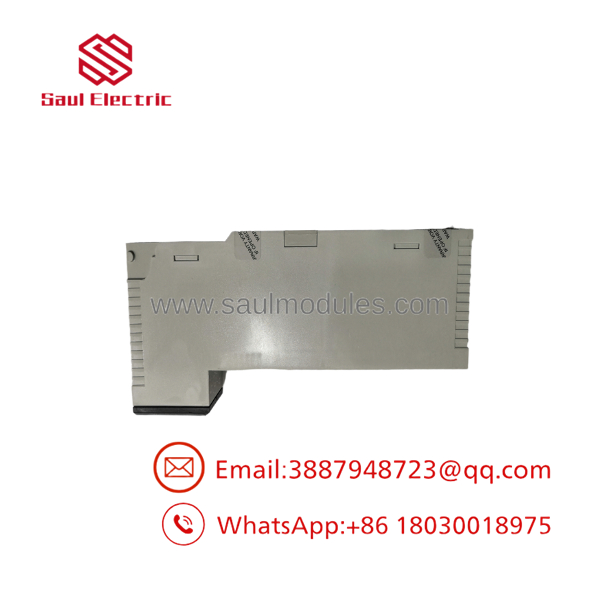
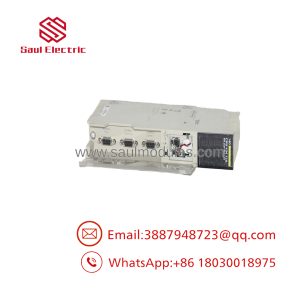
140EHC10500
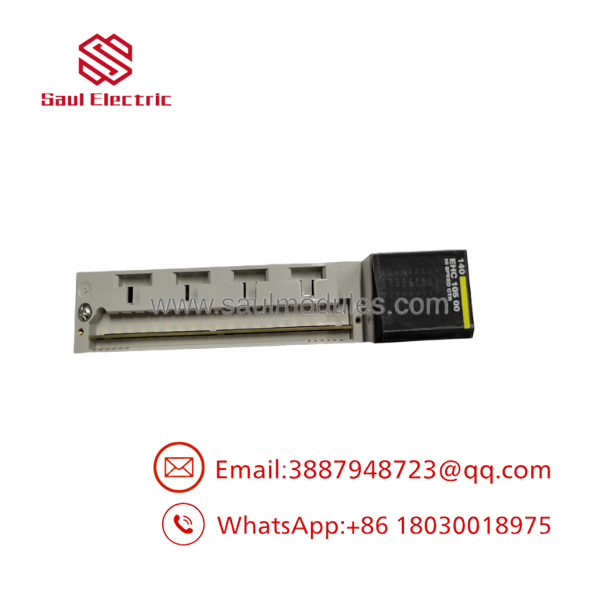
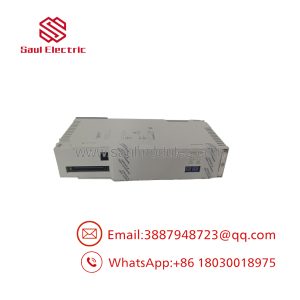
140EHC10500
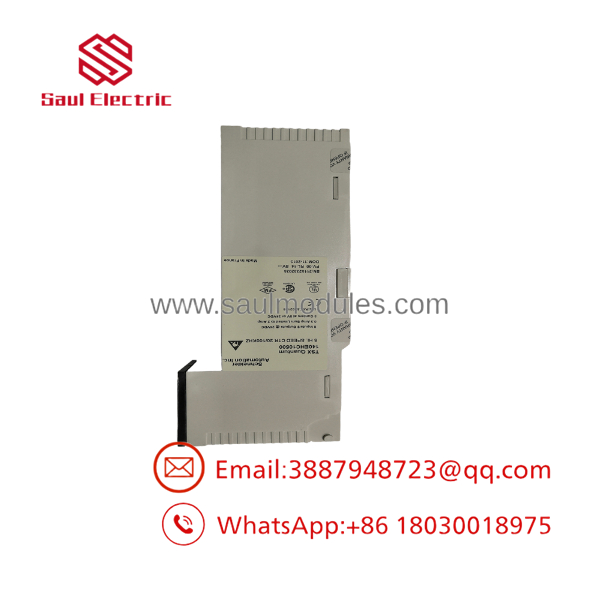
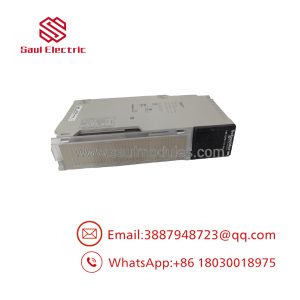
140EHC10500
Transparency SOP: QA & Testing
For New Surplus or refurbished 140EHC10500 inventory, a basic power-up test is not enough. The counter circuitry must be exercised.
- Catalog verification — Confirm
140EHC10500on the physical label. - Physical inspection — Examine the housing, terminal interface, backplane connector, status LEDs, and labeling.
- Power verification — Install the module in an appropriate Quantum test rack and provide the specified external DC supply.
- Low-frequency pulse test — Apply controlled pulses to each counter channel and verify the accumulated count.
- Frequency verification — Exercise the input at representative frequencies appropriate to the test fixture.
- Channel isolation check — Confirm that activity on one channel does not incorrectly alter another channel’s count.
- Setpoint testing — Where supported by the test configuration, verify configured setpoint output behavior.
- PLC data verification — Confirm that count values and status information are correctly exchanged with the Quantum controller.
- Documentation — Record test frequency, input voltage, channels tested, and final condition.
Do not claim “100 kHz tested” unless the actual test equipment and signal source support that frequency. A low-frequency pulse test demonstrates basic operation; it does not prove full-speed performance.
The Veteran’s Tech Trap Guide
⚠️ Trap #1 — 100 kHz does not mean 100 kHz at 24 VDC.
The published specification is 100 kHz at 5 VDC, while 24 VDC pulse counting is specified up to 20 kHz. This is probably the single most important specification to verify before approving a replacement.
PRO TIP: Record the actual sensor output voltage and maximum pulse frequency from the machine. Don’t rely solely on the sensor’s catalog description.
⚠️ Trap #2 — Five channels does not mean five identical application configurations.
The five counters are independently configurable and support different operating modes. The existing Unity/Control Expert configuration should therefore be backed up and reviewed before replacing or reconfiguring the module. Schneider provides a dedicated user guide covering EHC105 configuration and parameterization.
⚠️ Trap #3 — Don’t assume it directly accepts every incremental encoder.
Schneider’s FAQ specifically states that the 140EHC10500 cannot directly connect to an incremental encoder for fully automatic forward/reverse counting; direction handling requires software configuration of the relevant virtual register.
⚠️ Trap #4 — Don’t substitute a normal digital input module.
A high-speed counter captures events at a fundamentally different timing scale from ordinary PLC inputs. If the application depends on pulse frequency, event timing, or high-speed setpoints, replacing the EHC module with a standard DDI card can change machine behavior even though the field signal appears electrically compatible.
Dynamic FAQ
Q: What is the Schneider 140EHC10500?
A: It is a five-channel high-speed counter module for the Modicon Quantum platform, designed to independently count high-frequency pulses and events.
Q: What is the maximum counting frequency?
A: The published maximum is 100 kHz at 5 VDC. For 24 VDC signals, the specified maximum is 20 kHz.
Q: How many counter channels does the 140EHC10500 have?
A: It has five independently usable counter channels, with 32-bit event-counter functionality.
Q: Can the 140EHC10500 perform forward/reverse encoder counting automatically?
A: Not directly in the way a dedicated quadrature encoder interface does. Schneider states that fully automatic forward/reverse counting from an incremental encoder is not directly supported; direction can instead be managed through software configuration.
Q: What is the recommended replacement for 140EHC10500?
A: Schneider currently identifies the BMXEHC0800, an eight-channel high-speed counter for the Modicon M340/X80 family, as a replacement. This is a platform migration rather than an assumption of mechanical or application-level one-for-one compatibility.
Q: Is the 140EHC10500 discontinued?
A: Yes. Schneider regional product pages show the module as discontinued, although the exact discontinuation date varies by region. Schneider’s Canada page lists August 8, 2025, while other regional pages show earlier dates; the Canada listing gives an end-of-service date of December 31, 2030.
Q: How should New Surplus 140EHC10500 stock be verified?
A: Confirm the exact catalog number, inspect the terminal and backplane interfaces, verify the external 24 VDC supply circuitry, and request functional-test evidence showing actual pulse counting. For high-speed applications, ask specifically whether the module was tested only at low frequency or at a representative operating frequency. The supplier should also state the New Surplus condition, warranty, and return terms.

 Start Chat


