





Description
Product Introduction & Engineering Value
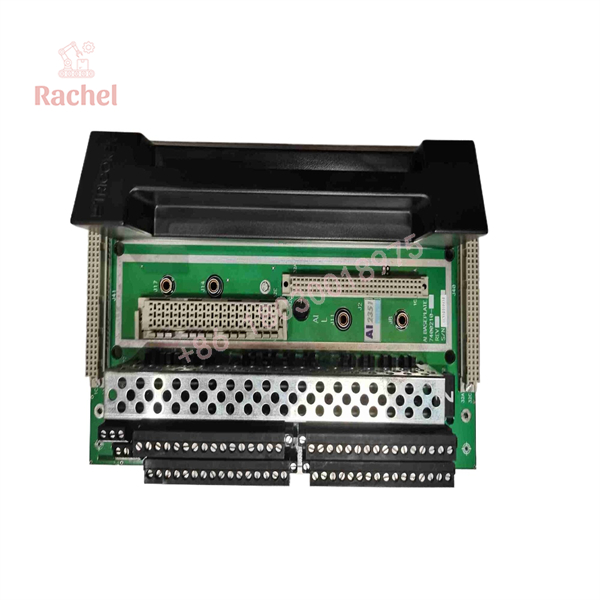
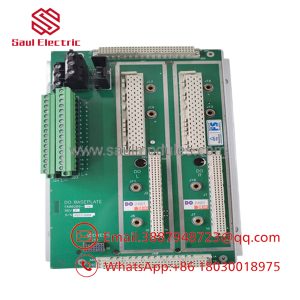
The Triconex 2351 is the field-interface component used with the Trident 3351 Analog Input Module. It supports direct termination of 32 analog input points and is intended for 4–20 mA instrumentation. This is a baseplate, not the triplicated analog-processing electronics themselves.
That distinction matters during a spare-parts replacement. The 2351 provides the physical field connections and interfaces to the 3351 module. A procurement request for a failed 3351 should therefore not be fulfilled with a 2351 simply because both carry the “analog input” designation.
Technical Specifications
| Specification | Triconex 2351 |
|---|---|
| System | Trident |
| Component | Analog Input Baseplate Kit |
| Associated I/O Module | 3351 |
| Analog Signal | 4–20 mA DC |
| Input Points | 32 |
| Termination | Direct field termination |
| Baseplate Assembly | 3000675-010 |
| Interconnect Assembly | 2921 |
| Slot Cover | 2900 |
| Terminal Cover | 2901 |
| Field Power | PS1 + PS2 |
| Typical Fault Current | 130 mA |
| Maximum Fault Current | 200 mA |
The Trident installation documentation specifies 130 mA typical and 200 mA maximum for field short-to-ground fault current on the 2351. The baseplate schematic shows dual field-power paths and 32 analog channels.
The corresponding 3351 Analog Input Module provides the actual triplicated signal-processing electronics. Its published specifications include 32 commoned 4–20 mA inputs, 12-bit resolution, 0.15% full-scale absolute error, and a scan time of less than 1 ms for all 32 points.
Field Application & the “Trench” Experience
Consider a Trident safety system monitoring dozens of pressure, flow, and level transmitters. During a planned shutdown, several analog channels begin showing abnormal behavior after work has been performed inside the I/O cabinet. The 3351 module passes its diagnostics, so the maintenance engineer traces the issue toward the field termination side.
This is where the 2351 baseplate becomes relevant. Rather than immediately replacing the electronic module, the engineer checks the baseplate, interconnect assembly, terminal connections, field-power paths, and wiring against the approved drawings.
Typical applications include:
- Reactor pressure transmitter inputs in a safety instrumented system.
- Compressor discharge-pressure monitoring using 4–20 mA transmitters.
- High-integrity process-temperature or flow measurements feeding a Trident safety application.
The documented 2351 architecture provides direct termination for a 32-point analog input module and uses separate field-power paths.
2351
Transparency SOP: QA & Testing
For New Surplus or Refurbished 2351 inventory, the inspection should focus on mechanical integrity and field-interface continuity.
QA sequence:
- Part identification — Verify the 2351 designation and, where applicable, baseplate P/N 3000675-010.
- Physical inspection — Examine terminal points, connectors, mounting hardware, PCB areas, and covers for damage or corrosion.
- Interconnect verification — Confirm the included 2921 I/O Interconnect Assembly where the item is supplied as a complete kit.
- Continuity testing — Check relevant field-power and termination paths against the applicable wiring documentation.
- Module compatibility — Confirm the target installation uses the 3351 Analog Input Module.
- Final documentation — Record condition, test status, included components, and warranty before shipment.
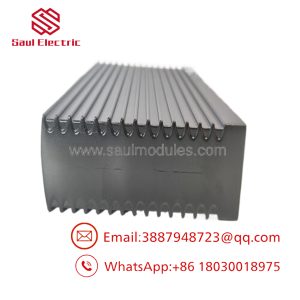
The standard Trident product guide lists the 2351 kit as four components: 3000675-010 baseplate, 2921 interconnect, 2900 slot cover, and 2901 terminal cover.
The Veteran’s Tech Trap Guide
⚠️ Trap #1 — Confusing 2351 with 3351.
This is the big one:
2351 = Analog Input Baseplate
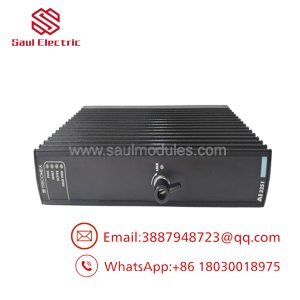
3351 = Analog Input Module
The 3351 contains the signal-processing electronics; the 2351 provides the associated field-interface/baseplate function.
⚠️ Trap #2 — Assuming all Trident analog baseplates are interchangeable.
They are not. Triconex lists separate configurations for standard analog input, external termination, thermocouple/RTD/4–20 mA applications, HART, and hazardous-location installations. For example, 2352 and 2354 are different baseplate configurations.
PRO TIP: Match the complete installed architecture—not just “Trident analog input.” Confirm whether the cabinet uses direct termination, an external termination panel, HART, or a hazardous-location arrangement.
⚠️ Trap #3 — Treating the baseplate as passive hardware that cannot cause problems.
A damaged terminal, poor connection, failed interconnect, corrosion, or incorrect field-power arrangement can produce symptoms that look like an I/O-module failure. Check the field interface before replacing expensive electronic modules.
Dynamic FAQ
Q: What is the Triconex 2351?
The 2351 is an Analog Input Baseplate Kit for the Trident safety system. It provides the field interface for the 3351 analog input module.
Q: How many analog inputs does the 2351 support?
It is designed for a 32-point analog input module. The associated 3351 accepts 32 commoned 4–20 mA inputs.
Q: What is the baseplate part number inside the 2351 kit?
The standard product guide identifies the I/O baseplate as 3000675-010. The kit also includes the 2921 interconnect assembly, 2900 slot cover, and 2901 terminal cover.
Q: Is 2351 the same as 2352?
No. The 2351 is the standard analog input baseplate kit, while the 2352 is an external-termination baseplate intended for TC, RTD, and 4–20 mA applications.
Q: What is the relationship between the 2351 and 3351?
The 2351 is the baseplate; 3351 is the analog input module. The 3351’s published architecture uses triplicated input-processing paths and interfaces with the 2351 field connections.
Q: What should I verify when purchasing New Surplus Triconex 2351?
Verify the exact 2351 model, baseplate P/N 3000675-010, included 2921/2900/2901 components, physical condition, compatibility with the installed 3351 architecture, and the supplier’s warranty. “New Surplus” should be explicitly distinguished from refurbished or previously installed stock.

 Start Chat


