





Description
Product Introduction
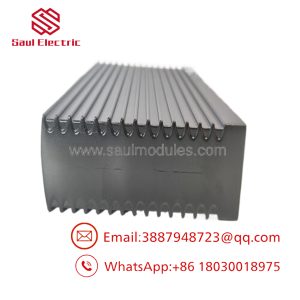
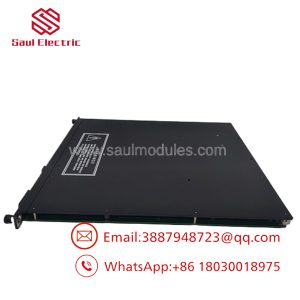
The Triconex 3721 is a 32-channel Triple Modular Redundant (TMR) Analog Input Module designed for the Tricon Safety Instrumented System (SIS). It accepts 4–20 mA process signals from pressure, temperature, flow, and level transmitters used in Safety Instrumented Functions (SIFs). Each field input is independently sampled by three isolated channels before the Tricon Main Processors perform mid-value selection and fault analysis.
Unlike a conventional PLC analog input module, the 3721 continuously performs channel diagnostics while maintaining online operation. Built-in fault detection identifies open loops, input failures, and internal channel discrepancies before they compromise system availability. One thing to watch out for is transmitter loop integrity. Many “module failures” are eventually traced to wiring faults or unstable loop power rather than the electronics themselves.
Key Technical Specifications
| Parameter | Value |
|---|---|
| Manufacturer | Triconex (Schneider Electric) |
| Model | 3721 |
| Product Type | TMR Analog Input Module |
| System | Tricon Safety Instrumented System |
| Input Channels | 32 Differential Inputs |
| Input Signal | 4–20 mA DC |
| Input Resolution | 12-bit |
| Accuracy | Better than ±0.15% Full Scale |
| Input Update Rate | Approximately 55 ms |
| Input Isolation | Triple Independent Acquisition Channels |
| Diagnostics | Continuous Self-Test and Channel Comparison |
| Fault Detection | Open Loop, Channel Failure, Internal Diagnostics |
| Status Indicators | PASS, ACTIVE, FAULT |
| Hot-Spare Support | Yes |
| Typical Applications | SIL 2 / SIL 3 Safety Instrumented Systems |
Engineering Note: The 3721 is designed specifically for 4–20 mA current loops. Verify transmitter power supply capacity, loop resistance, and termination wiring before replacing the module. A transmitter with insufficient loop voltage can produce symptoms nearly identical to a failed analog input channel.
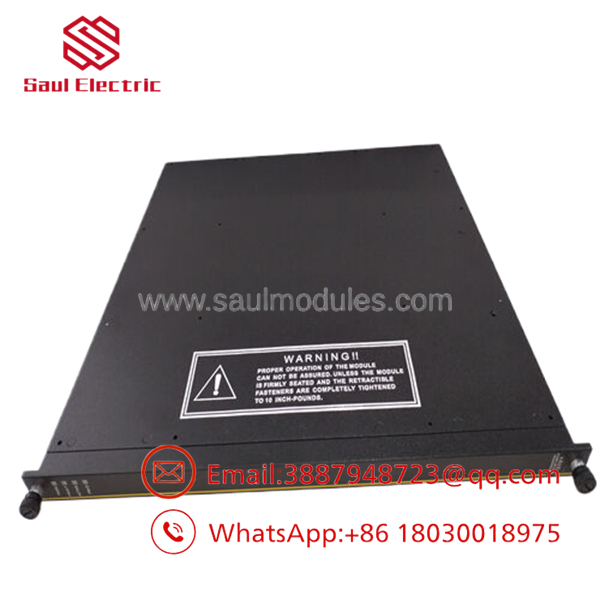
- 3721
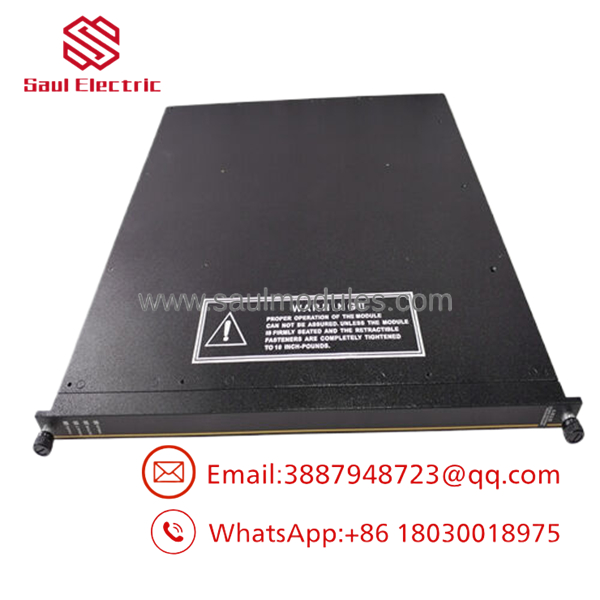
- 3721
Application Scenarios & The “Trench” Experience
Pressure transmitters rarely fail without warning.
What usually happens is more frustrating.
A hydrocracker began reporting unstable reactor pressure during startup. Operators suspected the Tricon controller because multiple alarms appeared within minutes. A replacement module was already sitting on the maintenance cart.
The real problem turned out to be a loose marshalling cabinet terminal that intermittently interrupted the 4–20 mA loop. The original 3721 had correctly identified the abnormal input all along.
That’s why experienced SIS technicians always verify the loop before replacing hardware.
Typical Applications
Oil & Gas — Emergency Shutdown Systems — Monitors pressure, flow, and temperature transmitters used for trip logic.
Power Generation — Turbine Protection — Acquires lubrication pressure, bearing temperature, and hydraulic system measurements.
Chemical Processing — Reactor Protection — Collects safety-critical analog measurements from process transmitters.
Refineries — Burner Management Systems — Monitors combustion airflow, fuel pressure, and furnace draft transmitters.
LNG Facilities — Compressor Protection — Acquires anti-surge pressure, suction pressure, and discharge temperature signals.
Field Replacement Example
During an annual proof test at a petrochemical plant, one analog input channel repeatedly generated diagnostics while the transmitter calibration remained within tolerance. Engineers first verified loop current, measured power supply voltage under load, and inspected termination points. Only after eliminating the field wiring did they replace the 3721. The new module immediately passed all acceptance tests, confirming an intermittent internal analog acquisition fault while avoiding unnecessary replacement of expensive field instrumentation.
Transparency SOP: Quality Assurance & Testing
We don’t just ship boxes; we test them on actual Tricon racks whenever compatible equipment is available.
1. Inbound Inspection
- Verify Schneider Electric identification labels
- Inspect PCB assemblies and analog circuitry
- Examine connector contacts for wear or corrosion
- Record hardware revision and serial number
2. Live Rig Testing
- Install into a compatible Tricon chassis
- Verify successful startup diagnostics
- Inject calibrated 4–20 mA signals
- Verify processor communication
- Confirm PASS, ACTIVE, and FAULT indicators
3. Electrical Parameter Checks
- Analog accuracy verification
- Input current calibration
- Channel stability testing
- Connector continuity inspection
4. Hardware Verification
- Record hardware revision
- Verify module identification
- Confirm compatibility with supported controller revisions
5. Final QC & Anti-static Packaging
- Complete functional inspection
- Anti-static moisture-barrier packaging
- Industrial shock-resistant cushioning
- Serialized inventory tracking
- 12-month warranty documentation
The Veteran’s Tech Trap Guide
⚠️ Measure the Loop Current Before Replacing the Module
Don’t trust the transmitter display alone. Break the loop and measure the actual current. A transmitter showing 12 mA locally may only be delivering 9 mA to the controller because of wiring resistance or a failing power supply.
⚠️ Check the 24 VDC Loop Supply Under Load
A weak power supply often behaves normally until multiple transmitters draw current simultaneously. Voltage sag during startup is a common cause of intermittent analog input diagnostics.
❗Inspect the Marshalling Cabinet
Loose terminals, corrosion, or water ingress inside junction boxes create intermittent loop interruptions that closely resemble module failures.
⚠️ Verify Channel Calibration After Replacement
Even when the replacement module passes diagnostics immediately, always perform a complete loop check and verify transmitter scaling in the Tricon application before returning the Safety Instrumented Function to service.
Frequently Asked Questions (FAQ)
Q1. What signals does the Triconex 3721 accept?
The 3721 is designed for 32 channels of 4–20 mA analog current inputs from process transmitters used in safety-critical applications.
Q2. Can the module be replaced while the controller remains online?
Yes. The Tricon architecture supports online module replacement and hot-spare operation when performed according to Schneider Electric maintenance procedures. Redundancy is temporarily reduced until the replacement module synchronizes with the system.
Q3. What types of field devices connect to the 3721?
Typical devices include:
- Pressure transmitters
- Temperature transmitters
- Flow transmitters
- Level transmitters
- Position transmitters
- Differential pressure transmitters
Q4. Does the module perform self-diagnostics?
Yes. The 3721 continuously monitors channel integrity, compares redundant measurements, and reports internal faults, open loops, and abnormal input conditions.
Q5. Why are surplus modules less expensive than purchasing directly from the OEM?
Most available inventory originates from canceled expansion projects, strategic spare inventories, or plant modernization programs. Lower pricing reflects the procurement source rather than the module’s intended performance.
Q6. Is every module tested before shipment?
Yes. Every module undergoes visual inspection, power-up verification, calibrated current-loop testing, communication verification, diagnostic validation, connector inspection, and final quality control before anti-static packaging.
Q7. What should I verify before ordering?
Confirm the following before purchasing:
- Part number (3721)
- Tricon controller generation
- Hardware revision
- Firmware compatibility
- External termination panel (ETP) compatibility
- 4–20 mA transmitter configuration
- Loop power supply specifications
Veteran’s advice: Before replacing a 3721, disconnect the transmitter and inject a calibrated 4–20 mA signal directly into the input channel. If the controller reads the injected signal correctly, the problem is almost certainly in the field loop—not the module. That simple test has saved countless hours of unnecessary troubleshooting in operating plants.

 Start Chat


