





Description
Product Introduction
The Triconex 3481S2 is a 4-channel Analog Output Module for the Trident Safety Instrumented System. It generates controlled 4–20 mA analog signals for field devices such as valve positioners, control valves, variable-speed drives, and process controllers used in Safety Instrumented Systems (SIS). Each output is managed through the Trident Triple Modular Redundant (TMR) architecture for high diagnostic coverage.
Unlike a conventional PLC analog output card, the 3481S2 incorporates three independent processing channels, continuous loopback monitoring, and Forced-Switch Diagnostics (FSD). The module continuously verifies output integrity, helping detect internal faults before they affect the safety function. One thing to watch out for is compatibility with the correct 2481 Analog Output Baseplate and the associated Trident hardware revision.
Key Technical Specifications
| Parameter | Value |
|---|---|
| Manufacturer | Triconex (Schneider Electric) |
| Model | 3481S2 (AO3481S2) |
| Product Type | TMR Analog Output Module |
| System | Trident Safety Instrumented System |
| Output Channels | 4 Commoned Analog Outputs |
| Output Signal | 4–20 mA Controlled |
| Over-Range Output | 0–22 mA |
| Output Resolution | 12-bit |
| Output Accuracy | <0.25% FSR (4–20 mA) |
| Diagnostics | Forced-Switch Diagnostics (FSD) |
| External Loop Power | 24 VDC Nominal, 32 VDC Maximum |
| Over-Voltage Protection | 36 VDC Continuous |
| Typical Leg Failure Switch Time | 1 ms Typical, 3 ms Maximum |
| Compatible Baseplate | 2481 Analog Output Baseplate |
| Architecture | Triple Modular Redundant (TMR) |
Application Scenarios & The “Trench” Experience
Analog outputs can fool even experienced technicians.
One chemical plant experienced unstable control valve positioning during a proof test. The valve positioner calibrated correctly. The control valve stroked normally. Even the wiring insulation tested well.
The actual problem was an intermittent analog output channel that only drifted under operating temperature. Static measurements looked perfect, but the continuous diagnostics eventually identified the faulty channel before it caused a process trip.
Typical Applications
Oil & Gas — Emergency Shutdown Systems (ESD) — Drives shutdown valve positioners requiring accurate 4–20 mA commands.
Refining — Burner Management Systems (BMS) — Controls combustion air dampers and fuel control valves.
Power Generation — Turbine Protection Systems — Sends analog reference signals to hydraulic actuators and governors.
Chemical Processing — Reactor Safety Systems — Controls emergency vent valves and critical process actuators.
LNG Facilities — Compressor Protection — Provides analog commands to anti-surge and recycle valve positioners.
Field Replacement Example
During an annual turnaround, engineers noticed one emergency shutdown valve drifting approximately 3% from its commanded position. Calibration of the valve positioner showed no issues. Installing a tested 3481S2, verifying the output loop current under load, and completing loop calibration restored stable operation. The original module later failed diagnostic testing due to an intermittent output circuit that only appeared after thermal cycling.
Transparency SOP: Quality Assurance & Testing
We don’t just ship boxes; we test them on actual Trident hardware whenever compatible equipment is available.
1. Inbound Inspection
- Verify Schneider Electric identification labels
- Inspect PCB, connector fingers, and conformal coating
- Check for corrosion, overheating, or unauthorized repairs
2. Live Rig Testing
- Install in a compatible Trident chassis
- Verify successful startup diagnostics
- Simulate multiple analog output values
- Verify communication with the Main Processor
- Confirm PASS, FAULT, and ACTIVE indicators
3. Electrical Parameter Checks
- Measure output current accuracy
- Verify loop current under various load conditions
- Check output stability
- Inspect connector continuity
4. Firmware & Hardware Verification
- Record hardware revision
- Verify module compatibility
- Confirm correct baseplate configuration
5. Final QC & Anti-static Packaging
- Final functional inspection
- Anti-static moisture-barrier packaging
- Industrial shock-resistant cushioning
- Serialized inventory tracking
- 12-month warranty documentation
The Veteran’s Tech Trap Guide
⚠️ Verify the External Loop Power First
The 3481S2 depends on an external loop supply. If the field power supply is unstable, the module may report output faults even though the electronics are operating normally. Measure the loop voltage under load—not just with a multimeter and no connected device.
⚠️ Don’t Judge the Module by Open-Circuit Measurements
A channel may output exactly 20.00 mA with no load attached and still fail once connected to a valve positioner. Always perform current measurements with the actual field load connected.
❗Watch the Load Resistance
The available loop voltage determines the maximum supported load resistance. If the total loop resistance exceeds the published limits, the output may never reach the commanded current even though the module itself is healthy.
⚠️ Verify the Correct Baseplate
The 3481S2 is intended for the 2481 Analog Output Baseplate. Using the wrong termination hardware can result in incorrect field wiring and commissioning delays.
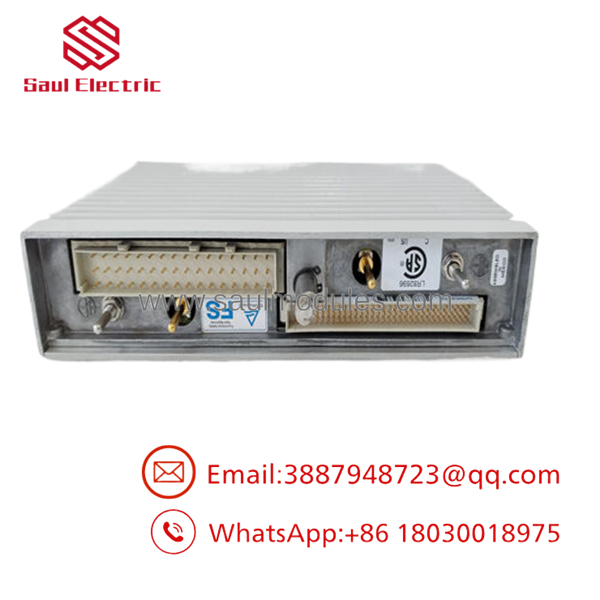
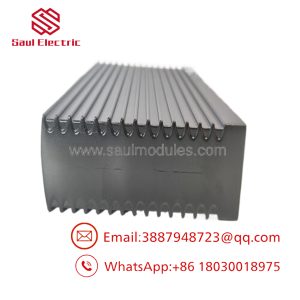
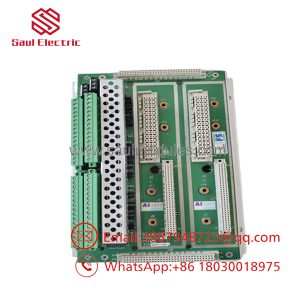
- 3481S2
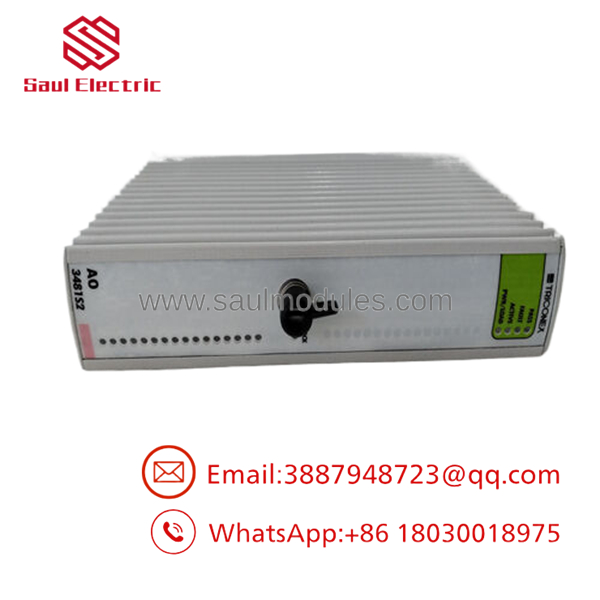
- 3481S2
Frequently Asked Questions (FAQ)
Q1. Is the Triconex 3481S2 a voltage output module?
No. The standard 3481S2 is a 4-channel, 4–20 mA analog current output module designed for Trident Safety Instrumented Systems.
Q2. How many analog outputs are available?
The module provides four commoned-return analog output channels, each supporting controlled 4–20 mA output with 0–22 mA over-range capability.
Q3. What diagnostics are built into the module?
The 3481S2 includes Forced-Switch Diagnostics (FSD), current loopback, voltage loopback, and continuous channel monitoring to detect internal failures before they affect the safety function.
Q4. Can the module be replaced while the system is online?
The Trident platform supports online maintenance in certain configurations, but replacement should only be performed in accordance with Schneider Electric maintenance procedures and the site’s approved Management of Change (MOC) process.
Q5. What devices are typically connected to the 3481S2?
Typical loads include:
- Valve positioners
- Electro-pneumatic converters
- Variable-speed drive references
- Process controllers
- Analog actuators requiring 4–20 mA input
Q6. Why is surplus inventory less expensive than purchasing directly from the OEM?
Most available modules originate from strategic spare inventories, canceled capital projects, or plant modernization programs. Lower pricing reflects the supply chain rather than reduced functional capability.
Q7. Is every module tested before shipment?
Yes. Each module undergoes visual inspection, power-up verification, analog output calibration checks, current accuracy testing, communication verification, and final quality inspection before anti-static packaging.
Veteran’s advice: Analog output problems often get blamed on the controller first. In our field experience, the real culprit is frequently somewhere else—a weak 24 VDC loop supply, excessive cable resistance, a failing valve positioner, or a loose termination. Before replacing the 3481S2, measure the actual loop current with the field device connected and compare it to the commanded value. That five-minute check has prevented many unnecessary module replacements.

 Start Chat


