





Description
Product Introduction & Engineering Value
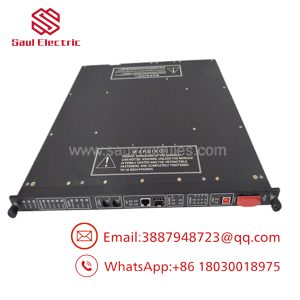
When scaling a safety control architecture beyond basic logic tasks, the Triconex 3101 (MP3101) Main Processor module acts as the core processing engine for the Trident safety system. Operating as one channel of a Triple Modular Redundant (TMR) set on a 2101 MP Baseplate, three 3101 modules work in lockstep to provide complete 2-out-of-3 voting and fault isolation for critical processes.
The 3101 housing splits execution duties between two dedicated internal processors: the System Executive (SX) (handling safety application logic, hardware diagnostics, and network comms) and the I/O Executive (IOX) (managing field I/O scanning via custom ASICs). This dedicated task separation keeps cycle times deterministic and guarantees that fault detection on field channels never degrades core safety control execution.
Technical Specifications
- SX Application Processor: Motorola MPC860, 32-bit, 50 MHz clock speed
- System Memory Architecture: 16 MB DRAM (byte parity), 6 MB Flash PROM (CRC-protected), 8 KB NVRAM for retentive variables
- TriBus Inter-Module Link: High-speed 25 Mbps DMA bus with dedicated hardware CRC protection
- I/O Capacity: Supports up to 14 I/O baseplates per Trident controller setup
- Power Consumption: 8 W maximum power dissipation per module at 24 VDC nominal
- Clock Calendar & Retentive Memory: ½ AA Lithium battery backup with 15-year predicted lifespan
- Communications (via Baseplate Interfaces): Ethernet 10BaseT (TriStation/TSAA/Peer-to-Peer), RS-232/485 Modbus RTU, and RS-232 ASCII Debug ports
- Operating Temperature: -40°C to +75°C (-40°F to +167°F)
- Safety Certifications: TÜV Certified for SIL 3 (IEC 61508), NFPA 85/86, CSA Class I Div 2
Field Application & The “Trench” Experience
The Trench Story
During a winter cold snapshot at a gas processing terminal, a power surge hit an auxiliary power supply rail on Channel A’s main processor slot in the primary ESD controller. The surge damaged the voltage regulation circuit on the active MP3101 module in Channel A.
Thanks to the hardware-isolated TriBus architecture, the MP3101 modules in Channels B and C immediately detected the voltage fault on Channel A, logged a diagnostic alarm, isolated Channel A’s outputs, and smoothly maintained 2-out-of-3 logic execution without a millisecond of process interruption. The on-call technician brought a fresh 3101 module to the cabinet, turned the key-lock on the replacement unit, swapped it into Slot A, and watched the main processor automatically re-sync memory over the 25 Mbps TriBus in under two seconds.
Specific Field Applications
- High Integrity Pressure Protection Systems (HIPPS): Executing sub-50 ms overpressure isolation logic on gas pipelines.
- Turbomachinery Control (TMC): Providing high-reliability speed monitoring and emergency shutdown functions for large gas compressors.
- Offshore Platform Fire & Gas Systems: Processing continuous voting logic for optical flame detectors and toxic gas transmitters.
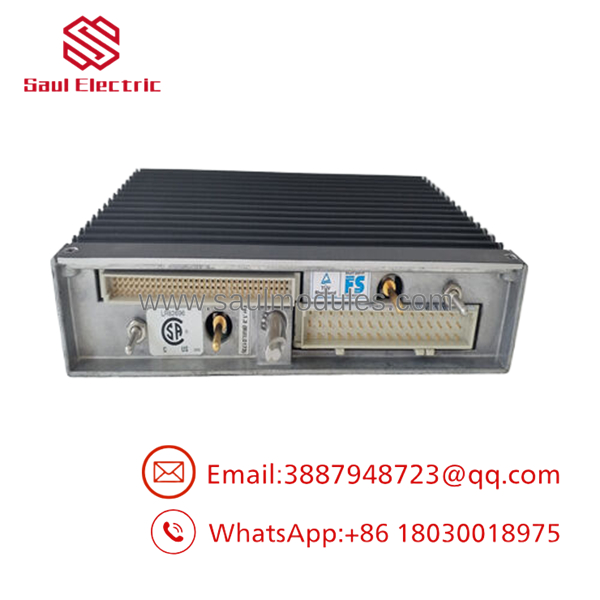
- 3101
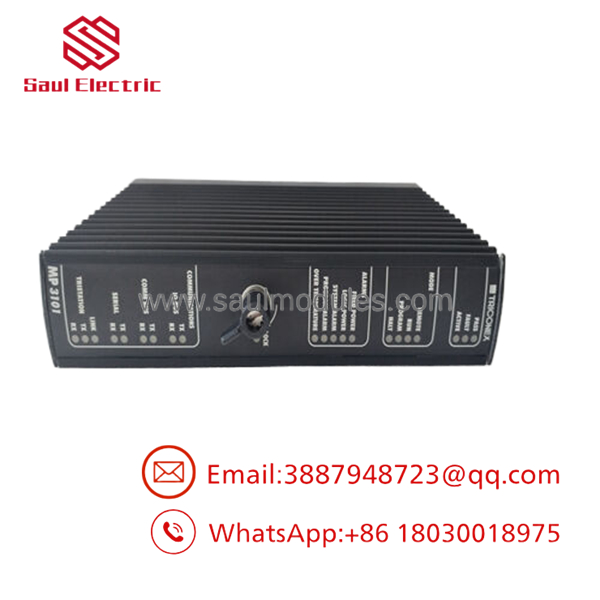
- 3101
Transparency SOP: QA & Testing
1.Physical & Latch Audit ──► Microscopic pin check on baseplate bus headers and mechanical engagement test on the key-lock mechanism.
2.Power & Short Circuit Test ──► Power up on 24 VDC rails; verify current draw stays below maximum operational limits (8 W max).
3.Dual Executive Verification ──► Run diagnostic firmware sweeps across both the SX (MPC860) and IOX processing engines.
4.TriBus Lockstep Test ──► Install in 3-channel 2101 test rack; verify 25 Mbps synchronization and memory state transfers.
5.Battery & NVRAM Audit ──► Check ½ AA lithium coin battery charge and test 8 KB NVRAM retentive variable memory under complete power drops.
The Veteran’s Tech Trap Guide
- ⚠️ Baseplate Key-Lock Position: Ensure the physical front-panel lock switch on the MP3101 module is positioned correctly when installing into the 2101 MP Baseplate. If the lock mechanism is not engaged, the module will remain in a standby state and will not join the active TriBus voting set.
- PRO TIP: Matching Firmware Versions: Always check the System Executive (SX) and Input/Output Executive (IOX) firmware revisions via TriStation 1131 before inserting a replacement 3101 module into a live TMR set. Running mixed major firmware revisions across Channels A, B, and C can prevent the replacement card from synchronizing.
- ⚠️ Real-Time Clock Battery Checks: The ½ AA lithium battery on the 3101 maintains clock accuracy and retentive variable memory during long power-offs. If the module has been sitting in warehouse storage for several years, test or replace the battery prior to field deployment to avoid clock drift alarms upon startup.
Dynamic FAQ
Q: What is the difference between the Triconex 3009 and 3101 processor modules?
A: The Model 3101 (MP3101) represents an updated generation of the Trident Main Processor card featuring refined internal electronics, enhanced memory handling, and updated System Executive firmware compared to earlier 3009 revisions.
Q: How many 3101 modules are needed for a functioning Trident controller?
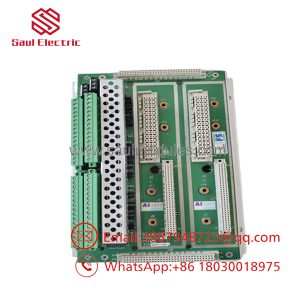
A: A standard fault-tolerant Trident configuration requires three 3101 MP modules installed together on a single Model 2101 Main Processor Baseplate.
Q: Can a single 3101 module be hot-swapped while the safety system is active?
A: Yes. The 3101 supports full online hot-swapping. Removing or replacing one module allows the remaining two modules to continue controlling the plant safety functions without interruption.
Q: What ports on the 2101 baseplate are tied to the 3101 processor?
A: The baseplate routes communication directly from the 3101 modules to a 10BaseT RJ-45 Ethernet port (TriStation/TSAA), a DB-9 serial port (Modbus RTU), and an RJ-12 debug port.
Q: What warranty applies to New Surplus Triconex 3101 units?
A: All 3101 processor modules are fully bench-tested, pin-verified, and shipped with a standard 1-year replacement warranty.

 Start Chat


