





Description
Product Introduction
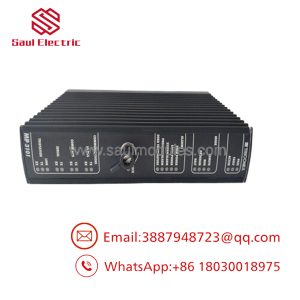
The Triconex 4201 Intelligent Communication Module (ICM) serves as the communication gateway between a Tricon Safety Instrumented System and external equipment such as Distributed Control Systems (DCS), Human-Machine Interfaces (HMI), engineering workstations, historians, and supervisory computers. It transfers process data, status information, diagnostics, and configuration traffic while maintaining separation between the safety controller and the plant communication network.
Unlike a standard PLC communication card, the 4201 operates within the Tricon fault-tolerant architecture and supports redundant communication paths. One thing to watch out for is firmware compatibility. Communication modules often appear healthy electrically but fail to establish reliable data exchange because the controller firmware and communication firmware belong to different supported revisions. Always verify the complete system revision before installation.
Key Technical Specifications
| Parameter | Value |
|---|---|
| Manufacturer | Triconex (Schneider Electric) |
| Model | 4201 |
| Product Type | Intelligent Communication Module (ICM) |
| System | Tricon Safety Instrumented System |
| Primary Function | Controller-to-Host Communications |
| Communication Media | Ethernet and Serial (Configuration Dependent) |
| Supported Architecture | Triple Modular Redundant (TMR) |
| Installation | Tricon Main Chassis |
| Controller Compatibility | Tricon v9 through v11 Systems (Verify Revision Before Installation) |
| Diagnostics | Continuous Self-Diagnostics |
| Communication Features | Data Exchange, Diagnostics, Engineering Access |
| Redundancy Support | Yes |
| Status Indicators | PASS, ACTIVE, FAULT, COMM LEDs |
| Hot Replacement | Supported According to OEM Procedures |
Engineering Note: Communication capability depends on the installed firmware revision, communication protocol configuration, and controller generation. Verify compatibility with the OEM documentation before replacing the module.
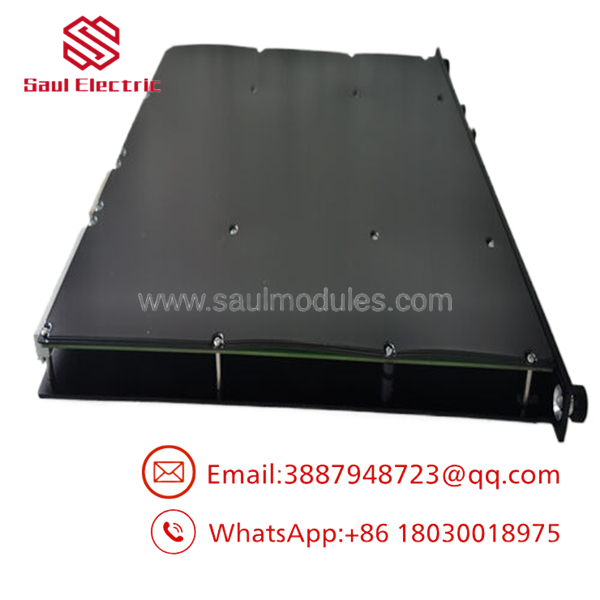
- 4201
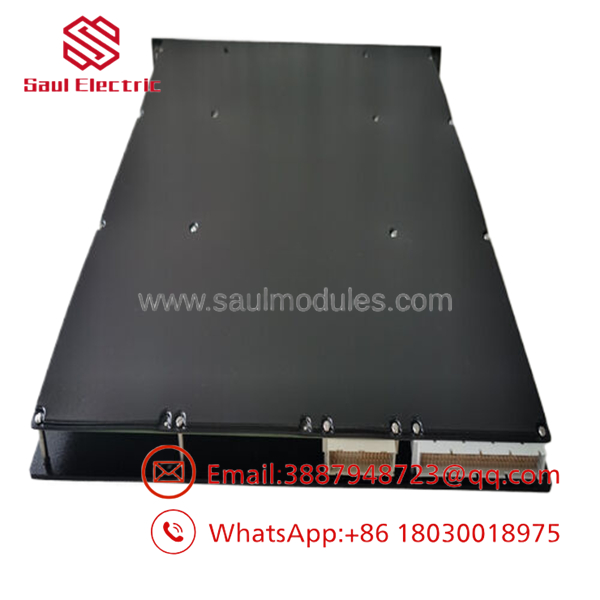
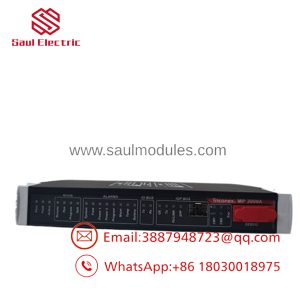
- 4201
Application Scenarios & The “Trench” Experience
The controller wasn’t offline.
The network was.
During a refinery turnaround, operators suddenly lost every process value on the DCS while the Tricon safety controller continued running normally. Shutdown logic remained healthy. Field instruments still worked. The maintenance team initially suspected a controller failure.
The actual culprit was a failed communication module that had stopped exchanging data with the host network.
Production never tripped, but operators temporarily lost visibility into the safety system.
That’s exactly why communication modules deserve as much attention as CPUs and I/O.
Typical Applications
Oil & Gas — Safety System Integration — Exchanges shutdown status and process data with plant DCS.
Power Generation — Turbine Protection — Transfers trip status, alarms, and event logs to operator stations.
Chemical Processing — Process Monitoring — Provides real-time safety data to engineering workstations and historians.
Refineries — Distributed Control Integration — Connects Tricon SIS with refinery control systems.
LNG Facilities — Plant Information Systems — Shares diagnostics and operating data with maintenance and asset management software.
Field Replacement Example
During routine maintenance at a gas processing facility, intermittent communication timeouts began appearing between the Tricon controller and the DCS. Engineers first verified network switches, fiber converters, and Ethernet cabling before replacing the 4201. After installing a tested replacement and confirming firmware compatibility, communication was restored immediately. Subsequent bench testing revealed an intermittent hardware fault within the communication interface that only appeared under continuous network traffic.
Transparency SOP: Quality Assurance & Testing
We don’t just ship boxes; we test them on actual Tricon hardware whenever compatible equipment is available.
1. Inbound Inspection
- Verify Schneider Electric identification labels
- Inspect PCB assemblies and communication interfaces
- Examine connectors for wear and oxidation
- Record hardware revision and serial number
2. Live Rig Testing
- Install in a compatible Tricon chassis
- Verify successful startup
- Confirm communication with the Main Processors
- Exercise Ethernet and serial interfaces where applicable
- Verify PASS, ACTIVE, FAULT, and COMM indicators
3. Electrical Parameter Checks
- Internal power rail verification
- Connector continuity testing
- Interface signal validation
- Communication stability testing
4. Firmware Verification
- Record firmware revision
- Verify hardware compatibility
- Confirm communication protocol support
5. Final QC & Anti-static Packaging
- Complete functional inspection
- Anti-static moisture-barrier packaging
- Industrial shock-resistant cushioning
- Serialized inventory tracking
- 12-month warranty documentation
The Veteran’s Tech Trap Guide
⚠️ Verify Firmware Before Swapping Hardware
Many communication problems are caused by firmware mismatches rather than failed electronics. Compare the controller firmware, communication module revision, and engineering software version before replacing the module.
⚠️ Don’t Ignore Network Infrastructure
A faulty Ethernet switch, damaged fiber converter, or duplex mismatch can produce exactly the same symptoms as a failed 4201. Verify the network before opening the controller cabinet.
❗Back Up the Configuration First
Before replacing any communication module, save the current controller configuration and network settings. Restoring communication becomes much easier when the original parameters are available.
⚠️ Check Communication LEDs Before Removing the Module
The front-panel indicators often identify whether the fault is in the module, controller, or network. Spending two minutes reading the diagnostics can save hours of unnecessary troubleshooting.
Frequently Asked Questions (FAQ)
Q1. What is the Triconex 4201 used for?
The 4201 is an Intelligent Communication Module (ICM) that exchanges data between a Tricon Safety Instrumented System and external equipment such as DCS platforms, HMIs, engineering workstations, and plant historians.
Q2. Does the 4201 affect the execution of the safety logic?
No. The communication module handles external data exchange. The Tricon controller continues executing safety logic independently. A communication failure may interrupt operator visibility or data transfer, but it does not directly stop safety program execution.
Q3. Can the module be replaced while the controller remains online?
Yes, provided the installed Tricon system configuration and Schneider Electric maintenance procedures support online replacement. Follow the site’s Management of Change (MOC) process and verify communication after installation.
Q4. Which communication protocols are supported?
Protocol support depends on the installed firmware revision and system configuration. Common implementations include communication with DCS, HMI, engineering workstations, and supervisory systems. Always verify protocol compatibility using the OEM documentation for your controller revision.
Q5. Why is surplus inventory priced below OEM quotations?
Most available modules originate from strategic spare inventories, canceled expansion projects, or decommissioned systems. Pricing reflects the procurement source rather than reduced operating capability.
Q6. Is every module tested before shipment?
Yes. Every 4201 undergoes visual inspection, power-up verification, communication interface testing, diagnostic validation, firmware identification, connector inspection, and final quality control before anti-static packaging.
Q7. What should I verify before ordering?
Confirm the following:
- Part number (4201)
- Tricon controller generation
- Hardware revision
- Firmware revision
- Communication protocol requirements
- Chassis compatibility
- Existing network configuration
Veteran’s advice: If communications suddenly disappear but the safety controller continues running normally, don’t assume the 4201 has failed. Check the network switch, fiber links, serial cabling, IP configuration, and firmware compatibility first. In many shutdown investigations, the communication module is functioning exactly as designed—the fault is somewhere between the controller and the network.

 Start Chat


