





Description
Product Introduction & Engineering Value
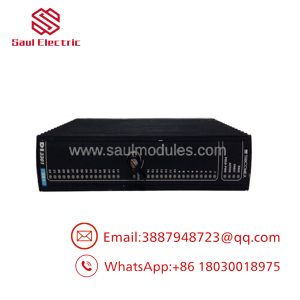
The TRICONEX DO3401 is not an ordinary PLC output card. It is part of a safety architecture where output integrity, diagnostic coverage, and fault tolerance are central to the design. The Model 3401 provides 16 commoned digital outputs and uses triplicated electronics with output-voting circuitry for safety-critical actuation.
For replacement work, the 24 VDC designation alone is not enough. Engineers should verify the exact Model 3401 configuration, baseplate, field termination arrangement, system generation, firmware compatibility, and connected final elements before approving a substitute. Triconex documentation identifies specific baseplates and termination arrangements for the 3401.
Technical Specifications
| Parameter | Specification |
|---|---|
| Manufacturer | TRICONEX |
| Model | 3401 / DO3401 |
| System | Trident SIS |
| Module Type | Digital Output |
| Output Points | 16, commoned |
| Nominal Output Voltage | 24 VDC |
| Specified Operating Voltage | 15–30 VDC |
| Absolute Maximum Output Voltage | 33 VDC |
| Switching Current | <4.8 A, self-limiting; 3 A typical |
| Carry Current | >0.7 A, self-limiting; 1.5 A typical |
| Off-State Leakage | <1 mA |
| On-State Voltage Drop | <1 VDC at 1.5 A |
| Loop-Back Scan Time | <1 ms for all 16 points |
| Functional-to-Protective-Earth Isolation | 500 VDC minimum |
| Functional-to-Functional-Earth Isolation | 800 VDC minimum |
These values are taken from published Trident planning/install documentation and secondary reproductions of the Model 3401 specification.
TMR output architecture
Each DO3401 contains three isolated sets of electronics. The three channels independently receive data and participate in the output-voting process. The documented Quad Voter circuitry uses redundant signal paths, allowing the module to maintain the commanded output when a single channel experiences a fault.
The module also performs Output Voter Diagnostics (OVD). Published documentation states that stuck-on and stuck-off point faults are detected in less than 500 ms.
Field Application & the “Trench” Experience
Consider an emergency-shutdown cabinet at a process facility where one solenoid-operated final element stops responding during a maintenance test. The processor is healthy, field power is present, and the wiring checks out. The maintenance team initially suspects the field device. Further testing shows that the affected output point is reporting an abnormal condition.
This is where the DO3401’s diagnostics matter. Rather than treating the module as a simple 16-channel switch, the engineer checks the PASS, FAULT, ACTIVE, PWR/LOAD, and individual point indicators, then reviews the Tricon diagnostic information before pulling the module. The published Trident guide specifically identifies these front-panel indicators on the DO3401.
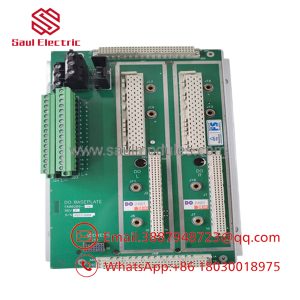
A replacement should be installed only after confirming the module’s associated baseplate and field termination arrangement. The Model 3401 is documented for use with the Model 2401 and 2401L baseplates, as well as specified external termination configurations.
Niche application scenarios
- Emergency shutdown solenoid control: Driving de-energize-to-trip or other safety-related final-element interfaces within a process ESD architecture.
- Fire and gas shutdown logic: Providing discrete output commands to safety-related field devices and shutdown interfaces.
- Burner management systems: Switching discrete control signals associated with fuel isolation and burner shutdown sequences.
- High-integrity process interlocks: Controlling safety-related relays, contactors, or other discrete final elements where fault tolerance is required.
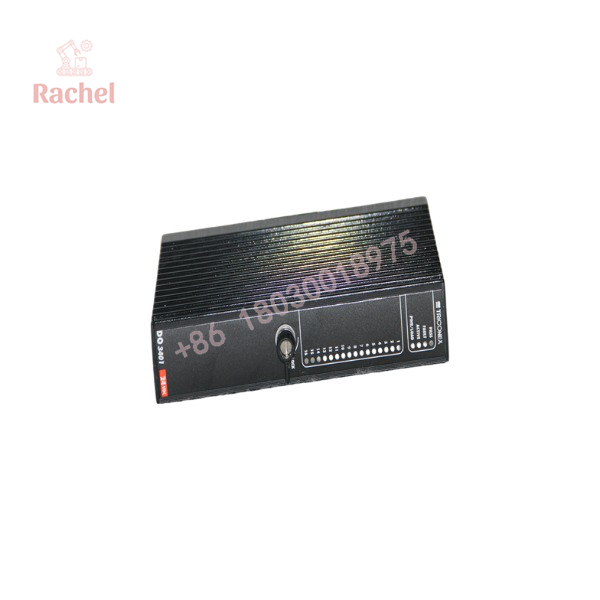
DO3401
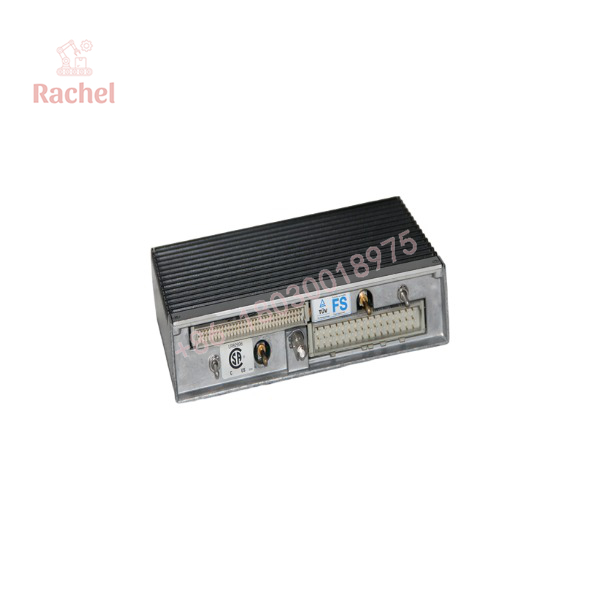
DO3401
Transparency SOP: QA & Testing
For New Surplus DO3401 inventory, a meaningful inspection should include:
- Identity verification — Confirm the front-panel designation, Model 3401/DO3401 marking, voltage designation, and hardware revision.
- Mechanical inspection — Check the housing, locking mechanism, backplane interface, labels, and field-side connectors for damage.
- PCB inspection — Inspect for corrosion, contamination, cracked components, bent pins, or evidence of unauthorized repair.
- Indicator check — Verify that the front-panel indicators behave normally during controlled power-up.
- Functional test — Where a compatible Trident test environment is available, verify communication, output behavior, diagnostics, and representative point operation.
- Documentation — Record the serial/model information and test condition before shipment.
Do not describe a unit as function-tested merely because it powers on. For a safety-system I/O module, power-up verification and a genuine I/O functional test are two different things.
The Veteran’s Tech Trap Guide
⚠️ Trap #1 — Do not confuse 3401 with a generic 24 VDC output card.
The DO3401 is part of a TMR safety architecture. Its compatibility is determined by the Tricon/Trident system configuration, baseplate, termination hardware, and application—not simply by whether the field load happens to be 24 VDC.
⚠️ Trap #2 — Watch the baseplate.
The documented Model 3401 can be installed with specific Trident baseplates, including the Model 2401 and 2401L. High-voltage applications can also use specified external termination hardware. Do not order the module without checking the existing baseplate and termination scheme.
⚠️ Trap #3 — Don’t ignore the load.
The published specification distinguishes switching current from carry current. A field load that appears acceptable based solely on nominal voltage can still create problems if its inrush, continuous current, or short-circuit behavior exceeds the applicable output limits.
PRO TIP: Record the DO3401 front-panel status before removal. PASS, FAULT, ACTIVE, PWR/LOAD, and individual point indicators can provide useful evidence when diagnosing whether the problem is the I/O module, field power, wiring, or final element.
Dynamic FAQ
What is the TRICONEX DO3401?
The DO3401, also designated Model 3401, is a 16-point digital output module for the Triconex Trident safety instrumented system. It provides nominal 24 VDC outputs using a triplicated output architecture.
Is the DO3401 a TMR module?
Yes. The Model 3401 uses three independent electronic channels and voting circuitry as part of the Trident TMR architecture.
What is the DO3401 output voltage?
The nominal output voltage is 24 VDC, with a specified operating range of 15–30 VDC and an absolute maximum output voltage of 33 VDC.
How many outputs does the DO3401 have?
It has 16 commoned digital output points.
Can a standard PLC digital output module replace the DO3401?
No—not as a direct substitution. The DO3401 is integrated into a Triconex safety architecture with TMR processing, diagnostics, voting, and specific baseplate/termination requirements. Replacing it with a conventional PLC output card would constitute a system redesign, not a like-for-like spare-parts replacement.
How should New Surplus DO3401 stock be verified?
Confirm the complete model marking and hardware revision, inspect the module physically, and request evidence of functional testing where the application is safety-critical. New Surplus should mean unused original inventory, not merely a cleaned or repaired used module. Warranty terms should also be documented, including DOA coverage, return conditions, and the period of functional warranty.

 Start Chat


