





Description
Product Introduction
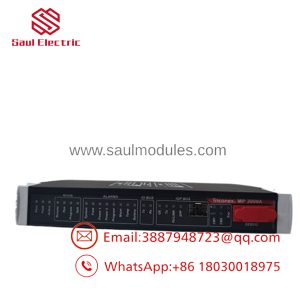
The Triconex 3503E is a 32-point Triple Modular Redundant (TMR) Digital Input Module designed for Tricon Safety Instrumented Systems. It accepts 24 VAC/VDC field signals from emergency stop stations, limit switches, pressure switches, relay contacts, and other discrete devices used in SIL-rated safety applications. Each input is processed independently by three isolated channels before the Tricon Main Processors perform voting.
Compared with conventional PLC digital input cards, the 3503E continuously performs built-in self-testing while maintaining online diagnostics. One important limitation deserves attention: this model is not recommended for systems using shunt-diode intrinsic safety barriers. For those applications, Schneider Electric recommends the 3505E, which is specifically designed for lower input thresholds. Verify the field interface design before replacing an existing module.
Key Technical Specifications
| Parameter | Value |
|---|---|
| Manufacturer | Triconex (Schneider Electric) |
| Model | 3503E |
| Product Type | TMR Digital Input Module |
| System | Tricon Safety Instrumented System |
| Input Channels | 32, Commoned in Groups of 8 |
| Nominal Input Voltage | 24 VAC/VDC |
| Recommended Input Range | 20–42.5 VDC |
| Maximum Input Voltage | 42.5 VAC/VDC |
| Input Frequency | DC or 47–63 Hz |
| Input Delay (OFF→ON) | < 8 ms |
| Input Delay (ON→OFF) | < 15 ms |
| Input Isolation | 1,000 VAC Minimum / 1,500 VDC Minimum |
| Input Impedance | >1.25 kΩ Nominal |
| Logic Power | <10 W |
| Diagnostics | Self-Test, Continuous Diagnostics, Hot-Spare Support |
| Status Indicators | PASS, FAULT, ACTIVE, Individual Input LEDs |
Engineering Note: The 3503E includes continuous diagnostic testing that periodically injects a diagnostic pulse. In applications where adjacent equipment is connected in parallel, review the OEM documentation to ensure the diagnostic pulse cannot produce unintended responses.
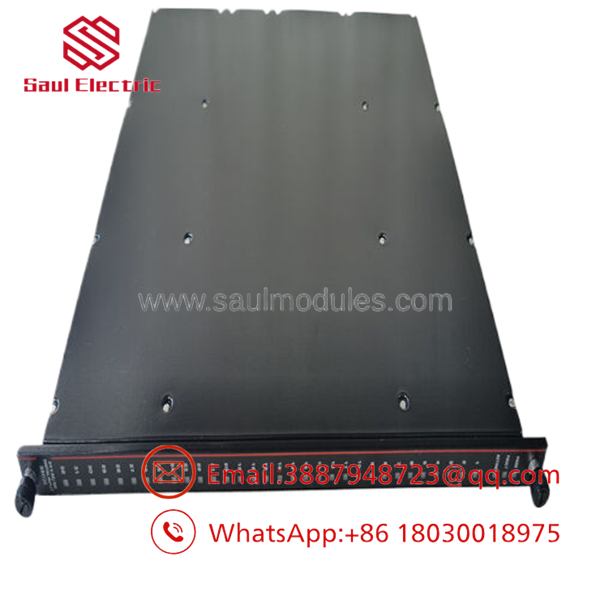
- 3503E
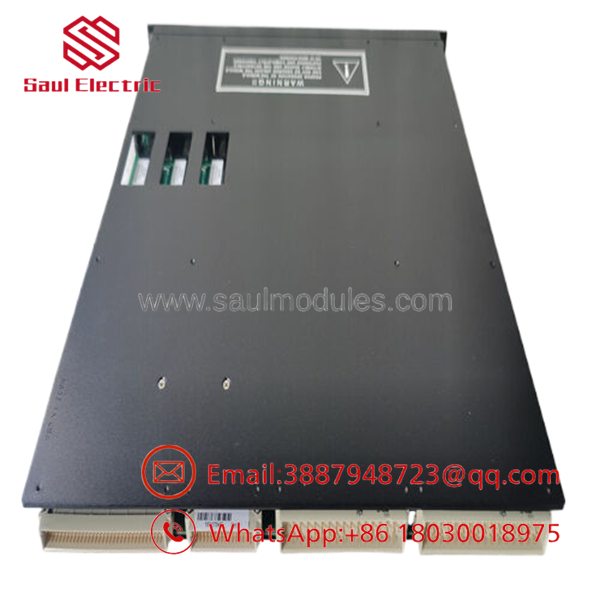
- 3503E
Application Scenarios & The “Trench” Experience
Nothing gets everyone’s attention faster than a nuisance trip on a safety system.
A compressor train suddenly reports an emergency shutdown input during normal production. The operator confirms the field pushbutton was never pressed. Instrument technicians spend hours checking wiring, replacing switches, and measuring voltage.
Eventually they discover moisture inside a junction box causing intermittent leakage current. The 3503E wasn’t malfunctioning—it was accurately reporting exactly what it detected.
That’s the difference between a safety controller and a standard PLC.
Typical Applications
Oil & Gas — Emergency Shutdown (ESD) Systems — Monitors emergency stop buttons, shutdown pushbuttons, and valve limit switches.
Refining — Burner Management Systems (BMS) — Receives flame safeguard contacts, permissives, and fuel valve status signals.
Power Generation — Turbine Protection — Monitors breaker auxiliary contacts, trip relays, and overspeed protection devices.
Chemical Processing — Reactor Safety Systems — Collects discrete shutdown signals from pressure switches and process interlocks.
LNG Facilities — Compressor Protection — Monitors isolation valve feedback, gas detection systems, and emergency shutdown circuits.
Field Replacement Example
During annual proof testing at a petrochemical facility, one group of eight digital inputs generated intermittent diagnostics while all field devices tested correctly. Engineers installed a tested 3503E, cleaned the backplane connectors, and repeated functional testing. The intermittent faults disappeared. Later inspection showed oxidation on the module connector rather than failure of the field instrumentation, preventing unnecessary replacement of dozens of field switches.
Transparency SOP: Quality Assurance & Testing
We don’t just ship boxes; we test them on actual Tricon racks whenever compatible hardware is available.
1. Inbound Inspection
- Verify Schneider Electric identification labels
- Inspect connector fingers and PCB condition
- Check for corrosion, overheating, or unauthorized repairs
- Confirm revision markings
2. Live Rig Testing
- Install into a compatible Tricon chassis
- Verify successful startup
- Simulate all digital input channels
- Confirm communication with Main Processors
- Verify PASS, FAULT, and ACTIVE LEDs
3. Electrical Parameter Checks
- Input threshold verification
- Opto-isolation testing
- Connector continuity inspection
- Internal voltage rail verification
4. Firmware & Hardware Verification
- Record hardware revision
- Verify module identification
- Confirm compatibility with installed Tricon system version
5. Final QC & Anti-static Packaging
- Complete functional inspection
- Anti-static moisture-barrier packaging
- Industrial shock-resistant foam
- Serialized inventory tracking
- 12-month warranty documentation
The Veteran’s Tech Trap Guide
⚠️ Don’t Use the 3503E with Shunt-Diode Intrinsic Safety Barriers
This catches people during plant upgrades. Schneider specifically recommends the 3505E instead for those installations because of its lower input threshold characteristics. Verify the hazardous-area interface before ordering.
⚠️ Check the Field Voltage Under Load
Twenty-four volts measured with no load means very little. Measure the voltage while the field device is energized. We’ve traced many “bad modules” to weak power supplies instead.
❗Inspect the Backplane Before Ordering Electronics
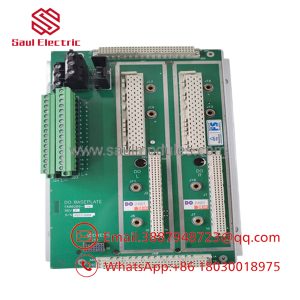
A worn connector or contaminated backplane can generate intermittent input faults that look identical to module failures.
⚠️ Remember the Inputs Are Commoned
The 32 inputs are arranged in groups of eight. A wiring fault affecting the common return can impact multiple channels simultaneously. Don’t troubleshoot each point independently until you’ve checked the shared wiring.
Frequently Asked Questions (FAQ)
Q1. What does the Triconex 3503E do?
The 3503E is a 32-point TMR Digital Input Module that monitors discrete field signals in Tricon Safety Instrumented Systems. It continuously performs diagnostics while delivering voted input data to the Main Processors.
Q2. How many input channels are available?
The module provides 32 digital inputs, arranged in four commoned groups of eight, for 24 VAC/VDC field devices.
Q3. Can the 3503E be hot-swapped?
Yes. The Tricon platform supports online module replacement and hot-spare capability when performed according to Schneider Electric maintenance procedures. Even so, replacing a module temporarily reduces redundancy. Follow your site’s Management of Change (MOC) process before performing online maintenance.
Q4. What is the difference between the 3503E and the 3505E?
Both are 32-point TMR digital input modules, but the 3505E is intended for applications using shunt-diode intrinsic safety barriers and has a lower input threshold. The 3503E should not be selected for those installations.
Q5. Why is this module less expensive than purchasing directly from the OEM?
Most available inventory comes from strategic spare inventories, canceled capital projects, or professionally managed surplus stock. Pricing reflects the procurement source rather than the module’s intended operating capability.
Q6. Is every module tested before shipment?
Yes. Each unit undergoes visual inspection, power-up verification, digital input simulation, communication testing, diagnostic verification, connector inspection, and final quality control before shipment.
Q7. What should I verify before ordering?
Confirm the following before purchasing:
- Part number (3503E)
- Tricon controller generation
- Hardware revision
- Backplane compatibility
- Field voltage (24 VAC/VDC)
- Whether the installation uses intrinsic safety barriers
- Existing system firmware version
Veteran’s advice: When several inputs in the same common group begin acting strangely, don’t replace the module immediately. Inspect the shared common wiring, check for water intrusion in field junction boxes, verify the 24 VDC supply under load, and review the Tricon event log. In many cases, the 3503E is correctly reporting a field wiring problem—not creating one.

 Start Chat


