





Description
Product Introduction
The Tylan General CMHT-11S02 is a high-accuracy, heated capacitance diaphragm gauge engineered for critical vacuum pressure measurements in semiconductor manufacturing, thin-film deposition, and industrial vacuum coating processes. Operating at a 10 Torr full-scale range, this sensor measures total absolute pressure directly without requiring gas-specific calibration corrections.
Designed to withstand aggressive process chemistry, the internal heated cell prevents gaseous condensation and sublimation build-up on the sensor diaphragm. Compared to unheated vacuum transducers or standard Pirani gauges, the CMHT-11S02 delivers superior zero-point stability and minimizes process drift during long thermal-cycling etch or CVD runs.
Key Technical Specifications
| Parameter | Value / Description |
| Manufacturer | Tylan General (Millipore / Celerity) |
| Model Number | CMHT-11S02 / CMHT-11S02-EMC |
| Full Scale Pressure Range | 10 Torr |
| Measurement Type | Absolute Pressure (Gas-Independent Capacitance) |
| Output Signal | 0 to 10 VDC Linear |
| Sensor Technology | Temperature-Controlled Inconel Diaphragm |
| Warm-up Time | Approx. 2 to 4 hours to reach thermal equilibrium |
| Enclosure Shielding | EMC Shielded (on EMC-designated variants) |
| Power Requirements | ±15 VDC (Standard Industrial Instrumentation Power) |
| Process Connection | Standard Vacuum Flange (e.g., 8 VCR or NW16 KF depending on sub-suffix) |
Application Scenarios & The “Trench” Experience
A chamber pressure reading shifts by 0.8 Torr on an etch tool mid-shift. The process controller tries to throttle the exhaust valve to compensate, ruining an entire batch of wafers because the legacy manometer drifted from internal precursor buildup. When high-value vacuum processes stall, waiting 16 weeks for a modern drop-in retrofit kit isn’t an option.
- Semiconductor Manufacturing – Plasma Etch (RIE/PECVD) – Requires gas-independent, drift-free pressure feedback at sub-atmospheric levels.
- Thin-Film Optical Coating – Physical Vapor Deposition (PVD) – Keeps chamber base pressures locked to ensure precise layer uniformity.
- Solar & Photovoltaic Cell Production – Silicon Wafer Processing – Delivers fast, linear 0-10V response for precise pressure control loops.
- Industrial Vacuum Metallurgy – Vacuum Sintering Furnaces – Prevents sensor corrosion during outgassing phases.
Real-World Field Case Study
During a night shift at a wafer fabrication plant in Oregon, a Lam Research plasma etch tool dropped offline due to an out-of-spec vacuum interlock. Diagnostic logs traced the fault to a failed heating circuit inside a legacy Tylan CMHT-11S02 gauge, causing process byproduct condensation directly onto the sensing diaphragm.
With tool downtime costing over $12,000 an hour, retrofitting the tool control rack to accept a different brand’s pinout and form factor would have taken three days of engineering and re-validation. Instead, the maintenance team pulled a factory-tested surplus CMHT-11S02 from critical spares stock, bench-verified zero offset under hard vacuum, mounted it to the VCR fitting, and had the chamber re-qualified and back in production within four hours.
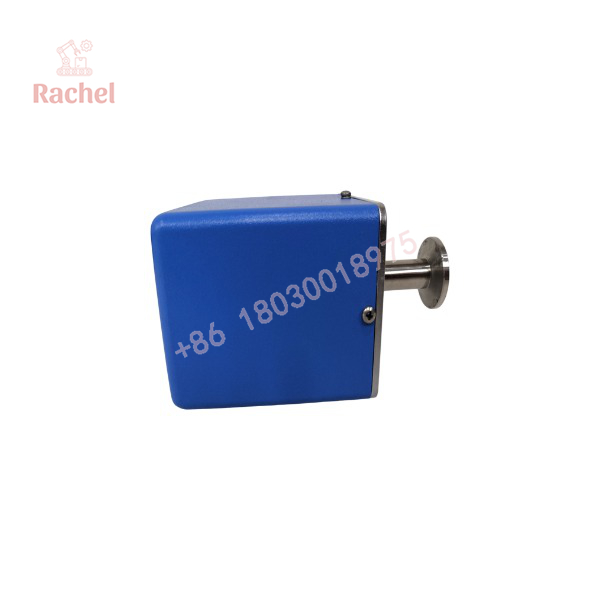
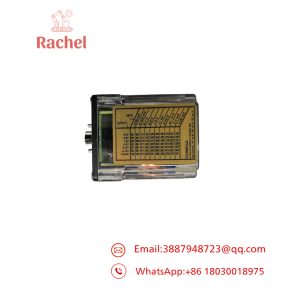
CMHT-11S02
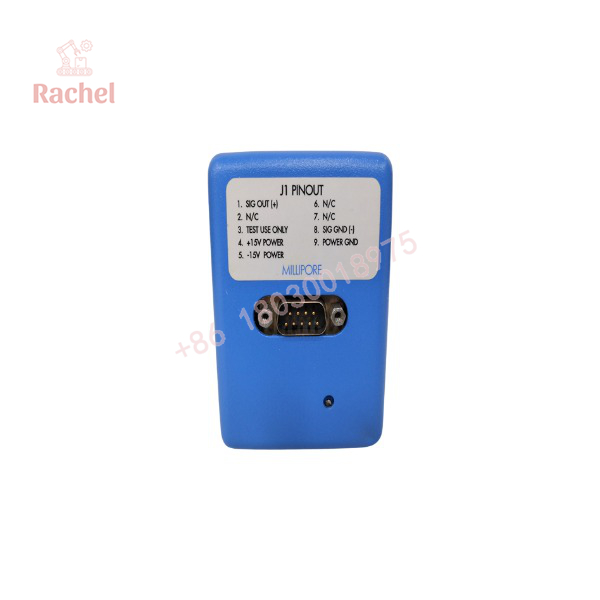
CMHT-11S02
Transparency SOP: Quality Assurance & Testing
We don’t just ship boxes; we test them on actual vacuum test stands and analyzer rigs. Every pre-owned or new-surplus CMHT-11S02 undergoes a rigorous multi-point inspection before leaving our facility:
- Inbound Physical & Seal Inspection: Check housing integrity, connector pins, process ports, and original OEM serial labels for signs of contamination or physical trauma.
- Electrical & Heater Circuit Check: Measure internal heater resistance to ensure proper temperature stabilization circuits function without shorting.
- Vacuum Station Test: Mount unit to a turbomolecular vacuum bench pulled down to 10^{-5} Torr to check zero-point offset stability.
- Span & Linearity Verification: Verify 0-10 VDC output against an NIST-traceable reference standard across the full 0-10 Torr scale.
- Final QC & ESD Packaging: Log zero offset values, seal process ports with cleanroom caps, and pack in anti-static, moisture-barrier packaging.
The Veteran’s Tech Trap Guide (Crucial Value-Add)
⚠️ Thermal Stabilization Required: Do not attempt to calibrate zero offset right after plugging the unit in. A heated capacitance manometer needs at least 2 to 4 hours powered on to reach thermal equilibrium. Adjusting zero cold guarantees massive drift as it warms up.
❗ Zero Adjustment Under Hard Vacuum Only: Always ensure your calibration manifold is pulled down well below the resolution of the gauge (at least 10 times lower than the lowest readable increment, ideally < 10^{-4} Torr) before tweaking the zero potentiometer. Zeroing it at ambient or rough vacuum will corrupt the entire measurement curve.
⚠️ Check the Cable Shielding & EMC Suffix: If replacing a CMHT-11S02-EMC unit, ensure your cable ground shield is fully tied back to the power supply ground. High-frequency RF noise from plasma generators can couple onto unshielded signal lines and cause erratic voltage spikes on the 0-10V feedback output.
❗ VCR Gasket Caution: Never reuse old silver-plated or copper VCR gaskets when reinstalling this gauge. A microscopic scratch on a used gasket will cause a micro-leak that looks like instrument drift. Always torque a new gasket to standard specs.
Frequently Asked Questions (FAQ)
Q: Can I hot-swap the CMHT-11S02 while the power supply is energized?
A: No. Unplugging or plugging in the 15-pin connector under power can cause arc-over across the \pm15 VDC and signal pins, potentially frying the internal sensor electronics or damaging the analog input card on your PLC/DCS.
Q: Is the Tylan CMHT-11S02 gas-dependent like a Pirani or thermocouple gauge?
A: No. Capacitance manometers measure true physical force (pressure) exerted by gas molecules against an internal diaphragm. The output voltage is identical whether you are measuring Argon, Nitrogen, Helium, or process gases.
Q: What is the difference between a CMHT unit and standard unheated CMM units?
A: The “H” in CMHT indicates a heated internal sensor enclosure. Heated units keep the diaphragm at a constant elevated temperature (typically 45°C or 100°C depending on sub-spec) to prevent volatile process gases from condensing inside the tube.
Q: Can I adjust the zero and span settings myself?
A: You can adjust the zero offset potentiometer during routine maintenance when under hard vacuum. However, span adjustments require a calibrated vacuum standard bench. Do not adjust the span pot in the field unless you have NIST-traceable calibration equipment connected.
Q: Does this module come with a warranty?
A: Yes. All new surplus and refurbished CMHT-11S02 units supplied through our channel come backed by a comprehensive 12-month operational warranty.
Q: Why are surplus CMHT-11S02 gauges significantly cheaper than ordering a replacement directly from the OEM tool manufacturer?
A: Equipment manufacturers markup replacement instruments heavily. We source surplus stock directly from decommissioned semiconductor lines, fab upgrades, and surplus inventory reserves. Every unit undergoes full functional testing on vacuum stands to guarantee OEM-level performance at a fraction of the cost.

 Start Chat


