





Description
Product Introduction
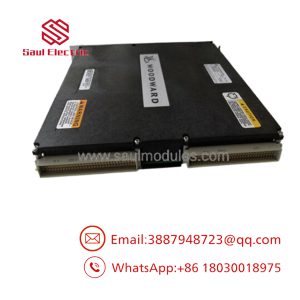
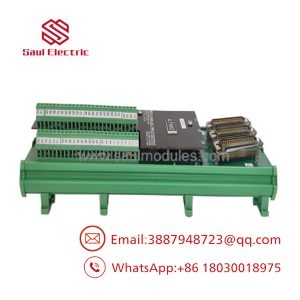
The Woodward 2301A 9907-018 is an industry-standard electronic speed and load control module designed for precise governing of diesel engines, gas engines, or steam turbines driving electrical generators. Housed in a rugged chassis with accessible potentiometers on the front face, this unit manages speed control, isochronous or droop load sharing, and ramp time controls without requiring complex programming tools or digital screens.
Configured for 24V DC nominal power systems (operating within a 20 to 40V DC range), the 9907-018 features a forward-acting output that delivers a 0–200 mA current signal to drive hydraulic or electric actuators (such as Woodward EGB, EG-3P, or EG-6P drives). Its high noise immunity and discrete circuit architecture make it a reliable control node in harsh industrial and marine environments where microprocessor-based governors might suffer from electrical transients or software lockups.
Key Technical Specifications
| Parameter | Value |
| Power Supply Input | 20 to 40V DC (24V DC Nominal), 5W maximum |
| Control Action | Forward Acting (Increased signal increases fuel delivery) |
| Actuator Output Current | 0 to 200 mA into a 30 to 35 \Omega actuator coil |
| Speed Sensor Input | Magnetic Pickup (MPU) generating 1.0 to 30.0V RMS |
| Speed Range | 500 Hz to 12,000 Hz MPU signal frequency range |
| Operating Modes | Isochronous or Droop (0 to 10% adjustable) |
| Load Sharing Input | \pm 6V DC parallel line connection |
| Ambient Temperature Range | -40°C to +85°C (-40°F to +185°F) |
| Vibration Resistance | Up to 4G at 5 to 500 Hz per marine/industrial specs |
| Enclosure Rating | Sheet metal chassis, surface or panel mount |
| Weight | Approx. 4.5 lbs (2.04 kg) |
Application Scenarios & The “Trench” Experience
Imagine an offshore drilling platform running a parallel array of three diesel generator sets during a storm. Suddenly, Gen 2’s governor fails, causing it to shed its load entirely. Gen 1 and Gen 3 take on the sudden spike, triggering a reverse-power trip that blackout-darkens the entire deck. The plant engineer steps up to the control room panel and finds the original 2301A board scorched from a line spike. Because the 9907-018 uses direct potentiometer adjustments rather than software parameters, swapping in a replacement unit takes 15 minutes: hook up the spade terminals, set the idle/rated pots, match the droop setting, and bring the generator back online before emergency batteries drop out.
- Emergency Diesel Generator (EDG) Sets: Maintains tight frequency regulation (50/60 Hz) and rapid transient recovery during sudden main bus load acceptance.
- Marine Auxiliary Power Systems: Manages parallel load sharing across multi-engine shipboard power grids driving 24V DC auxiliary systems.
- Islanded Microgrids & Remote Mining Operations: Controls gas engines operating in droop or isochronous modes under extreme ambient temperature shifts.
- Mechanical Drive Turbines: Governs speed loops on mechanical steam turbines driving boiler feed pumps or compressors.
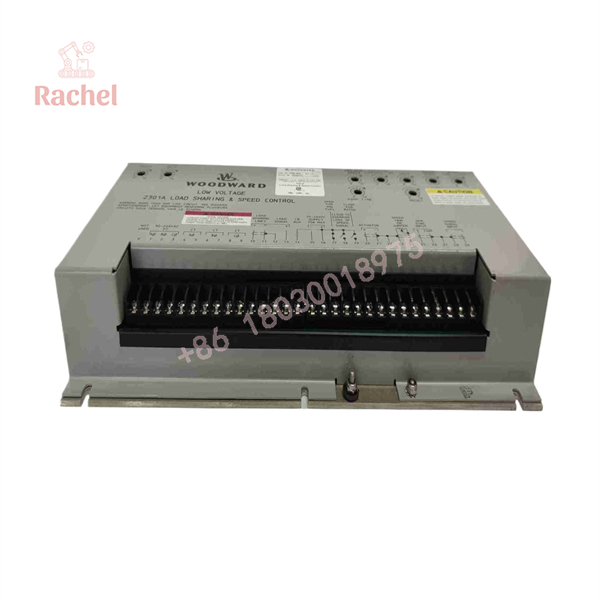
2301A 9907-018
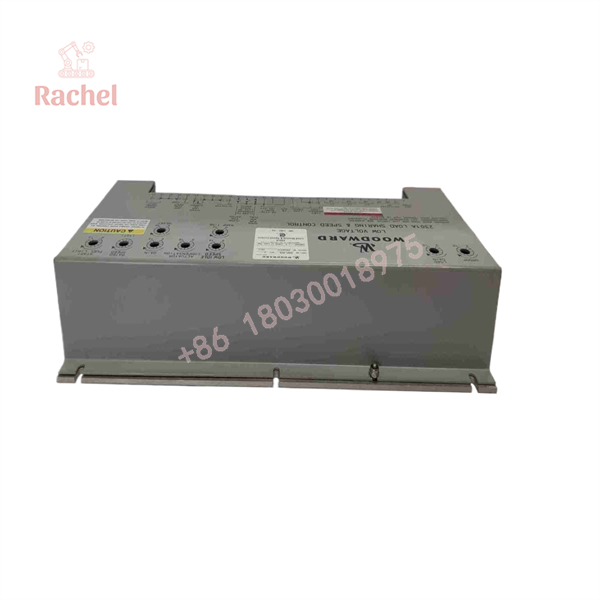
2301A 9907-018
Transparency SOP: Quality Assurance & Testing
We test our engine governor hardware on live signal benches. Here is how every Woodward 9907-018 unit is qualified before it leaves our shop:
- Inbound Visual & Component Inspection: Verification of PCB solder joints, potentiometer shaft condition, potted transformer seals, and terminal block terminal integrity.
- Power-On & Power Supply Tolerance: 24V DC power applied to confirm internal voltage regulators stay stable across the full 20V to 40V DC supply range.
- MPU Signal Generator Simulation: Variable frequency sine-wave signal fed into the Magnetic Pickup terminals to verify accurate frequency detection from 500 Hz to 10,000 Hz.
- Actuator Loop Current Load Test: Connect a 35 \Omega dummy actuator load and verify smooth 0 to 200 mA output current response across the full speed potentiometer sweep.
- Isochronous & Droop Circuit Test: Inject a simulated load-sharing voltage onto the parallel lines to confirm the control loop ramps fuel current up or down as expected.
- Anti-Static & Heavy-Duty Packaging: The board is wrapped in anti-static shielding film and packed in custom foam to absorb transit vibration.
The Veteran’s Tech Trap Guide (Crucial Value-Add)
In our field experience, field techs ruin governor replacements by skipping basic wiring and pot calibrations. Keep these traps in mind:
- ⚠️ Forward Acting vs. Reverse Acting: The 9907-018 is Forward Acting (0 mA = minimum fuel, 200 mA = maximum fuel). If you install this unit in place of a Reverse Acting module (e.g., 9907-014), the engine will immediately overspeed to destruction upon cranking! Verify your actuator behavior before applying power.
- ❗ Potentiometer Position Logging: Record or take a clear photo of every trim pot setting (Rated Speed, Idle Speed, Gain, Stability, Droop) on the old card before unmounting it. Setting pots back to factory mid-points will cause massive hunting or failure to reach rated speed during first start.
- ⚠️ Shielded MPU Cable Grounding: The Magnetic Pickup (MPU) wires must be twisted pair and shielded. Ground the shield at the 2301A end only. Grounding both ends creates a ground loop that introduces electrical noise, causing severe actuator jitter and frequency fluctuation.
- ❗ Jumper Configuration Check: Check the internal circuit board jumpers for speed range selection before installation. If your MPU pulse frequency doesn’t match the jumper setting, the governor will saturate the actuator output or refuse to govern.
Frequently Asked Questions (FAQ)
Q: What is the main difference between forward-acting and reverse-acting 2301A controls?
A: A forward-acting control (like the 9907-018) increases current to the actuator to increase fuel. A reverse-acting control decreases current to increase fuel (used with reverse-acting mechanical governors with hydraulic backup). Installing the wrong type will cause an instant runaway condition.
Q: Can I replace a 9907-018 with a digital Woodward governor like the 2301D or 723 series?
A: Yes, but digital units require parameter software, programming cables, and harness wiring changes. The 9907-018 allows an immediate direct swap using existing terminal wiring and analog potentiometer tuning.
Q: What should I do if the engine “hunts” (speed swings back and forth) after installation?
A: Hunting is usually caused by incorrect Gain or Stability pot settings. Turn the Gain pot counterclockwise slightly to lower loop sensitivity, then adjust the Stability pot until the speed settles. Also verify that the MPU signal voltage is above 1.5V RMS while cranking.
Q: Is this module compatible with non-Woodward actuators?
A: As long as the actuator operates within a 0–200 mA current range and has a coil resistance around 30 to 35 \Omega (or can be adapted with a series resistor), the 2301A can drive it successfully.
Q: What warranty coverage comes with this module?
A: We supply this unit with a full 12-month operational warranty. If it faults or fails under standard operating conditions within one year, we repair or replace it immediately.

 Start Chat


