





Description
Product Introduction
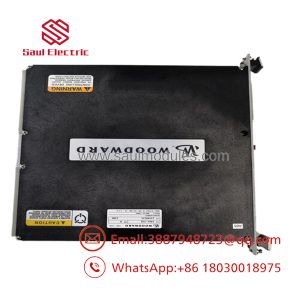
The Woodward 8237-1597 is a ProTech-GII Overspeed Protection System designed to provide an independent safety layer for steam turbines, gas turbines, and hydro turbines. Unlike the primary turbine controller, the ProTech-GII continuously monitors shaft speed using redundant speed inputs and trips the turbine whenever an overspeed condition or configured safety event occurs.
One important distinction is that this is not a governor or turbine controller. It is a dedicated Safety Instrumented System (SIS) device. The 8237-1597 uses a triple-module architecture with 2-out-of-3 voting logic, reducing nuisance trips while maintaining a high level of protection against dangerous overspeed events.
Key Technical Specifications
| Parameter | Value |
|---|---|
| Manufacturer | Woodward |
| Model | 8237-1597 |
| Product Family | ProTech-GII |
| Product Type | Overspeed Protection System |
| Mounting Style | Bulkhead Mount |
| Power Supply | High Voltage / High Voltage (HV/HV) |
| Input Architecture | Triple Redundant (3 Independent Modules) |
| Voting Logic | 2-out-of-3 (2oo3) |
| Relay Configuration | Voted Trip Relays |
| Speed Inputs | Triple Redundant Speed Sensors |
| Communications | Modbus® |
| Analog Output | 4–20 mA Speed Output |
| Supported Machines | Steam Turbines, Gas Turbines, Hydro Turbines |
| Primary Function | Independent Overspeed Shutdown Protection |
Application Scenarios & The “Trench” Experience
A gas turbine suddenly loses load after a generator breaker opens.
The governor immediately commands fuel reduction.
Unfortunately, the fuel valves hesitate.
Rotor speed climbs faster than expected.
This is exactly where the ProTech-GII earns its place.
Instead of relying on the turbine controller, the ProTech independently measures shaft speed. If the configured overspeed threshold is reached, it trips the turbine regardless of what the main controller is doing.
Typical Applications
Combined Cycle Power Plants — Gas turbine overspeed protection — Provides an independent shutdown path separate from the governor.
Steam Turbines — Emergency overspeed protection — Monitors turbine shaft speed using redundant magnetic pickups.
Hydroelectric Plants — Water turbine safety — Detects runaway turbine conditions following sudden load rejection.
Pipeline Compressor Stations — Driver turbine protection — Trips the machine before mechanical overspeed damages rotating equipment.
Industrial Cogeneration — Generator prime mover protection — Provides SIL-oriented overspeed protection independent of process control.
Field Replacement Example
A 25 MW steam turbine experienced repeated overspeed test failures during annual maintenance. Investigation showed one of the three speed sensing channels had developed intermittent signal loss. Because the ProTech-GII continued operating in its voting architecture, the turbine remained protected while maintenance diagnosed the fault. Engineers replaced the affected hardware, verified all three speed channels, completed the automatic overspeed test, and returned the unit to service without modifying the governor configuration.
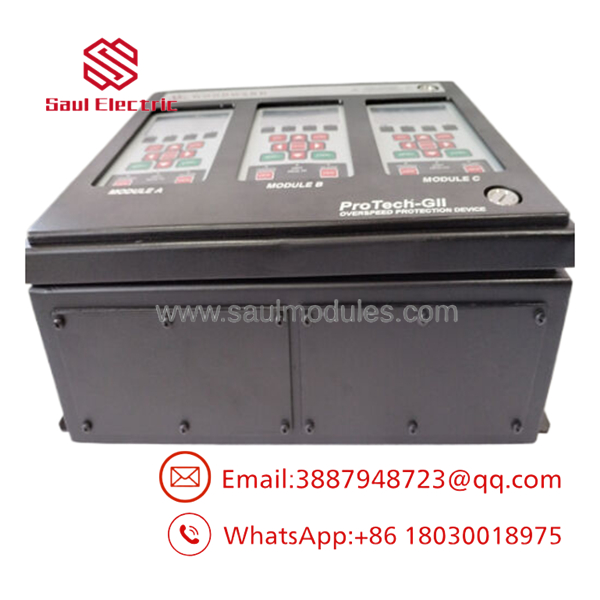
- 8237-1597
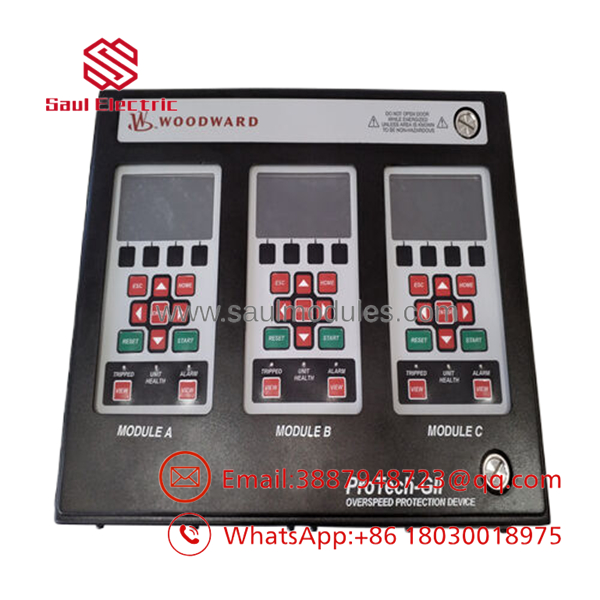
- 8237-1597
Transparency SOP: Quality Assurance & Testing
We don’t just ship boxes; safety systems are tested on compatible Woodward hardware whenever practical.
- Inbound Inspection
- Verify Woodward serial number and hardware revision.
- Inspect enclosure, connectors, and terminal blocks.
- Check tamper seals and evidence of previous repairs.
- Live Rig Testing
- Verify complete boot sequence.
- Test all three speed input channels.
- Confirm relay operation.
- Verify Modbus communication.
- Perform overspeed simulation.
- Electrical Parameter Checks
- Verify power supply operation.
- Test analog 4–20 mA output.
- Confirm relay timing.
- Verify diagnostic alarms.
- Firmware Verification
- Record firmware revision.
- Verify hardware configuration.
- Confirm diagnostic status.
- Final QC & Packaging
- Complete functional inspection.
- Anti-static protection.
- Shock-resistant packaging.
- Full serial number traceability.
The Veteran’s Tech Trap Guide
⚠️ Never assume all ProTech-GII models are interchangeable.
The 8237-1597 is specifically the Bulkhead Mount, HV/HV, Voted Relay configuration. Other ProTech-GII models differ in mounting style, power supply, relay architecture, and input configuration. Always verify the complete part number before ordering.
⚠️ Verify every speed probe before replacing the unit.
Many overspeed alarms originate from damaged magnetic pickups, wiring faults, or incorrect probe gaps—not from the ProTech itself.
❗ Perform an overspeed functional test after installation.
Installing the hardware is only half the job. Confirm that every speed channel, trip relay, and shutdown circuit operates correctly before returning the turbine to service.
⚠️ Match the firmware revision.
Woodward provides field software conversion kits for supported revisions. Mixing incompatible revisions may affect configuration import or available features.
Frequently Asked Questions (FAQ)
Q1. What is the Woodward 8237-1597?
The 8237-1597 is a ProTech-GII turbine overspeed protection system that independently monitors turbine speed and trips the machine if configured overspeed limits are exceeded. It is intended as a dedicated safety device rather than a turbine controller.
Q2. Which turbines can use the 8237-1597?
It is designed for steam turbines, gas turbines, and hydroelectric turbines, providing independent overspeed protection across a wide range of rotating equipment.
Q3. What does “2-out-of-3 voting” mean?
The system contains three independent speed-monitoring channels. Under normal configuration, two channels must agree before a trip command is issued, improving fault tolerance while reducing nuisance trips.
Q4. Can the unit communicate with a DCS or PLC?
Yes. The ProTech-GII supports Modbus communication and provides a 4–20 mA speed output, allowing integration with DCS, PLC, or turbine monitoring systems while keeping the safety function independent.
Q5. Is the 8237-1597 still supported?
Yes. Woodward identifies 8237-1597 as a preferred ProTech-GII model. Older models such as 8237-1247 Rev D or newer can be converted to this configuration using approved conversion procedures.
Q6. Does replacing the unit require configuration?
Yes. Trip setpoints, speed probe configuration, relay assignments, communication parameters, and overspeed test settings should be verified or restored after installation before the turbine is returned to operation.
Q7. What should be verified before commissioning?
Confirm the 8237-1597 part number, mounting configuration, HV/HV power supply, speed probe type and wiring, trip relay logic, Modbus settings, firmware revision, and all overspeed setpoints. Before placing the turbine back into service, perform a complete functional trip test and verify that each of the three speed channels responds correctly under simulated overspeed conditions.


 Start Chat


