





Description
Product Introduction
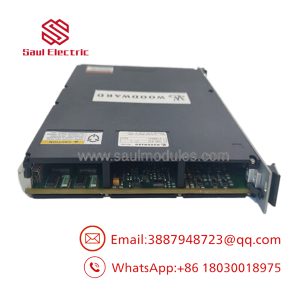
The Woodward 8290-185 is an EPG (Electrically Powered Governor) Isochronous Speed Control module developed for industrial gasoline and natural gas engines driving generators, compressors, and other constant-speed equipment. Unlike mechanical governors, it uses an electronic control algorithm and magnetic pickup feedback to maintain engine speed as load changes occur.
One thing to watch out for is that this controller is intended for 24 VDC systems and specifically supports 524 and 1724 electric actuators. It also incorporates a Start Fuel Limit function to reduce excessive fuel delivery during engine cranking, helping improve starting stability and limiting smoke on applicable engines.
Key Technical Specifications
| Parameter | Value |
|---|---|
| Manufacturer | Woodward |
| Model | 8290-185 |
| Product Family | EPG (Electrically Powered Governor) |
| Product Type | Isochronous Electronic Speed Controller |
| Supply Voltage | 24 VDC |
| Control Mode | Isochronous Speed Control |
| Engine Type | Gasoline or Natural Gas |
| Start Fuel Limit | Supported |
| Compatible Actuators | Woodward 524, 1724 |
| Speed Signal | Magnetic Pickup |
| Recommended Speed Range | 3000–6000 Hz MPU Frequency |
| Maximum Power Consumption | 95 W |
| Ambient Temperature | –40°C to +75°C |
| Terminal Type | Screw Clamp |
Application Scenarios & The “Trench” Experience
The generator starts normally.
No alarms appear.
Then a large motor starts.
Engine speed immediately hunts.
Operators assume the actuator has failed.
To be honest, the actuator often isn’t the problem.
In older EPG systems, unstable speed regulation is frequently caused by poor magnetic pickup signals, incorrect governor adjustments, or deteriorated electronic speed controllers. Replacing a failing 8290-185 restores stable engine speed without replacing the entire governor system.
Typical Applications
Natural Gas Generator Sets — Constant-speed power generation — Maintains stable engine frequency during changing electrical loads.
Industrial Gas Engines — Compressor drives — Controls engine speed for process stability.
Standby Generator Systems — Emergency power — Maintains generator frequency during sudden load acceptance.
Oil & Gas Facilities — Auxiliary engines — Provides electronic governor control without hydraulic governors.
Industrial Pump Drives — Fixed-speed operation — Delivers consistent speed regulation under varying mechanical loads.
Field Replacement Example
During commissioning of a 500 kW natural gas generator, operators observed engine hunting whenever the load exceeded 60%. Fuel pressure, ignition timing, and actuator linkage all checked out. Engineers connected an oscilloscope to the magnetic pickup and verified a clean speed signal before replacing the aging 8290-185 controller. After recalibrating gain and stability settings, the generator maintained rated frequency within specification throughout full-load testing. The actuator itself required no replacement.
-
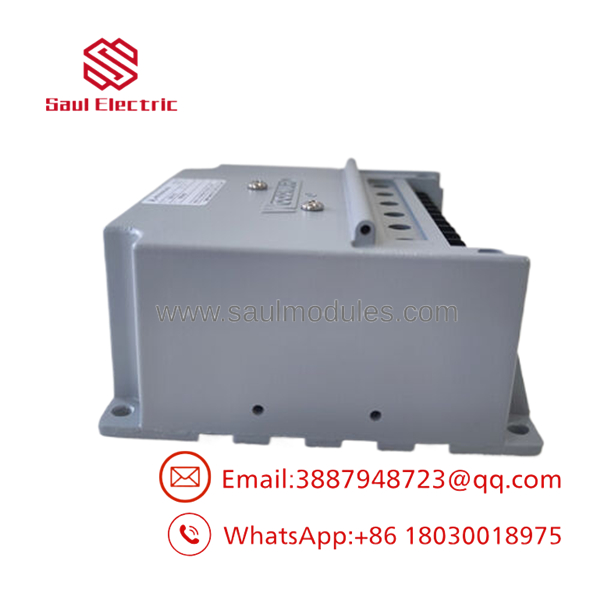
- 8290-185
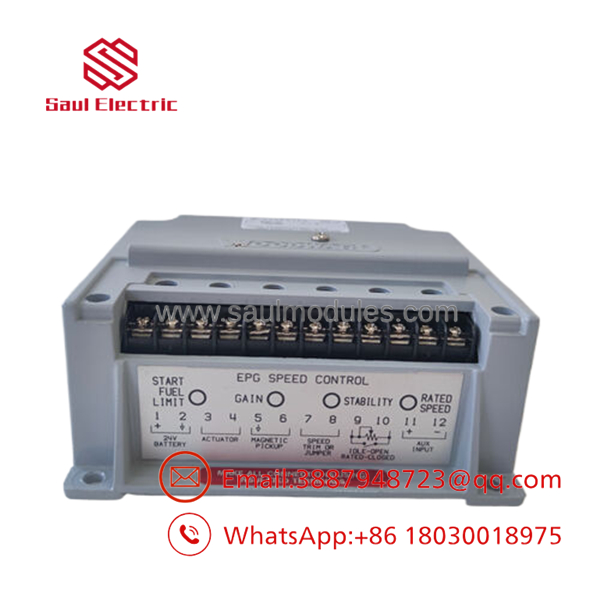
- 8290-185
Transparency SOP: Quality Assurance & Testing
We don’t just ship boxes; every Woodward governor controller is tested on compatible EPG hardware whenever practical.
- Inbound Inspection
- Verify Woodward identification label and hardware revision.
- Inspect housing, connectors, and terminal screws.
- Check for corrosion, impact damage, and unauthorized repairs.
- Live Rig Testing
- Power the controller using a regulated 24 VDC supply.
- Simulate magnetic pickup frequency.
- Verify actuator drive output.
- Confirm Start Fuel Limit operation.
- Electrical Parameter Checks
- Measure supply current.
- Verify output response.
- Perform thermal stability testing.
- Confirm control response under varying frequency inputs.
- Compatibility Verification
- Record hardware revision.
- Verify compatibility with 524 and 1724 actuators.
- Final QC & Packaging
- Functional inspection report.
- Anti-static packaging.
- Shock-resistant shipping.
- Complete product traceability.
The Veteran’s Tech Trap Guide
⚠️ Don’t replace the controller before checking the magnetic pickup.
Weak or noisy MPU signals frequently cause unstable governing even when the controller is operating correctly.
⚠️ Verify the supply voltage.
The 8290-185 is a 24 VDC controller. Installing it on a 12 VDC system will prevent proper operation.
❗ Don’t skip actuator inspection.
Sticky linkage, worn bearings, or excessive backlash can produce speed hunting that looks like an electronic governor fault.
⚠️ Adjust gain carefully.
Increasing gain to eliminate droop can create oscillation under heavy load. Make adjustments with the engine operating under representative load conditions.
Frequently Asked Questions (FAQ)
Q1. What is the Woodward 8290-185?
The 8290-185 is an EPG Isochronous Electronic Speed Control designed for 24 VDC gasoline and natural gas engines. It maintains constant engine speed by controlling a compatible Woodward electric actuator.
Q2. Which actuators are compatible?
The controller is designed for Woodward 524 and 1724 electric actuators. These actuator models are specified by Woodward for use with the 8290-185.
Q3. What is the purpose of the Start Fuel Limit feature?
The Start Fuel Limit temporarily limits actuator travel during engine cranking, reducing excessive fuel delivery and improving engine starting behavior on compatible gasoline and natural gas engines.
Q4. Can this controller operate diesel engines?
No, not this version. The 8290-185 is intended for gasoline or natural gas engines. Woodward offers different EPG controller variants for diesel applications. Always verify the exact part number before replacement.
Q5. Does the controller require hydraulic oil?
No. The EPG system is fully electronic and drives an electric actuator. It does not require a mechanical governor drive or an external hydraulic oil supply.
Q6. Why is the 8290-185 still widely used?
Many industrial generator sets, compressor packages, and stationary gas engines continue operating with Woodward EPG governor systems. Replacing the controller is often far more economical than upgrading the complete governor package.
Q7. What should be verified before installation?
Verify the 8290-185 part number, confirm a 24 VDC power supply, inspect the 524 or 1724 actuator, verify magnetic pickup output and air gap, check all governor wiring, and record the existing gain, stability, and speed settings before removing the old controller. After installation, perform a full-load speed stability test and confirm frequency regulation under normal operating conditions.

 Start Chat


