





Description
Product Introduction & Engineering Value
Option C (The Veteran’s Take): Anyone who has ever stood in front of a switchgear line waiting for a legacy analog synchronizer to catch a moving phase window knows how stressful a manual grid tie-in can be. The Woodward 5448-906 REV:SPM-D10 cuts out the guesswork entirely by replacing drift-prone analog circuitry with a dedicated microprocessor core. It handles automated voltage, phase, and slip frequency matching quickly, protecting your generator shafts from high torque shocks during close-in sequences.
This platform is a long-standing standard for three-phase AC generator integration. It uses discrete bias signal commands to communicate directly with automatic voltage regulators (AVRs) and speed governors. This eliminates the need for external signal conversion hardware, providing a reliable, self-contained solution for islanded multi-generator hubs and automated utility parallel configurations.
Technical Specifications
| Parameter | Performance Baseline |
| Logic Supply Voltage | 24 VDC nominal range |
| AC Phase Voltage Inputs | 100 VAC nominal measuring scale |
| Sampling Processing Rate | High-fidelity internal tracking execution |
| Sensing Configuration | 3-phase / 4-wire voltage measurement tracking (YB type) |
| System Frequency Range | 40 to 70 Hz processing capability |
| Bias Output Type | Discrete contacts for contactor raise/lower speed & voltage tuning |
| Local HMI Display | Two-line backlight liquid crystal text screen with LED synchroscope |
| Breaker Output Control | 1 dedicated isolated relay contact block |
| Housing Dimensions | Standard DIN 43 700 compact panel cutout frame |
Field Application & The “Trench” Experience
The “Trench” Story
A peak-shaving diesel generator plant at a major processing facility suffered a lightning strike that bypassed their surge suppression cabinet, frying the internal logic boards of their primary utility tie-in synchronizer. The facility could not parallel their 2.5 MW genset with the incoming power line, risking heavy demand penalties from the utility company during peak operational hours. We pulled a verified 5448-906 module from our warehouse stock and got it to the site immediately. The electrical supervisor installed the unit into the existing door cutout, adjusted the breaker closing delay profile via the front-face interface buttons, and completed a perfect, vibration-free automated zero-phase tie-in during the next high-demand period.
Specific Application Scenarios
- Hydraulic Turbine Co-Generation Plants: Controls automatic grid-tie transitions under fluctuating water head pressures using fast-acting discrete speed biasing commands.
- Hospital Standby Multi-Genset Paralleling: Manages rapid synchronization of a secondary diesel plant into a de-energized or isolated emergency bus system.
- Industrial Landfill Methane Generation Loops: Synchronizes soft-reacting gas engine power blocks with the utility grid while providing active phase mismatch protection.
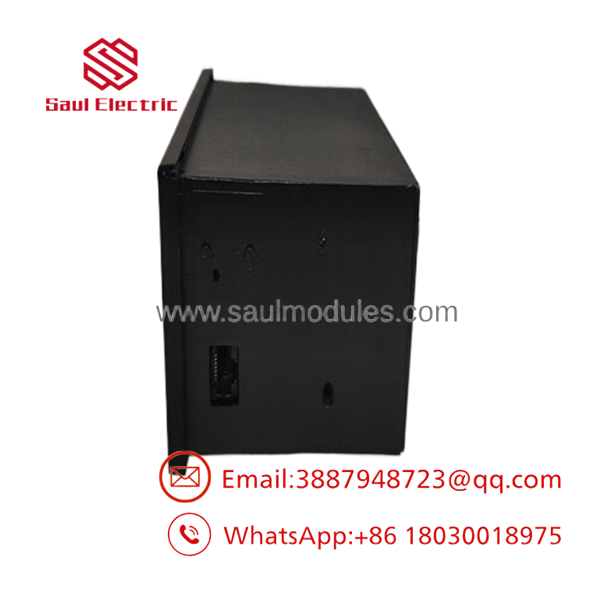
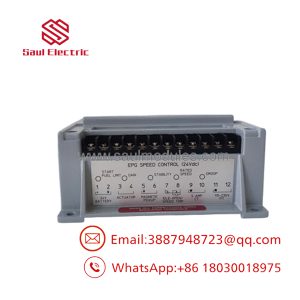
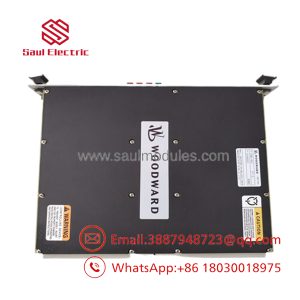
- 5448-906 REVSPM-D10
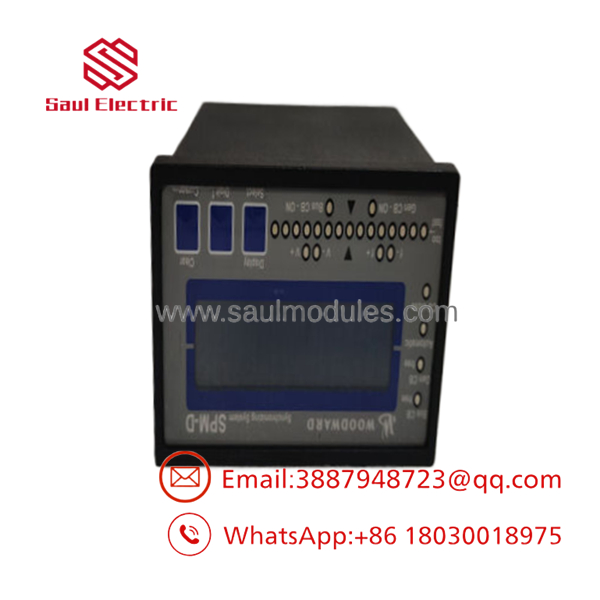
- 5448-906 REVSPM-D10
Transparency SOP: QA & Testing
Every Woodward 5448-906 synchronizer module goes through a comprehensive functional verification process before packaging:
- [ ] AC Voltage Input Calibration: We feed an exact 100 VAC reference into both the generator and busbar sensing terminals to confirm correct line readings on the LCD screen.
- [ ] Frequency Tracking Verification: We simulate frequency drift across the 40 to 70 Hz range to verify that the internal processor calculates phase differences accurately.
- [ ] Discrete Command Loop Test: We check the physical operation of the raise/lower relay outputs under load to verify clean governor command signals.
- [ ] Breaker Closure Timing Validation: We test the breaker output contacts to confirm that the synchronization commands trigger at the precise zero-phase intercept.
The Veteran’s Tech Trap Guide (Crucial Value-Add)
- ⚠️ Breaker Closing Time Compensation: When setting up a replacement 5448-906, always verify and enter the precise physical closing time delay of your circuit breaker (typically between 40ms to 120ms) into the module parameter settings. Failing to program this delay means the synchronizer will send the close signal at exactly zero degrees, but by the time the mechanical breaker contacts close, the phase will have shifted. This can cause an out-of-phase connection that could damage your generator components.
- PRO TIP: Double-check your phase rotation wiring sequences before starting up for the first time. The SPM-D10 assumes standard A-B-C rotation. If your generator or bus sensing wires are reversed (e.g., A-C-B), the unit will see a constant phase error and refuse to give a closing command, or it may trigger a mains fault protection state.
- ⚠️ Biasing Pulse Configuration: Ensure your speed governor or AVR control settings match the pulse duration configured in the 5448-906. If the discrete raise/lower pulses are too long, the system will overshoot the synchronization point, causing the generator speed to hunt continuously without locking into step.
Dynamic FAQ
- Q: Can this 5448-906 module handle analog ±10V governor inputs directly?
- A: No. The 5448-906 model relies on discrete raise/lower relay pulse commands to adjust speed and voltage controls. If your control loop uses an analog bias input, you will need an SPM-D series variant that features dedicated analog bias outputs.
- Q: Is the 5448-906 configuration saved if the 24 VDC system power drops out?
- A: Yes. All parameters, phase timing configurations, and breaker settings are saved in non-volatile memory, preventing any data loss during a power outage.
- Q: Can this synchronizer be used with 400 VAC systems?
- A: This model has 100 VAC measuring inputs. To use it on a higher voltage line, such as a 400 VAC system, you must route the sensing lines through external step-down potential transformers (PTs) to drop the voltage to the correct 100 VAC range.
- Q: What is the recommended upgrade path if our facility wants to migrate to the newer SPM-D2 family?
- A: Woodward offers the SPM-D2-10/YB series as a drop-in replacement that matches the form, fit, and functions of older units while adding USB connectivity for ToolKit programming software.

 Start Chat


