





Description
Product Introduction & Engineering Value
Few things are more frustrating than an unexplainable position error fault causing a turbine shutdown mid-sequence. This issue often stems from high-frequency LVDT processing lag overloading your central processor, resulting in unstable valve positioning loop responses. The Woodward 5501-432 eliminates this vulnerability by shifting the entire closed-loop position calculation directly to dedicated onboard microcontrollers. It maintains tight feedback loops locally, keeping high-frequency sensor communication off the primary backplane data lanes.
Industrial control teams use this module to bridge digital control logic with rugged fluid-drive actuators. It provides dual-channel isolation that prevents external field-wiring electrical transients from damaging sensitive internal system processors. When your operations require precise fuel or steam distribution under shifting system loads, this dedicated card delivers the localized, low-latency control required to maintain system stability.
Technical Specifications
| Core Parameter | Functional Specification |
| Channel Count | 2 Independent, Isolated Positioning Loops |
| Nominal Drive Current | ±200 mA Bipolar Loop Capability |
| Peak Driver Output | 245 mA Maximum Output Limits |
| Feedback Protocols | 1 or 2 LVDT/RVDT Transducers Per Channel |
| System Accuracy | 0.25% of Full Scale Loop Calibration at 25°C |
| Maximum Loop Tolerance | Within ±1% of program scale |
| Current Feedback Accuracy | Within ±5% of maximum scale limits |
| Chassis Power Requirements | +5 Vdc at 0.5 Amps & +24 Vdc at 1.0 Amp |
| Galvanic Isolation | 500 Vdc Field-to-Backplane Logic Protection |
Field Application & The “Trench” Experience
Stabilizing the Hunting Steam Inlet
We worked with a multi-turbine process plant where the main steam inlet valve began tracking erratically under high ambient conditions, threatening to trigger a high-vibration trip. The shift crew replaced the physical LVDT twice, but the problem persisted. When our diagnostic team looked closer, we discovered that the excitation oscillator on their legacy actuator driver card was drifting as the enclosure temperature rose. We swapped out the compromised card with a clean 5501-432 module from our inventory, downloaded the system parameters, and the valve stabilized immediately—saving the facility from an unplanned shutdown.
Specific Field Deployments
- Peaking Power Gas Turbine Fuel Controls: Managing dual-fuel liquid and gas valve systems that require dual LVDT feedback cross-checking.
- Extraction Steam Turbine Governor Upgrades: Direct control of high-volume integrating servo valves regulating high-pressure steam distribution headers.
- Hydraulic Variable Inlet Guide Vanes: Regulating air-flow volume in large industrial centrifugal compressors via high-speed proportional actuators.
Transparency SOP: QA & Testing
Our quality assurance team puts every incoming surplus 5501-432 card through a live validation process inside a dedicated MicroNet chassis. We power up the card to confirm the local logic processor clears its initial power-on self-test (POST). From there, we route both actuator driver channels into variable-impedance load banks that mimic the electrical properties of real industrial valve coils. We run full-range current sweeps up to 245 mA while feeding calibrated AC sensor signals back into the card to verify the 0.25% tracking accuracy remains stable across all operating zones. Finally, the card undergoes a thermal cycle test to ensure no component values drift when operational temperatures rise inside a sealed enclosure.
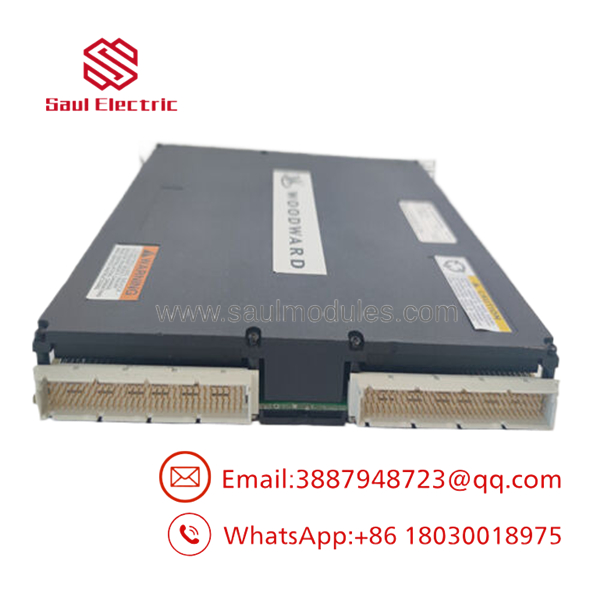
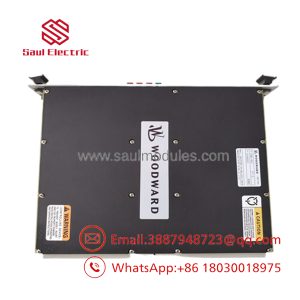
- 5501-432
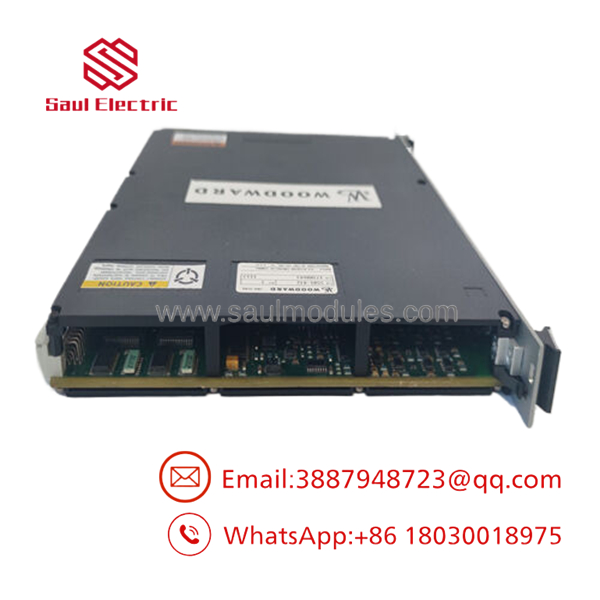
- 5501-432
The Veteran’s Tech Trap Guide (Crucial Value-Add)
⚠️ THE TRANSDUCER EXCITATION TRAP: The 5501-432 provides its own high-frequency AC excitation signal to power your LVDT or RVDT sensors. If you try to power your position sensors with an external AC source while they are connected to this card, or if you accidentally cross-wire the excitation pairs between channel 1 and channel 2, you will burn out the primary reference oscillator. Always verify your wiring pinout separation before applying chassis power.
PRO TIP: When installing this module as a replacement for older, four-channel actuator control cards (such as the legacy 5464 series), remember that you must rewrite your GAP (Graphical Application Programmer) software application blocks. The 5501-432 features a higher density, two-channel layout with different register addresses that will cause code execution faults if your software mapping isn’t updated.
Dynamic FAQ
Q: Do I need to manually re-calibrate the physical valve limits on the card itself using pots?
A: No, the 5501-432 does not use manual potentiometers. All loop tuning calibration, zero/span offsets, and PID loop parameters are adjusted digitally using Woodward software interfaces like Toolkit and are stored in the main system CPU.
Q: What type of field cables are required to interface with the 5501-432 plate connectors?
A: This module requires a low-density discrete (gray) cable assembly to route connections safely to your terminal blocks. Do not use high-density digital cables, even if the connectors look identical, as the pinouts will not align correctly.
Q: Can this module operate in a triple-modular redundant (TMR) MicroNet architecture?
A: Yes. The 5501-432 is compatible with both Simplex and TMR chassis systems. In TMR setups, the card handles split-path voting internally to maintain actuator control even if a single controller channel experiences a fault.
Q: How does the onboard hardware watchdog protect the system if the main CPU crashes?
A: The card monitors data communications from the master controller. If these signals cease for more than a few milliseconds, the local watchdog instantly forces the current outputs to a predetermined safe state (typically 0 mA or a fail-safe maximum position) to prevent uncommanded valve drift.

 Start Chat


