





Description
Product Introduction
The Woodward 5466-409 is a MicroNet™ TMR Pentium CPU module developed for high-availability turbine, compressor, and engine control systems. It serves as the primary processor responsible for executing real-time control algorithms, coordinating I/O processing, and managing communications across the MicroNet platform. It was widely deployed in power generation, oil & gas, and rotating equipment applications requiring deterministic control.
Unlike an analog I/O card or actuator driver, the 5466-409 is the computational core of the control chassis. It features a 233 MHz Pentium processor, 64 MB RAM, and operates on Windows NT 4.0 within the MicroNet architecture. One thing to watch out for is system compatibility. This module must match the existing chassis hardware, operating system, and application software. Simply installing another CPU without verifying the software image can prevent the control system from starting correctly.
Key Technical Specifications
| Parameter | Value |
|---|---|
| Manufacturer | Woodward |
| Model | 5466-409 |
| Product Family | MicroNet™ TMR |
| Product Type | CPU Module |
| Processor | Intel Pentium |
| CPU Speed | 233 MHz |
| Memory | 64 MB RAM |
| Operating System | Windows NT 4.0 |
| Function | Real-Time Control Processor |
| Installation | MicroNet TMR Chassis |
| Typical Applications | Steam Turbines, Gas Turbines, Compressors, Engine Control |
| Product Status | Legacy MicroNet CPU Module |
Application Scenarios & The “Trench” Experience
A gas turbine suddenly drops into shutdown.
Power supplies are healthy.
The field I/O modules still indicate normal status.
Communication LEDs continue flashing.
Then the CPU refuses to complete boot initialization.
I’ve seen maintenance teams replace I/O modules, Ethernet cards, and power supplies before realizing the processor itself had corrupted storage or an incompatible software image. The hardware wasn’t necessarily damaged. The application simply couldn’t initialize.
Typical Applications
Combined Cycle Power Plants — Gas turbine control — Executes real-time governor, sequencing, and protection logic.
Steam Turbines — Turbine governor systems — Coordinates valve positioning, overspeed protection, and process control.
Oil & Gas — Compressor control — Processes anti-surge control, speed regulation, and shutdown logic.
Pipeline Stations — Gas turbine compressor drives — Performs deterministic control under continuous operation.
Industrial Manufacturing — Critical rotating equipment — Maintains high system availability using MicroNet TMR architecture.
Field Replacement Example
A refinery experienced repeated startup failures after replacing a failed CPU board. The replacement hardware powered up normally but never entered application mode. Investigation showed that the installed processor contained a different software image than the original system. After restoring the archived application and confirming the correct Windows NT runtime environment, the control system booted successfully without changing any additional hardware.
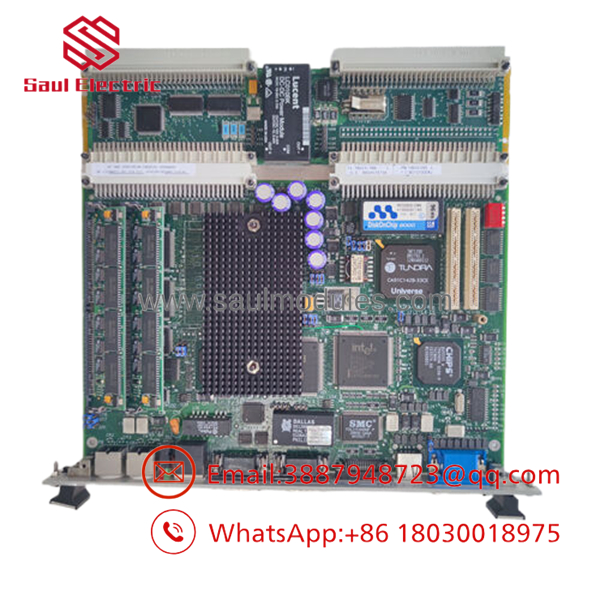
- 5466-409
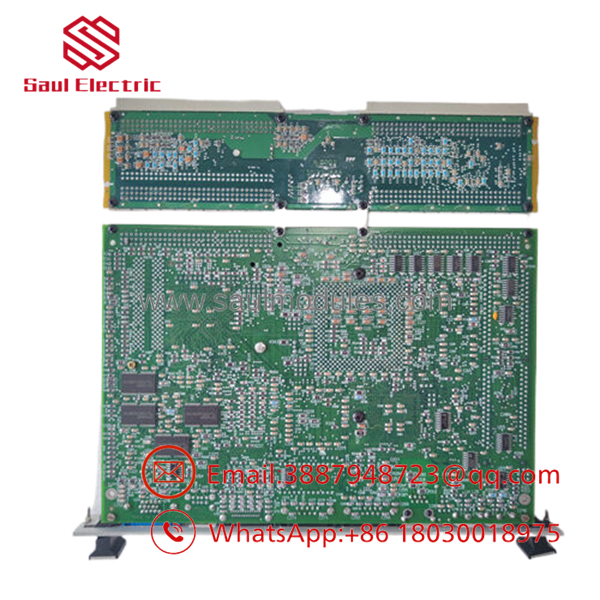
- 5466-409
Transparency SOP: Quality Assurance & Testing
We don’t just ship boxes; we test them on actual Woodward MicroNet racks whenever practical.
- Inbound Inspection
- Verify Woodward part number, serial number, and hardware revision.
- Inspect PCB, connectors, memory modules, and processor heat sink.
- Check for corrosion, overheating, or unauthorized repairs.
- Live Rack Testing
- Verify successful boot sequence.
- Confirm processor initialization.
- Test communication with MicroNet backplane.
- Verify watchdog operation.
- Confirm CPU diagnostics complete without faults.
- Electrical Parameter Checks
- Verify operating voltage.
- Test backplane communication.
- Verify processor stability during extended operation.
- Monitor temperature under load.
- Software Verification
- Record BIOS and firmware information.
- Verify operating system integrity.
- Confirm application loading capability.
- Final QC & Anti-static Packaging
- Complete operational inspection.
- ESD-safe packaging.
- Shock-resistant shipping.
- Full serial-number traceability.
The Veteran’s Tech Trap Guide
⚠️ Always back up the application before replacing the CPU.
The processor stores the control application. Losing the project files can extend an outage from one hour to an entire shift.
⚠️ Verify hardware revision compatibility.
Different generations of MicroNet processors may require different operating system versions, boot images, or application builds. Installing the wrong combination can prevent startup.
❗ Don’t blame the CPU immediately.
Power supply instability, damaged backplane connectors, or failed CompactFlash/storage media can produce symptoms identical to a processor failure.
⚠️ Check every Ethernet and network configuration.
After CPU replacement, communication parameters, IP addresses, and controller identification may need to be restored before the DCS or SCADA system reconnects.
Frequently Asked Questions (FAQ)
Q1. What is the Woodward 5466-409?
The 5466-409 is a MicroNet TMR Pentium CPU module that executes the real-time control software for Woodward MicroNet turbine and engine control systems. It features a 233 MHz Pentium processor with 64 MB RAM running Windows NT 4.0.
Q2. Is this an I/O module?
No. It is the primary CPU module responsible for executing the application software and coordinating communications with all installed I/O modules.
Q3. Can it replace another MicroNet CPU?
Possibly, but not automatically. Verify the hardware revision, operating system, application software, chassis compatibility, and licensing before replacement. Even processors with similar specifications may not be interchangeable without software migration.
Q4. Does it support redundant systems?
Yes. The 5466-409 was designed for use within MicroNet TMR (Triple Modular Redundant) architectures where high system availability is required.
Q5. Can the CPU be replaced while the system is operating?
No. Removing the processor from an active control chassis can stop the control application and may result in turbine, engine, or compressor shutdown. Follow plant lockout/tagout procedures and the OEM replacement procedure.
Q6. Why are surplus CPU modules still in demand?
Many utilities, refineries, and industrial plants continue operating proven MicroNet systems because complete control system migration is expensive and often requires extended plant outages. Maintaining tested spare CPU modules significantly reduces recovery time after a hardware failure.
Q7. What should be verified before installation?
Confirm the 5466-409 part number, hardware revision, operating system version, application software image, chassis compatibility, network configuration, controller database, and backup files. Before returning the unit to service, verify successful system boot, I/O communication, controller




 Start Chat


