





Description
Product Introduction & Engineering Value
Nothing stops an emergency diesel cycle faster than a transfer switch controller that cannot accurately differentiate between a momentary line dip and a total phase loss. The Woodward 8440-1849 D eliminates this risk by incorporating high-speed, True RMS sensing directly into its baseline firmware footprint. By filtering out the harmonic distortion common to degraded commercial infrastructure, it ensures the transfer sequence is triggered only when real voltage limits are crossed, saving your starter motors from short-cycling.
Plant operators rely on this specific DTSC-50 layout because it strips away excessive network protocols in favor of dedicated, deterministic open-transition hardware. It features hardwired electrical interlocks built into the logic registers, preventing both supply breakers from slamming closed simultaneously and threatening backplane safety. When backup power synchronization demands predictable, standalone execution without software baggage, this card forms the backbone of the switchgear cabinet.
Technical Specifications
- DC Supply Window: 6.5 to 40.0 Vdc continuous battery input
- Sensing Mode: True RMS AC voltage tracking across multiple phase configurations
- Supported Topologies: 1-Phase 2-Wire, 1-Phase 3-Wire, 3-Phase 3-Wire, 3-Phase 4-Wire
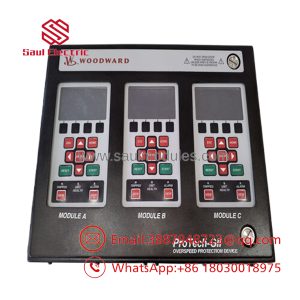
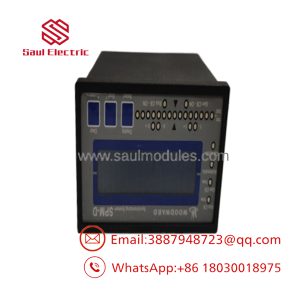
- Operator Interface: Six high-visibility 7-segment LED screens paired with dedicated status indicators
- Interlocking Architecture: Internal breaker position cross-checks via configured discrete inputs
- Transition Mode: Open-transition control logic (break-before-make)
- I/O Capacity: Freely programmable discrete inputs and output relays
- Diagnostics Array: Real-time logging of event histories, counter accumulation, and critical voltage faults
- Housing Form: Fully enclosed flush-mount flush casing with removable connection terminal rails
Field Application & The “Trench” Experience
The Out-of-Phase Utility Flash
We evaluated a hospital standby annex where the main utility leg suffered an un-cleared line-to-ground fault. The existing controller registered a brownout but failed to wait for the contacts to fully clear before signaling the engine breaker to seat. The resulting out-of-phase connection sheared the isolation bolts on the emergency generator housing. We gutted the layout, mounted a clean 8440-1849 D chassis, and mapped the auxiliary breaker contacts to the device’s internal interlock block. On the subsequent grid simulation, the module verified a clean break-before-make path, allowing the engine to pick up the emergency lighting panels without drawing a single amp of circulating current.
Targeted Engineering Scenarios
- Emergency Infrastructure ATS Panel Management: Orchestrating immediate engine start signals and load transfers for dedicated standby systems.
- Remote Telecom Shell Protection: Supplying low-draw DC utility tracking loops for off-grid battery arrays and micro-generator sheds.
- Industrial Compressor Bus Switching: Handling automated bus swaps for critical process motors requiring structured open-transition timings to allow residual rotor fields to decay.
Transparency SOP: QA & Testing
Our automated intake loop subjects every incoming 8440-1849 D to an engineering assessment:
- Hardware Power Scan: We bring the module up across its lower bounds (6.5 Vdc) to ensure the logic boards initialize cleanly without voltage sagging.
- Phase Injection Profiling: We route three-phase 480 Vac parameters into the voltage sensing pins, verifying that the True RMS tracking correlates perfectly to our reference meters.
- Transition Timing Audits: Every discrete output relay is tracked with an electronic logger to ensure the open-transition delay window stays within millisecond limits.
- Membrane & LED Sweep: The 7-segment arrays and front keypad switches undergo physical actuation mapping to verify environmental seals remain uncompromised.
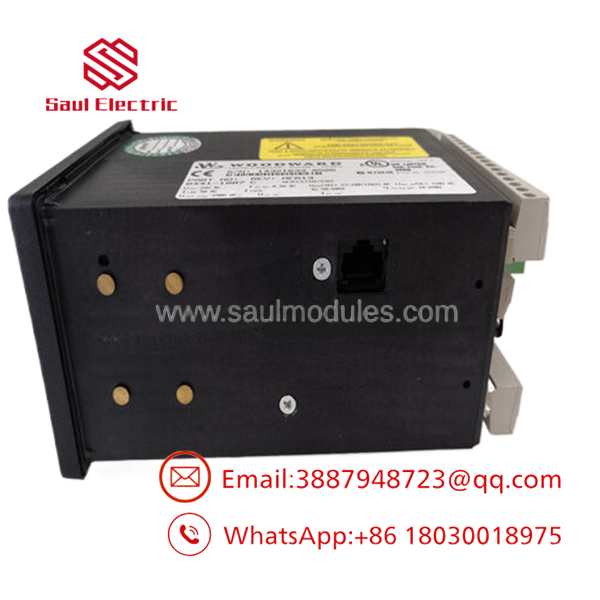
- 8440-1849 D
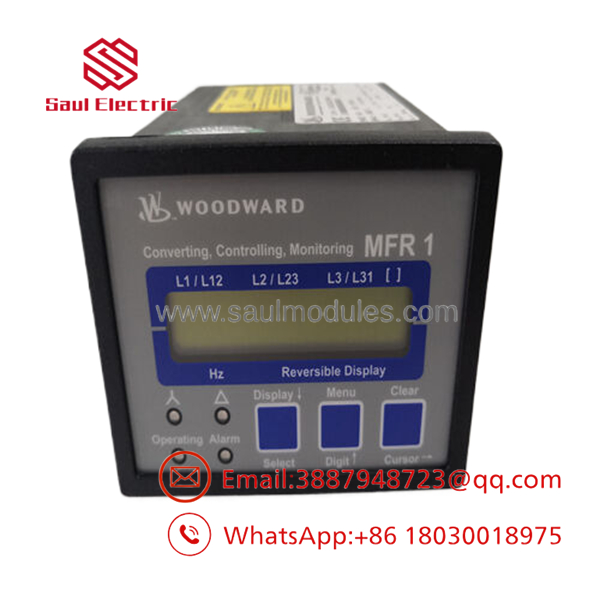
- 8440-1849 D
The Veteran’s Tech Trap Guide (Crucial Value-Add)
⚠️ THE FORGOTTEN COOLDOWN CYCLE: If you map the 8440-1849 D “Remote Start” contacts directly to your engine panel without defining the internal cooldown registers, the unit will stop the engine immediately upon utility return. Dropping a highly loaded diesel generator down to a dead stop without a zero-load cooling period causes thermal distortion in the turbocharger bearings. Always double-check your return-timer settings.
PRO TIP: Keep your password assignments uniform when updating these modules via the PC service tool. If a technician locks out the front panel and loses the communication config file, the 8440-1849 D cannot be bypassed or reset externally. You will be forced to pull the unit entirely from the panel and return it for low-level recovery.
Dynamic FAQ
Q: Can this module be used for closed-transition (momentary parallel) transfers?
A: No. The 8440-1849 D is strictly an open-transition (break-before-make) controller. If your application requires active synchronization and zero-break power overlapping, you must upgrade to the larger easYgen or SPM series blocks.
Q: My panel distributes a 48V auxiliary station battery. Can I run this unit directly off that line?
A: The absolute upper input limit for the 8440-1849 D power rails is 40.0 Vdc. Hooking it directly up to a floating 48V system (which frequently floats near 54V during charging) will damage the primary regulator. You must employ a step-down DC-DC transducer.
Q: How does the unit keep track of generator hours if the main battery is disconnected?
A: All maintenance schedules, operation hour tallies, and transfer logs are written directly to internal non-volatile NVRAM structures. Main battery isolation does not overwrite or wipe your operational stats.
Q: What is the significance of the “D” suffix on this specific Woodward part number?
A: The “D” identifier specifies the exact software bundle and terminal configurations native to the standard industrial DTSC distribution line, verifying that it carries the integrated LED faceplate interfaces rather than a blind-mount back-panel execution.

 Start Chat


