





Description
Product Introduction
The Woodward 8200-226 is an SPC (Servo Position Controller) designed to accurately position hydraulic or pneumatic actuators in turbine, engine, and compressor control systems. Rather than functioning as a standalone governor, it receives a position demand from a host controller and drives the actuator while continuously monitoring position feedback. It replaces earlier SPC models 8200-224 and 8200-225.
Compared with conventional analog actuator drivers, the 8200-226 offers configurable actuator current ranges, integrated diagnostics, and PC-based calibration. It supports DeviceNet and analog command signals, making it suitable for both retrofit projects and new control cabinets where accurate valve positioning is required.
Key Technical Specifications
| Parameter | Value |
|---|---|
| Manufacturer | Woodward |
| Model | 8200-226 |
| Product Family | SPC (Servo Position Controller) |
| Product Type | Closed-Loop Servo Position Controller |
| Input Supply | 18–32 VDC (24 VDC nominal) |
| Typical Power Consumption | Approximately 20 W |
| Command Inputs | DeviceNet or 4–20 mA Analog |
| Position Feedback | Single or Dual LVDT/RVDT, DC Position Transducer |
| Actuator Output | Configurable ±10, ±25, ±50, ±100, ±250 mA |
| Communication | DeviceNet, RS-232 Service Port |
| Configuration | PC-Based SPC Service Tool |
| Diagnostics | Overcurrent, Open Circuit, Short Circuit, Communication Fault, Internal Self-Test |
The controller is designed for precision positioning of hydraulic and pneumatic actuators and includes configurable calibration and diagnostic functions.
Application Scenarios & The “Trench” Experience
Valve position errors rarely begin with the actuator.
One shift, the steam turbine refuses to stabilize. The valve keeps hunting, operators blame the hydraulic actuator, and maintenance prepares to replace expensive hardware. Two hours later the real problem appears—a failed SPC controller that can no longer regulate actuator current correctly.
That scenario is far more common than most plants expect.
Typical Applications
Power Generation — Steam Turbine Governor Systems — Drives electro-hydraulic actuators controlling turbine inlet valves.
Oil & Gas — Compressor Anti-Surge Control — Positions recycle valves with high repeatability during changing process conditions.
Gas Turbines — Fuel Valve Positioning — Converts position demand into precise actuator current for stable combustion control.
Marine — Engine Governor Systems — Controls throttle actuators while maintaining engine speed under varying load.
Industrial Process Plants — Process Valve Positioning — Supports hydraulic or pneumatic actuators requiring closed-loop control.
Field Replacement Example
During a scheduled outage at a petrochemical facility, engineers observed unstable turbine valve movement after startup. The hydraulic actuator passed every bench test, yet valve response remained erratic. The SPC controller was replaced with a verified 8200-226, the original calibration file was restored, actuator stroke was recalibrated, and the turbine completed commissioning without replacing any mechanical components. The repair avoided an extended outage and unnecessary actuator replacement.
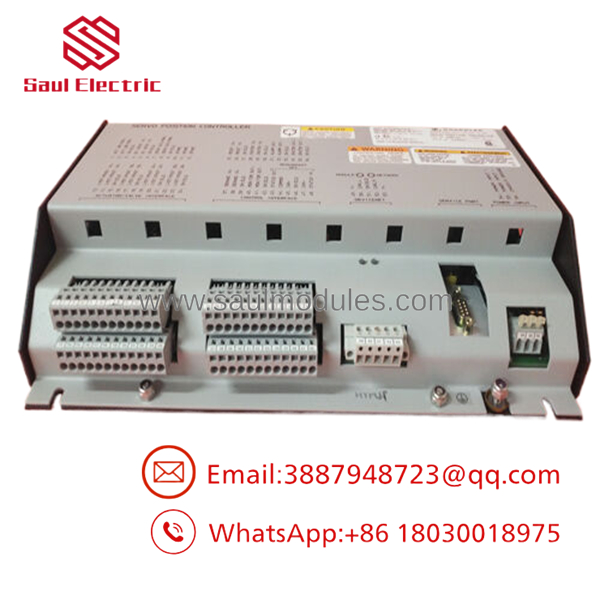
- 8200-226
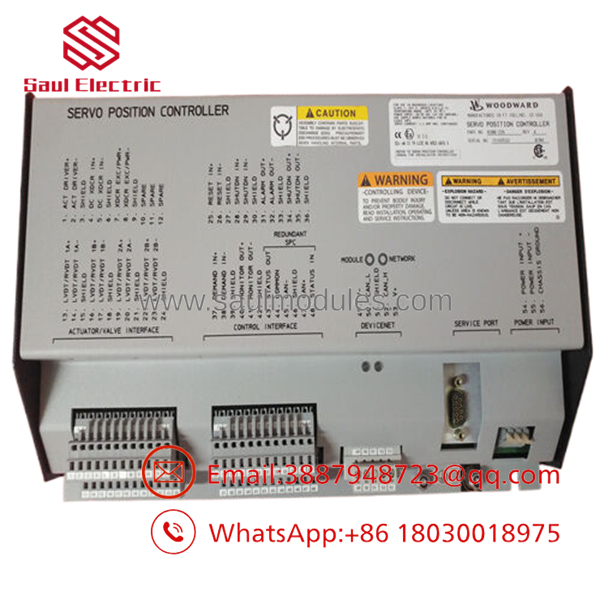
- 8200-226
Transparency SOP: Quality Assurance & Testing
We don’t just ship boxes; we test them on actual Woodward control hardware whenever compatible equipment is available.
- Inbound Inspection
- Verify Woodward labels and serial numbers
- Inspect PCB, connectors, and enclosure
- Check for corrosion, overheating, or unauthorized repairs
- Live Rig Testing
- Power-on verification
- DeviceNet communication test
- Analog command input verification
- Position feedback simulation
- Actuator output response test
- Electrical Parameter Checks
- Input voltage validation
- Output current verification
- Connector continuity
- Internal power rail inspection
- Firmware Verification
- Record hardware revision
- Record firmware revision
- Verify compatibility with customer requirements
- Final QC & Anti-static Packaging
- Functional inspection
- Anti-static packaging
- Industrial protective cushioning
- Serialized inventory tracking
- 12-month warranty documentation
The Veteran’s Tech Trap Guide
⚠️ Save the Configuration Before Removing the Controller
The SPC stores calibration and application parameters. Export the configuration first. Rebuilding actuator tuning from memory is rarely successful. Woodward provides an SPC Service Tool for configuration backup and restoration.
⚠️ Verify the Actuator Current Range
The controller supports several configurable output ranges from ±10 mA to ±250 mA. Installing a replacement without confirming the output setting can produce unstable valve movement or actuator saturation.
❗Check the Feedback Device Before Replacing the Controller
A damaged LVDT, RVDT, or position transducer often produces the same symptoms as a failed SPC. Confirm the feedback signal before condemning the controller.
⚠️ Don’t Ignore DeviceNet Diagnostics
Communication faults frequently originate from network wiring, termination, or node configuration rather than the controller itself. Verify DeviceNet health before replacing hardware.
Frequently Asked Questions (FAQ)
Q1. Does the Woodward 8200-226 support hot swapping?
No. Remove control power before replacing the controller. Installing or removing it while energized can interrupt actuator control and damage connected equipment.
Q2. Which models does the 8200-226 replace?
The 8200-226 is the current SPC generation and replaces Woodward 8200-224 and 8200-225, while maintaining the same application concept with updated hardware revisions.
Q3. What communication interfaces are available?
The controller supports DeviceNet for position demand and diagnostics, 4–20 mA analog command input, and an RS-232 service port for configuration and calibration.
Q4. Can it control both hydraulic and pneumatic actuators?
Yes. The SPC is designed to drive single-coil hydraulic or pneumatic actuators using configurable output current while accepting single or dual position feedback devices.
Q5. Is firmware compatibility important?
Absolutely. Hardware revision, firmware revision, and saved application parameters should all be verified before commissioning a replacement controller.
Q6. Why is surplus inventory less expensive than ordering directly from the OEM?
Many available units originate from canceled projects, plant upgrades, or unused maintenance inventories. Lower pricing reflects the procurement source rather than reduced functionality.
Q7. Is every controller tested before shipment?
Yes. Each controller undergoes visual inspection, electrical verification, communication testing, actuator output checks where applicable, firmware documentation, and final quality inspection before shipment.
Veteran’s advice: Before disconnecting the old SPC, record every terminal connection, save the configuration, and verify actuator feedback calibration. In most commissioning jobs, the hardware replacement takes minutes. Recovering lost calibration data can consume an entire shift.

 Start Chat


