





Description
Product Introduction & Engineering Value
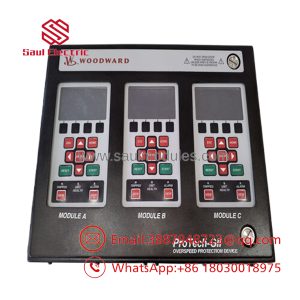
When an overspeed event occurs on a utility-scale steam turbine, mechanical flyweights often react too slowly to prevent disastrous rotor failures. The Woodward 8237-1369 ProTech-GII system solves this critical safety challenge by combining three totally isolated, microprocessor-based modules into a single panel-mount enclosure. Each independent channel continuously monitors speed via its own dedicated MPU, executing a voting algorithm that trips emergency stop valves before rotational stresses exceed safe mechanical metallurgy limits.
What makes this model a staple in high-reliability power generation and chemical refining is its true online testability and fault tolerance. You can test individual channel logic, exercise trip solenoids, and swap out a malfunctioning board without taking the prime mover offline or risking a spurious plant trip.
Technical Specifications
- Operating Input Voltage: Dual Redundant High-Voltage Inputs: 88 to 264 VAC (47–63 Hz) or 90 to 150 VDC
- System Architecture: Triple Modular Redundant (TMR) — Three isolated channels (A, B, C) with 2oo3 trip voting logic
- Response Time: Sub-12 milliseconds total time from speed threshold detection to output relay contact drop-out
- Speed Sensing Inputs: 3 Independent MPU/Proximity Probe Inputs (1 per module, frequency range 1 Hz to 50 kHz)
- Discrete Inputs: 3 Dedicated Reset inputs, 3 Remote Test inputs, 3 Acceleration Trip Overrides
- Relay Output Configuration: 2-out-of-3 voted Trip Relays (3 Independent sets of Form-C contacts for solenoid dump valves)
- Communication Interface: Modbus RTU (RS-232 / RS-485 serial) per individual module for DCS event logging
- Display & Keypad: 3 Separate backlit LCD screens with front-panel membrane keypads for independent module setup
- Safety & Regulatory: IEC 61508 SIL-3 Certified, API 612 / API 670 compliant, CE Marked, UL/cUL Listed
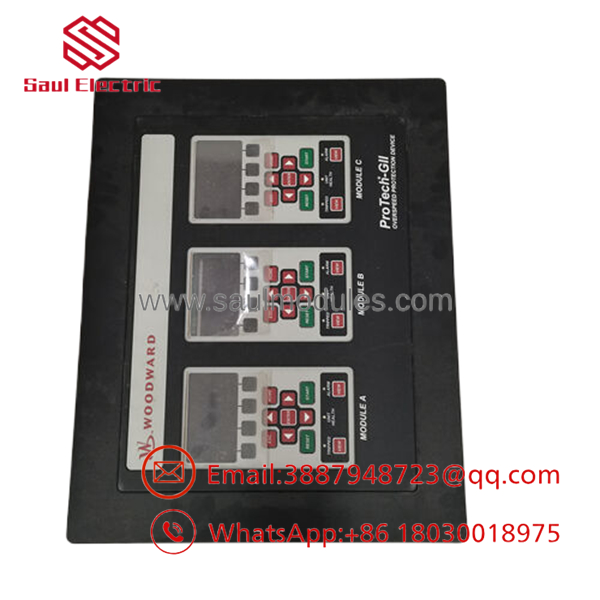
- 8237-1369
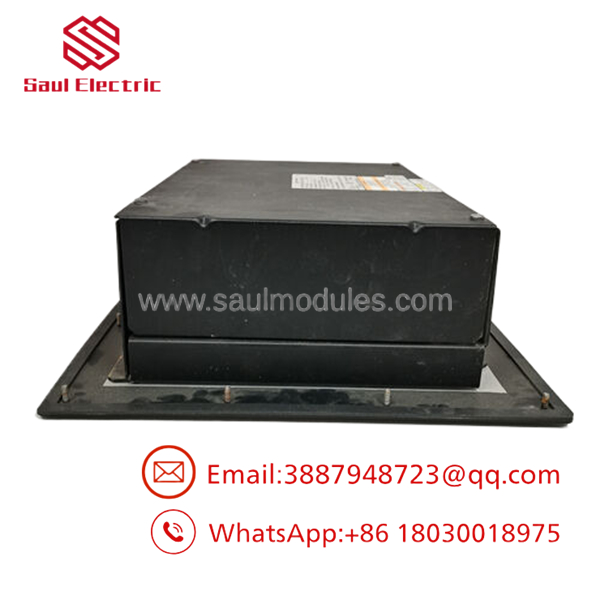
- 8237-1369
Field Application & The “Trench” Experience
The Trench Story
During a routine annual turn-around at a combined-cycle power station, the I&C crew hit a wall when an older mechanical trip bolt on a 150 MW steam turbine failed its offline overspeed test due to sticky latch linkages. Ordering a replacement mechanical assembly would have forced a 10-day extension on the shutdown, burning $120,000 per day in lost power purchase agreements.
The station engineer retrofitted the unit with an emergency replacement 8237-1369 ProTech-GII panel. Mount dimensions lined up neatly on the front of the local turbine rack. Because the 8237-1369 features built-in electronic overspeed testing routines, the team executed all SIL-3 trip verification sequences in under two hours without spinning the shaft to actual physical overspeed. The plant synchronized on schedule with full regulatory approval.
Specific Field Applications
- Ethylene Cracker Compressor Trains: High-consequence turbomachinery protection where false trips result in multi-million-dollar flaring events.
- Nuclear Feedwater Pump Drives: Safety-critical auxiliary turbine drives requiring SIL-3 certified redundant protection loops.
- Combined-Cycle Gas Turbines (CCGT): Acceleration rate and overspeed monitoring on high-rpm generator sets operating under volatile grid swings.
Transparency SOP: QA & Testing
- Power Isolation & Hi-Pot Verification: High-voltage power buses (88-264 VAC/DC) are bench-tested for dielectric breakdown to ensure internal ground planes remain completely isolated from signal logic.
- Frequency Injection & Response Timing: Microsecond signal generators simulate rapid acceleration curves across all three speed input channels simultaneously to verify that trip relays drop out inside the mandatory 12 ms window.
- 2oo3 Voting & Fault Injection Test: Technicians intentionally disconnect Channel A while driving Channel B past trip setpoints to verify that the 2oo3 logic executes correctly under partial failure conditions.
- Relay Contact Resistance Check: High-current loads are switched through all Form-C relay contacts to confirm zero pitting, oxidation, or excessive contact resistance on output terminals.
- Thermal Bake-In Run: The entire unit is cycled through temperature swings up to 60°C for 18 hours while recording Modbus register telemetry to screen out latent component degradation.
The Veteran’s Tech Trap Guide
- ⚠️ High-Voltage vs. Low-Voltage Terminal Mismatch: Do not confuse the 8237-1369 with low-voltage ProTech-GII variants (like those requiring 18-32 VDC). Feeding 120 VAC into a 24 VDC model blows the internal logic cards immediately, while hooking 24 VDC up to this high-voltage 8237-1369 will leave the unit dead with zero display response. Always check the serial tag before landing power wires!
- PRO TIP: Don’t Share Speed Sensor Cables: Never run the magnetic pickup cables for Modules A, B, and C inside the same shielded conduit bundle. Electromagnetic interference induced on one cable can cross-talk into adjacent conductors, causing false high-frequency readings that mislead the 2oo3 voting engine into tripping the turbine.
- ⚠️ Mismatched Firmware Across Modules: When replacing an individual module board within the 8237-1369 chassis, verify that all three channels run identical firmware revisions. Differing firmware versions can cause Modbus register mapping conflicts and fail internal self-diagnostic cross-checks.
Dynamic FAQ
Q: What does the 2-out-of-3 (2oo3) voting logic actually mean in practice?
A: The unit houses three independent internal safety channels (A, B, and C). An overspeed trip command is only executed when at least two of the three channels agree that an overspeed or acceleration condition has exceeded the programmed setpoint, eliminating single-sensor false trips.
Q: Can I run the 8237-1369 on 125 VDC station battery power?
A: Yes. The 8237-1369 is equipped with high-voltage universal power supplies that accept either 88–264 VAC or 90–150 VDC, making it directly compatible with standard 125 VDC plant emergency battery banks.
Q: Can individual channels be safely tested while the turbine is running?
A: Yes. The ProTech-GII architecture allows full online routine testing. You can safely simulate an overspeed signal on Channel A to test its internal trip logic and output relay without tripping the turbine, as long as Channels B and C continue sensing normal operating speed.
Q: How does the internal event logger track trip history?
A: Each module logs time-stamped speed data, trip events, and diagnostic alarms internally. These records can be accessed directly through the front-panel display or queried remotely via the Modbus serial communication ports for post-trip root cause analysis.
Q: What warranty covers this surplus or reconditioned safety module?
A: All Woodward 8237-1369 units provided are backed by a full 1-year replacement warranty, fully tested on dedicated speed-simulation rigs to ensure factory-spec response times prior to dispatch.

 Start Chat


