





Description
Product Introduction & Engineering Value
The 8290-185 belongs to Woodward’s 2301A family of electronic controls, where speed regulation and generator load sharing are handled through dedicated control circuitry rather than a general-purpose PLC. The controller can be integrated into generator systems using speed-sensing, load-sharing, and actuator signals appropriate to the specific prime mover.
For replacement work, the important engineering question is not simply whether another 2301A will physically fit. The actuator interface, speed-sensing arrangement, droop/isochronous configuration, power supply, and load-sharing connections need to match the installed system.
Technical Specifications
| Parameter | 8290-185 / 2301A Family |
|---|---|
| Manufacturer | Woodward |
| Part Number | 8290-185 |
| Product Family | 2301A |
| Control Function | Electronic speed and load control |
| Typical Prime Mover | Diesel or gas engine |
| Typical Application | Generator sets |
| Control Modes | Isochronous / droop, depending on system configuration |
| Speed Signal | Magnetic pickup or compatible speed-sensing arrangement, depending on configuration |
| Load Sharing | Compatible with Woodward load-sharing systems |
| Actuator Interface | Application-specific Woodward actuator signal |
| Power Supply | Application-specific; verify against the installed controller documentation |
| Configuration | Hardware/wiring dependent |
| Mounting | Panel-mounted industrial control |
| Service Consideration | Verify complete part number and revision before replacement |
Important: Woodward’s 2301A family contains multiple variants with different electrical characteristics. Because I could not verify an authoritative Woodward datasheet that uniquely specifies every electrical parameter for 8290-185, those values should not be inferred from another 2301A model.
Field Application & the “Trench” Experience
A typical field replacement starts with a generator that still runs but no longer holds its commanded speed correctly. The maintenance team identifies the Woodward controller as the suspected failure point and orders a replacement based on the visible 8290-185 number.
The problem often appears during commissioning. The replacement may power up normally, yet the generator can exhibit incorrect droop response, unstable actuator movement, or incorrect load-sharing behavior because the original system’s wiring and configuration were not documented before removal.
For this type of controller, recording the original terminal wiring and adjustment/configuration settings is part of the replacement procedure.
Specific application scenarios
- Parallel diesel generator sets: Speed control combined with generator load-sharing circuitry.
- Standby generator synchronization systems: Prime-mover speed regulation coordinated with generator controls.
- Industrial engine-generator packages: Electronic actuator control where stable engine speed is required under changing electrical load.
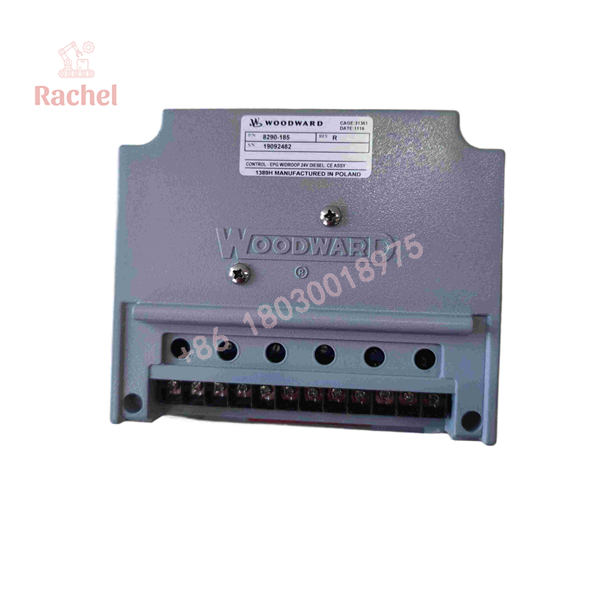
8290-185
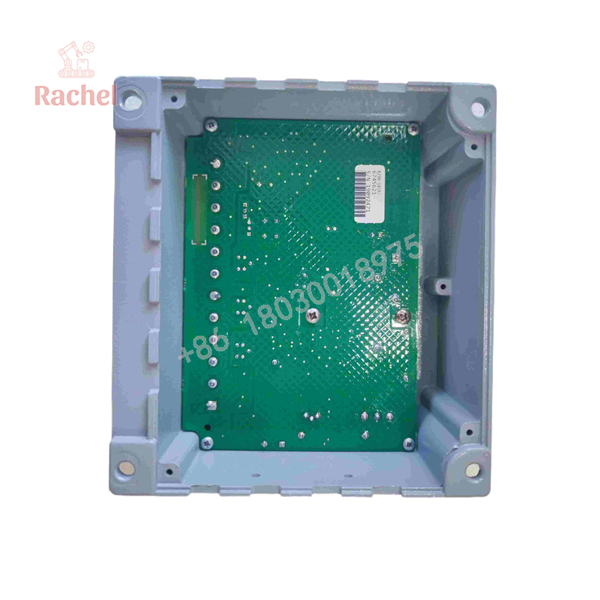
8290-185
Transparency SOP: QA & Testing
For New Surplus or refurbished stock, a meaningful inspection should include:
Part-number verification — Confirm the complete 8290-185 identification, revision, serial number, and manufacturer label.
Physical inspection — Examine the enclosure, terminal connections, adjustment points, connectors, and circuit board condition for corrosion, impact, contamination, or previous repair.
Electrical verification — Apply only the supply voltage specified for the exact controller configuration. Do not assume that every 2301A variant has identical power requirements.
Signal simulation — Where suitable test equipment is available, simulate the speed signal and verify the controller’s response.
Output testing — Check the actuator/control output under controlled test conditions before connecting the replacement to a running prime mover.
Configuration comparison — Compare the replacement against the removed controller’s wiring diagram, switch positions, adjustments, and load-sharing connections.
The Veteran’s Tech Trap Guide
⚠️ Trap #1 — Assuming every 2301A is interchangeable
The 2301A designation covers several configurations. A controller with a similar part number can have different electrical interfaces or application characteristics. Verify 8290-185 against the actual system documentation before installation.
⚠️ Trap #2 — Changing the actuator connection without checking the actuator
The governor and actuator are a matched control loop. An incorrect actuator interface can produce poor regulation or excessive actuator movement even when the controller itself is functioning normally.
⚠️ Trap #3 — Losing the original adjustment data
Older electronic governors frequently depend on application-specific adjustments. Record the original settings before removing the existing unit whenever the controller remains operational.
PRO TIP: For an installed 8290-185, photograph the nameplate and every terminal connection before disassembly. Also record the generator’s normal operating speed, rated load, actuator model, MPU arrangement, and whether the system operates in droop or isochronous mode.
Dynamic FAQ
What is Woodward 8290-185?
8290-185 is a Woodward 2301A-series electronic speed/load control used in prime-mover and generator applications. The exact electrical configuration should be verified from the controller nameplate and applicable Woodward documentation before replacement.
Is 8290-185 a generator controller?
It is primarily an engine/prime-mover speed and load control, rather than a generator protection relay or generator PLC. It regulates the prime mover so the generator can maintain the required operating speed and participate in load-sharing schemes.
Can another 2301A replace 8290-185?
Not automatically. The replacement must match the required speed-sensing circuit, actuator interface, power supply, load-sharing arrangement, and application configuration. A similar 2301A part number should not be treated as a universal substitute.
What information should I provide when sourcing 8290-185?
Provide the complete part number, revision, serial number, actuator model, engine type, generator rating, supply voltage, and photographs of the nameplate and terminal wiring. Those details allow a supplier or Woodward specialist to determine whether the offered unit corresponds to the installed configuration.
How should New Surplus 8290-185 be tested?
At minimum, verify the nameplate, physical condition, electrical supply compatibility, speed-signal response, and control output under controlled conditions. For critical generator service, request a documented test report rather than relying solely on a power-up test.
Does New Surplus include a Woodward factory warranty?
Not necessarily. New Surplus describes the inventory condition, not automatically the manufacturer’s current warranty status. The supplier should state the warranty period and whether the unit is unused surplus, refurbished, repaired, or previously installed.
Procurement note: For a critical generator application, specify Woodward 8290-185 + complete revision/configuration information, rather than ordering by the 2301A family name alone. This avoids one of the most common mistakes with legacy Woodward controls: receiving a physically similar controller with a different electrical or application configuration.

 Start Chat


