





Description
Product Introduction & Engineering Value
The Woodward 8406-113 is intended for generator sets where engine control, synchronization, generator loading, and load-sharing functions need to operate as one coordinated control system. It interfaces with the prime-mover speed control and generator voltage regulator rather than functioning as an isolated PLC.
The LS configuration is particularly relevant to installations with multiple generators operating in parallel. Its PT/CT measurement inputs, configurable speed and voltage bias outputs, discrete I/O, and serial communications allow the controller to coordinate generator operation while providing local setup and status monitoring.
Technical Specifications
| Parameter | 8406-113 Specification |
|---|---|
| Manufacturer | Woodward |
| Part Number | 8406-113 |
| Product Family | EGCP-3 |
| Model | LS — Load Sharing |
| Control Type | Microprocessor-based engine-generator control |
| Supply Voltage | 18–32 VDC |
| Nominal Supply | 24 VDC |
| Power Consumption | ≤20 W nominal; 22 W maximum |
| PT Inputs | 27–300 VAC |
| CT Inputs | 0–5 A AC RMS nominal; 7 A AC RMS maximum |
| Generator Frequency Range | 40–70 Hz |
| Magnetic Pickup Input | 100–24,950 Hz |
| Discrete Inputs | 16 |
| Analog Inputs | 4–20 mA or 1–5 VDC |
| Analog Outputs | 4–20 mA |
| Discrete Outputs | 12 low-side drivers, 200 mA |
| Speed Bias Output | ±3 VDC, 0.5–4.5 VDC, 5 V peak/500 Hz PWM, or 4–20 mA |
| Voltage Bias Output | ±1 VDC, ±3 VDC, ±9 VDC, or 4–20 mA |
| Serial Ports | RS-485, RS-422, RS-232 |
| Operating Temperature | −20 to +70 °C |
| Storage Temperature | −40 to +85 °C |
| Humidity | 95% at +20 to +55 °C |
| Ingress Protection | IP54 when properly installed in an IP54-or-better enclosure |
These values are taken primarily from Woodward’s EGCP-3 specification. The manufacturer also specifies MIL-STD 810C mechanical shock testing and an installation overvoltage category of III.
Physical Configuration
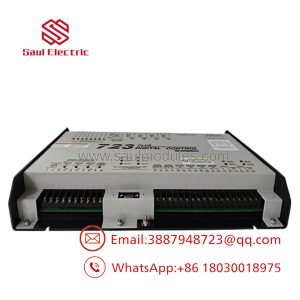
The published EGCP-3 documentation gives the enclosure dimensions as approximately 282 × 358 × 134 mm (11.1 × 14.1 × 5.275 in.). The operator interface uses an 8-line, 20-character display arrangement with membrane keypad, providing local access to setup, status, and alarm information.
The 8406-113 also has a significant revision history. Woodward’s application note documents revisions from the original unit through Rev. R, including hardware and software changes. This means the revision should be treated as part of the procurement specification rather than ignored.
Field Application & the “Trench” Experience
A common field scenario is a multi-generator plant where one genset refuses to assume its expected share of the electrical load after maintenance. The engine itself starts normally. Generator voltage looks acceptable. Yet once the breaker closes, the unit either takes too much load or contributes too little.
With an 8406-113, the investigation should extend beyond the engine governor. The EGCP-3 is sitting between the generator measurements and the prime-mover/voltage-regulator control loops. PT scaling, CT wiring, speed-bias configuration, voltage-bias output, generator breaker status, and load-sharing parameters can all affect the final behavior.
The manufacturer documents the 8406-113 as the LS configuration and provides dedicated KW Load, Generator, Synchronizer, I/O, and Sequence status functions for commissioning and troubleshooting.
Specific application scenarios
- Parallel diesel generator plants: Automatic synchronization and active load sharing among multiple generator sets.
- Gas-engine power generation: Engine speed and generator electrical measurements coordinated through the EGCP-3 control architecture.
- Industrial standby generation: Automatic generator start/stop, synchronization, loading, and unloading sequences.
- Marine generator systems: The EGCP-3 specification lists marine approvals including ABS, Bureau Veritas, DNV, and Lloyd’s Register.
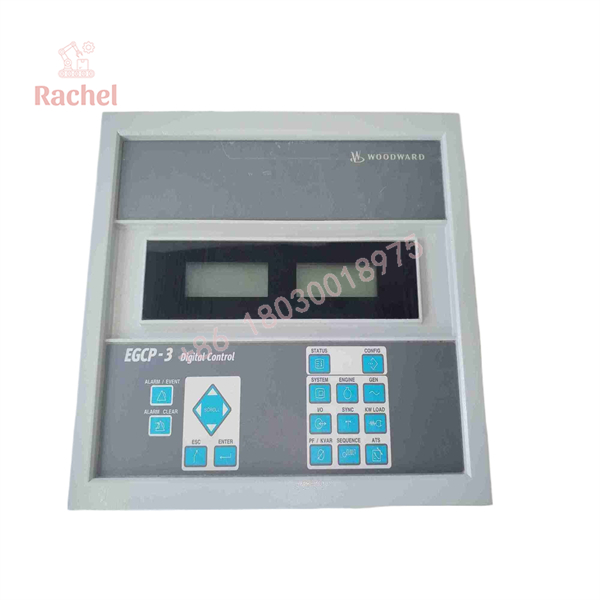
8406-113
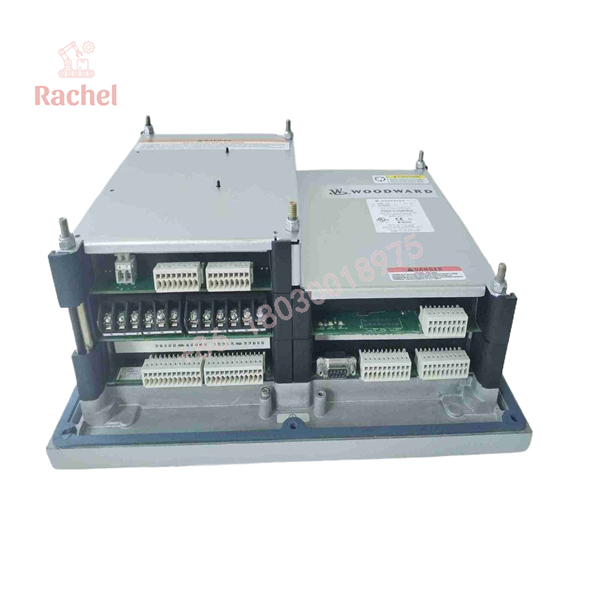
8406-113
Transparency SOP: QA & Testing
For New Surplus or refurbished 8406-113 inventory, a power-up test by itself is not enough.
1 — Identify the exact hardware
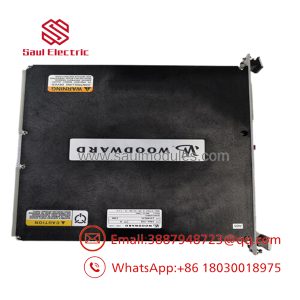
Verify the nameplate reads 8406-113 and record the hardware revision and serial number. This is particularly important because Woodward documented multiple revisions of this model.
2 — Inspect the measurement interface
Check the PT and CT terminals carefully. The controller handles generator voltage and current measurements, so damaged or contaminated terminals can create measurement errors that look like software problems.
3 — Verify DC supply
The documented supply range is 18–32 VDC, with approximately 20 W nominal consumption. Confirm the test supply is appropriate before energizing the controller.
4 — Exercise the I/O
Where appropriate test equipment is available, simulate generator voltage, current, speed, breaker status, and relevant analog/discrete signals. Check the corresponding status screens and outputs.
5 — Check communications
Verify the relevant serial interface where the application uses RS-485, RS-422, or RS-232 communications.
6 — Preserve configuration
If replacing a functioning unit, capture the existing configuration before removal. The 8406-113 has application-specific setup for synchronization, load sharing, speed bias, voltage bias, and generator parameters.
The Veteran’s Tech Trap Guide
⚠️ Trap #1 — Ordering 8406-114 instead of 8406-113
They are both EGCP-3 controls, but they are different models. 8406-113 is the LS (Load Sharing) model, while 8406-114 is the MC model. Woodward explicitly separates the two part numbers.
⚠️ Trap #2 — Ignoring the hardware revision
Woodward’s revision history shows changes to the 8406-113 over time, including a power-supply resistor change and later software changes. A purchase specification that says only “8406-113” can therefore be incomplete when a plant requires a particular revision.
⚠️ Trap #3 — Treating PT/CT wiring as generic
The 8406-113 relies on generator voltage and current measurements for synchronization and load-management functions. Incorrect PT scaling, CT polarity, phase sequence, or wiring can produce misleading generator and load readings.
⚠️ Trap #4 — Assuming a working display means the controller is good
The EGCP-3 can power up and display information while an I/O channel, measurement circuit, communication interface, or configured output still has a problem. A proper replacement test should exercise the functions actually used by the generator.
PRO TIP: Before removing an existing 8406-113, photograph the nameplate, revision, PT/CT wiring, generator breaker inputs, speed-bias wiring, voltage-bias wiring, and serial connections. Keep the configuration record with the replacement purchase order.
Dynamic FAQ
What is Woodward 8406-113?
8406-113 is the Woodward EGCP-3 LS (Load Sharing) Engine Generator Control Package. It is a microprocessor-based controller for generator-set management, including synchronization, load sharing, engine start/stop sequencing, and generator monitoring.
What is the difference between 8406-113 and 8406-114?
The 8406-113 is the LS, or Load Sharing, model. The 8406-114 is the MC model, which has a different role in EGCP-3 generator-system coordination. They should not be treated as interchangeable part numbers.
What power supply does the 8406-113 require?
The documented supply is 18–32 VDC, with 24 VDC nominal. Woodward specifies approximately 20 W nominal power consumption and 22 W maximum.
What generator measurements can 8406-113 accept?
The controller accepts 27–300 VAC PT inputs and 0–5 A AC RMS nominal CT inputs, with 7 A AC RMS maximum specified for the CT input. Generator frequency is specified at 40–70 Hz.
Can the 8406-113 control engine speed?
It provides configurable speed-bias outputs for interfacing with an engine speed controller/governor. Available output forms include ±3 VDC, 0.5–4.5 VDC, PWM, and 4–20 mA. The EGCP-3 therefore works as part of the complete generator control system rather than necessarily replacing the engine’s dedicated governor.
What should I verify when buying New Surplus 8406-113?
Request the complete nameplate photograph, hardware revision, serial number, physical-condition statement, test report, software/configuration information, and warranty terms. The revision is particularly important because Woodward documented numerous 8406-113 revisions and corresponding software changes.
Procurement note: Specify Woodward EGCP-3 LS, 8406-113, together with the required hardware revision and configuration requirements. For a live generator installation, do not substitute 8406-114 or another EGCP-3 variant solely because the front panel and enclosure appear similar.

 Start Chat


