





Description
Product Introduction & Engineering Value
In my years of balancing propulsion chains on twin-engine marine vessels, I have found that few platforms manage mechanical cross-coupling as reliably as the Woodward 8280-423. This unit is an absolute staple for operators who need to prevent twin reciprocating engines from tearing at each other’s gearboxes during dynamic sea conditions. By processing multi-variable inputs locally, this hardware executes load-balancing algorithms fast enough to prevent torsional winding before it ripples back into the driveline.
Instead of trying to adapt a generic PLC to handle high-speed Governor dynamics, engineers lean on this pre-programmed 723PLUS block. It drops straight into installations requiring low-voltage DC rails and instantly delivers predictable fuel rack limiting and speed matching. When dealing with heavy-duty diesel or gas engines operating in parallel, this card ensures that mechanical strain is split evenly down the middle.
Technical Specifications
| Parameter | Specification Metric |
| Input Supply Voltage | 18–40 Vdc (24 or 32 Vdc nominal) |
| Power Consumption | 40 Watts nominal operating draw |
| Microprocessor | 32-bit high-speed processing engine |
| Speed Input Range | 7.5 Hz to 1,000 Hz capability |
| Maximum Managed Engine Speed | 2,200 RPM top-end threshold |
| Serial Communication Ports | 2 Ports supporting Modbus (RTU/ASCII) or Servlink |
| Network Channels | 2 Local Operating Network (LON) paths |
| Update Configuration Groups | Tunable from 10 to 80 milliseconds |
| Regulatory Compliances | CSA Certified & CE Compliant |
Field Application & The “Trench” Experience
The Clutch Slip Nightmare
We were tracking down an issue on a commercial cargo vessel where the port engine would consistently bog down during high-torque maneuvering, forcing the starboard engine to carry up to 80% of the mechanical load. The crew had already overhauled the hydraulic clutch assemblies, but the imbalance remained. When we hooked up our diagnostic software to the governor rack, we found that the legacy speed control card was ignoring a broken shield wire on the clutch status input line. The unit never realized the clutch was fully engaged, leaving the fuel rack at an idle bias. Replacing the asset with a verified 8280-423 module allowed the system to register the discrete 24V clutch signal immediately, instantly restoring true dual-engine mechanical load sharing.
Specific Field Deployments
- Twin-Engine Marine Propulsion Systems: Equalizing torque across two medium-speed diesel engines clutched into a single reduction gearbox.
- Mechanical Drive Compressor Stations: Coordinating dual reciprocating gas engines driving a shared process compressor header.
- Islanded Marine Power Generation Units: Managing parallel speed governing configurations on auxiliary generator sets experiencing highly volatile cyclic loads.
Transparency SOP: QA & Testing
Our technical team uses a dedicated checklist validation framework for every incoming surplus 8280-423 platform:
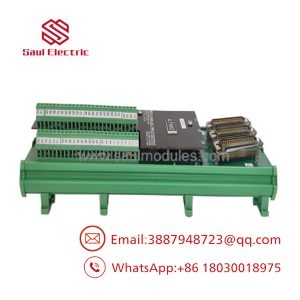
- Static Component Evaluation: We conduct visual micro-inspections to ensure that no conformal coatings are peeling and that the high-density terminal tracks show zero scoring or heat damage.
- Low-Voltage Inrush Validation: We supply a clean 18–40 Vdc voltage sweep, measuring the exact inrush current curve to guarantee it peaks safely within the factory 7 Amp limit.
- Dual MPU Track Testing: We stream simulated pickup signals through both speed processing ports to confirm precise frequency tracking across the entire 7.5 to 1,000 Hz spectrum.
- Modbus Loop Polls: We initiate continuous data read/write commands over the RS-485 interfaces to ensure that register maps do not drop packets during communication spikes.
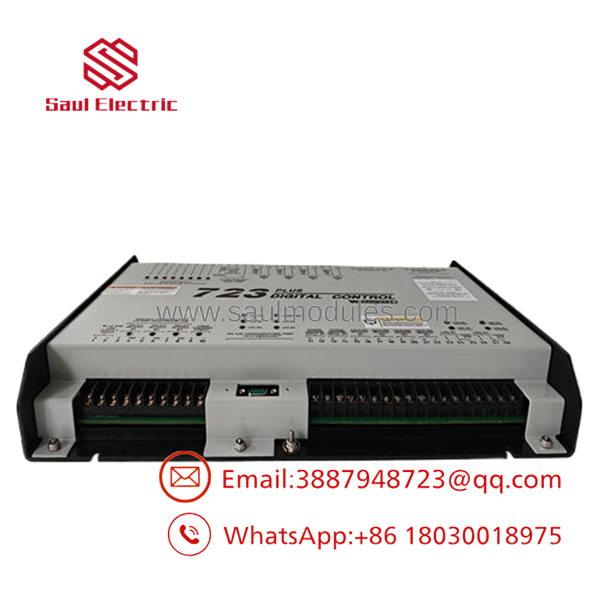
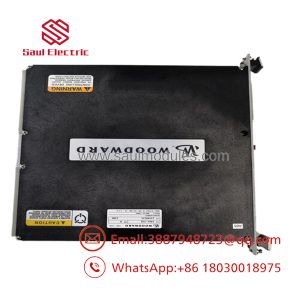
- 8280-423
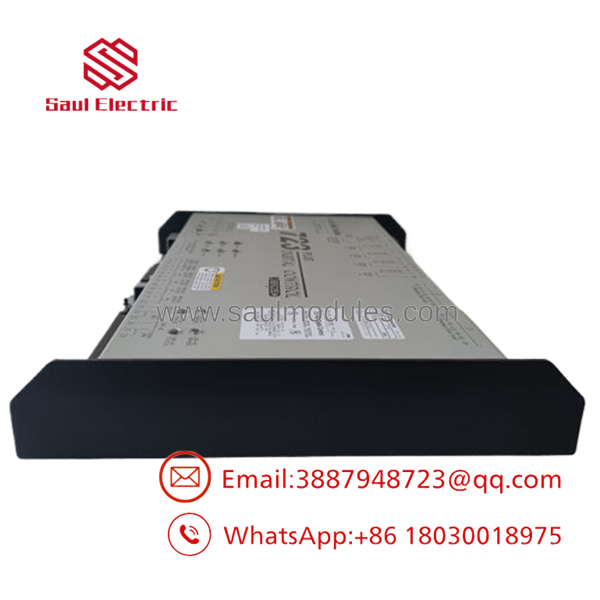
- 8280-423
The Veteran’s Tech Trap Guide (Crucial Value-Add)
⚠️ THE REMOTE SPEED ACCIDENT: The 8280-423 features a configurable “Lock-in-Last” or “Absolute Lower Limit” behavior if your remote speed input signal drops out unexpectedly. If a technician replaces this module without verifying how this specific software register is flagged relative to the shipboard automation system, a broken signal wire could cause the engine to slam directly down to idle while under heavy mechanical load.
PRO TIP: Pay strict attention to terminal 30 during replacement loops. Applying a 24 Vdc source here tells the 723PLUS application code that it is safe to ramp past idle speed. If you have a loose wire or a failing relay contact on this terminal, your engine will unexpectedly decelerate to basic idle, and you will spend hours fruitlessly tuning your PID gains thinking it is a dynamics issue.
Dynamic FAQ
Q: Can I use this 8280-423 low-voltage model in a system wired for high-voltage DC control?
A: No. The 8280-423 is strictly a Low-Voltage variant rated for an 18–40 Vdc envelope. If your panel distributes a high-voltage nominal battery bank (like 125 Vdc), you must use a sister part number like the 8280-413 or 8280-415 to prevent burning out the input power filter.
Q: What programming software is required to tweak the load sharing parameters?
A: You can configure the module directly using a Woodward Hand-Held Programmer or via a PC running Watch Window software hooked up to the front-facing service serial port.
Q: How does this unit handle engine speed anomalies caused by flexible coupling twist?
A: The 723PLUS engine application architecture includes an optional “Torsional Filter” configuration block. When enabled via your service software tool, it mathematically filters out the high-frequency speed oscillations common to flexible couplings, preventing your fuel actuators from chasing phantom speed changes.
Q: Are the internal tuning profiles backed up on a battery that could die while in warehouse storage?
A: No. Your operational setpoints, fuel limits, and PID maps are written directly into non-volatile EEPROM storage blocks on the main circuit board. The module can sit unpowered in a spare parts locker for years without risking application data corruption or memory blanking.

 Start Chat


