





Description
Product Introduction & Engineering Value
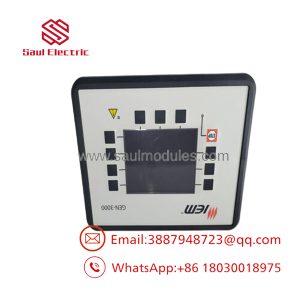
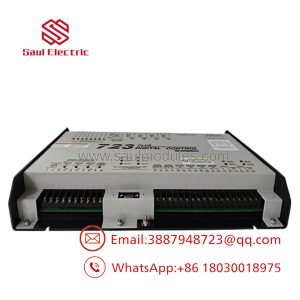
The Woodward 8440-1713 is an SPM-D11 microprocessor-based synchronizer designed for AC generator synchronization. It can be used with Woodward or compatible third-party speed controls and automatic voltage regulators. Its synchronization functions include frequency, phase, and voltage matching before generator breaker closing.
The specific 8440-1713 configuration is important because the SPM-D11 family contains multiple measuring-input variants. This version is configured for 100 VAC voltage measurement and 5 A current measurement, making the complete part number relevant when replacing an installed unit.
Technical Specifications
| Specification | 8440-1713 |
|---|---|
| Manufacturer | Woodward |
| Part number | 8440-1713 |
| Product family | SPM-D11 |
| Device type | Microprocessor-based synchronizer |
| Package | LSXR |
| Generator measurement | 100 VAC |
| Current measurement | 5 A |
| Power supply | 24 VDC |
| Discrete input rating | 18–250 VAC/DC |
| Generator configuration | One- or three-phase AC generators |
| Synchronization method | Phase match or slip-frequency synchronization |
| Voltage matching | Supported |
| Speed bias output | Supported |
| Voltage bias output | Supported |
| Generator protection | Included |
| Configuration | PC and front-panel configurable |
The SPM-D11 platform combines synchronization with generator protection, speed/voltage bias outputs, operating-mode inputs, and measurement functions. Woodward describes the series as suitable for generators equipped with Woodward or other compatible speed controls and AVRs.
Field Application & “Trench” Experience
A typical application is a standby or prime-power generator that must close its breaker onto a live bus without excessive phase-angle or frequency error. The SPM-D11 compares generator and bus electrical conditions, controls the synchronization process, and provides the appropriate bias signals to the speed control and AVR.
The 8440-1713 is particularly relevant where the existing system uses 100 VAC voltage measurement and 5 A CT inputs. Selecting another SPM-D11 variant solely because it has the same front-panel family designation can create a measurement-interface mismatch. Woodward lists several SPM-D11 part numbers with different voltage/current measurement combinations.
Niche application scenarios
- Diesel generator automatic synchronizing panels
- Prime-power generator plants operating multiple sets in parallel
- Industrial standby generation and emergency-power systems
- Marine generator synchronization systems
- Power-generation switchgear requiring automatic voltage and frequency matching
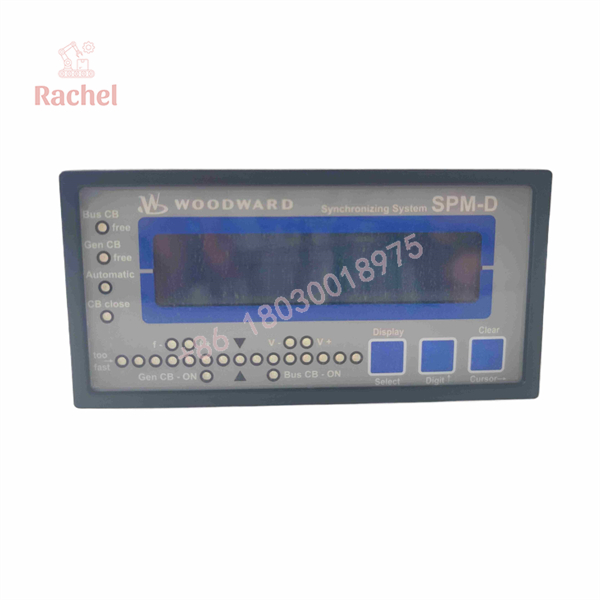
8440-1713
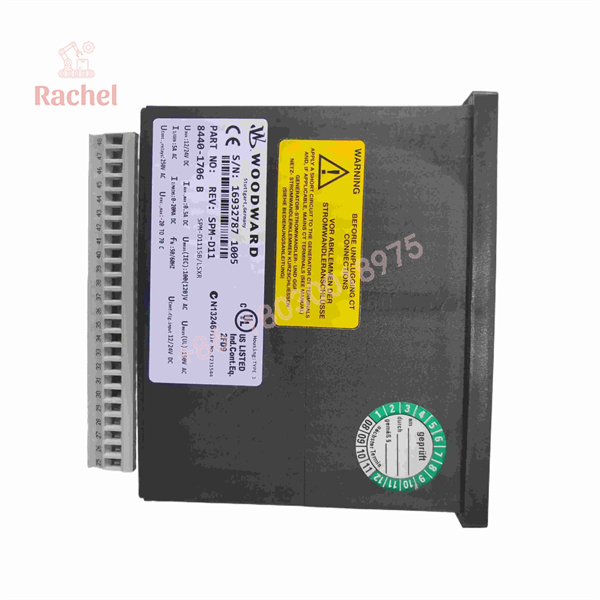
8440-1713
Transparency SOP: QA & Testing
For a replacement 8440-1713, inspection should verify the exact SPM-D11 variant before electrical testing.
New / New Surplus Inspection
- Verify the nameplate shows 8440-1713.
- Confirm the SPM-D11 identification.
- Check the measuring-input configuration against the required 100 VAC / 5 A specification.
- Inspect terminals, connectors, housing, display, and mounting hardware.
- Check for storage damage, oxidation, contamination, or mechanical deformation.
- Record serial and revision information when available.
Functional Testing
Where suitable test equipment is available, testing should cover:
- Power-up and controller initialization.
- Voltage measurement channels.
- Current measurement channels.
- Generator/bus synchronization measurements.
- Frequency and phase detection.
- Voltage matching behavior.
- Speed and voltage bias outputs.
- Discrete input/output operation.
- Alarm and protection functions.
- Configuration retention after power cycling.
A bench test should not be treated as a substitute for an application review. Synchronizer performance depends on the actual generator, CT/PT wiring, breaker interface, governor, and AVR.
Veteran’s Tech Trap Guide
Trap 1 — Confusing 8440-1713 with other SPM-D11 variants
The SPM-D11 family contains different measuring-input configurations. Woodward lists 8440-1702, 8440-1703, 8440-1705, 8440-1706, 8440-1708, 8440-1711, 8440-1713, 8440-1714, and other variants with different measurement interfaces.
Pro tip: Match both the part number and the installed CT/PT configuration.
Trap 2 — Treating the synchronizer as a standalone governor
The SPM-D11 performs synchronization and related generator-control functions, but it is designed to work with a speed control and AVR. It provides bias signals rather than replacing the complete prime-mover governor architecture.
Pro tip: Before replacement, document the existing speed-bias and voltage-bias wiring.
Trap 3 — Ignoring CT secondary rating
This particular 8440-1713 configuration uses 5 A current measurement inputs. A replacement with a different current-input configuration should not be connected to the existing CT circuit without engineering verification.
Pro tip: Verify CT ratio, secondary rating, polarity, and terminal assignment before energizing the measurement circuit.
Dynamic FAQ
Q1: What is Woodward 8440-1713?
Woodward 8440-1713 is an SPM-D11 microprocessor-based generator synchronizer. The specific configuration uses 100 VAC measuring inputs and 5 A current inputs.
Q2: What does the SPM-D11 do?
It performs generator synchronization by matching electrical conditions such as frequency, phase, and voltage before breaker closing. The platform also includes generator protection and interfaces for speed and voltage bias control.
Q3: What is the difference between 8440-1713 and other SPM-D11 part numbers?
The measurement configuration is a key difference. 8440-1713 is specified for 100 VAC and 5 A measuring inputs, while other SPM-D11 part numbers use different voltage/current combinations.
Q4: Can 8440-1713 be used with a non-Woodward governor or AVR?
Yes. Woodward describes the SPM-D11 as compatible with Woodward or other compatible speed controls and automatic voltage regulators. Actual compatibility depends on the available bias interfaces and system configuration.
Q5: What should be checked before replacing an 8440-1713?
Verify the complete part number, CT/PT ratings, generator and bus measurement wiring, breaker interface, speed-bias signal, voltage-bias signal, and existing SPM-D11 configuration.
Q6: How should a New Surplus 8440-1713 be authenticated?
Check the Woodward nameplate, complete 8440-1713 part number, SPM-D11 identification, physical condition, serial/revision information, and—where possible—functional test results. Do not authenticate the unit based solely on a generic SPM-D11 label or product photograph.

 Start Chat


