





Description
Product Introduction
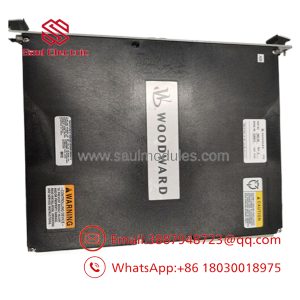
The Woodward 8440-2052H is an easYgen-3200-5/P2 generator controller designed for diesel and gas engine generator sets operating in standby, prime power, peak-shaving, and utility-parallel applications. It combines automatic synchronizing, generator protection, breaker control, engine monitoring, and load sharing into a single front-panel controller.
Unlike the larger easYgen-3500 family intended for more complex multi-breaker applications, the 8440-2052H targets standard generator synchronization and power management while maintaining extensive communication capabilities through SAE J1939, CANopen, and Modbus RTU. Verify firmware revision and saved configuration before replacing an existing controller to avoid commissioning delays.
Key Technical Specifications
| Parameter | Value |
|---|---|
| Manufacturer | Woodward |
| Model | 8440-2052H |
| Product Family | easYgen-3200 |
| Product Designation | easYgen-3200-5/P2 |
| Product Type | Generator Set Controller |
| CT Input Rating | 5 A |
| Mounting | Front Panel with Integrated Display |
| Generator Synchronizing | Automatic Voltage, Frequency & Phase Matching |
| Load Sharing | Active Power (kW) & Reactive Power (kVAR) |
| Engine Communication | SAE J1939 |
| Industrial Protocols | Modbus RTU, CANopen |
| CAN Interfaces | Dual FlexCAN |
| Generator Modes | Standby, Prime, Utility Parallel |
| Protection Functions | Voltage, Frequency, Reverse Power, Overcurrent, Engine Protection |
| Certifications | UL/cUL, CSA, CE, LR & ABS Marine (application dependent) |
Application Scenarios & The “Trench” Experience
The diesel engine starts.
Oil pressure is good.
Voltage reaches nominal.
Frequency stabilizes.
Yet the breaker never closes.
After several hours of troubleshooting, someone finally notices the synchronizer is rejecting the phase-angle window because the replacement controller was loaded with the wrong CT configuration.
I’ve seen similar situations more than once. The controller wasn’t defective. The configuration simply didn’t match the installation.
Typical Applications
Data Centers — Emergency standby generators — Performs automatic synchronization and closed-transition transfer during utility failures.
Manufacturing Plants — Prime power generation — Coordinates generator protection and load sharing across multiple units.
Hospitals — Critical backup power — Maintains synchronized operation of redundant generator sets.
Oil & Gas Facilities — Remote power stations — Controls diesel and gas generators operating in island or utility-parallel mode.
Commercial Buildings — Peak shaving systems — Synchronizes generators with the utility while managing exported and imported power.
Field Replacement Example
A pharmaceutical plant experienced repeated reverse-power alarms after replacing an aging generator controller. Generator wiring and protection relays tested normally. Engineers compared the archived configuration with the replacement 8440-2052H and discovered an incorrect current transformer ratio had been entered during commissioning. After restoring the proper settings and validating synchronizing parameters, the generator returned to automatic operation without replacing any field hardware.
Transparency SOP: Quality Assurance & Testing
We don’t just ship boxes; we test them on actual Woodward generator control platforms whenever practical.
- Inbound Inspection
- Verify Woodward serial number and hardware revision.
- Inspect display, keypad, housing, and connectors.
- Check for corrosion, overheating, or unauthorized repairs.
- Live Rig Testing
- Verify complete startup sequence.
- Simulate generator voltage and frequency.
- Test synchronization logic.
- Verify breaker control outputs.
- Confirm CANbus and Modbus communications.
- Electrical Parameter Checks
- Verify CT measurement accuracy.
- Test analog and digital I/O.
- Confirm relay response times.
- Perform extended operational testing.
- Firmware Verification
- Record firmware version.
- Verify hardware revision.
- Confirm successful parameter loading.
- Final QC & Anti-static Packaging
- Complete functional inspection.
- ESD-safe packaging.
- Shock-resistant shipping.
- Full serial-number traceability.
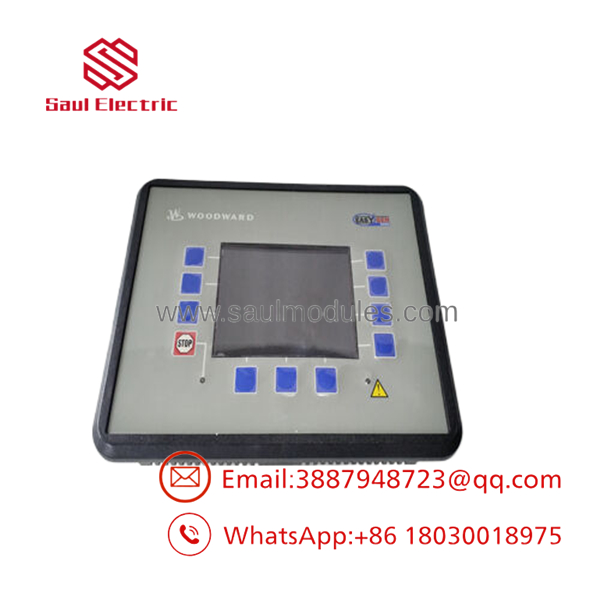
- 8440-2052H
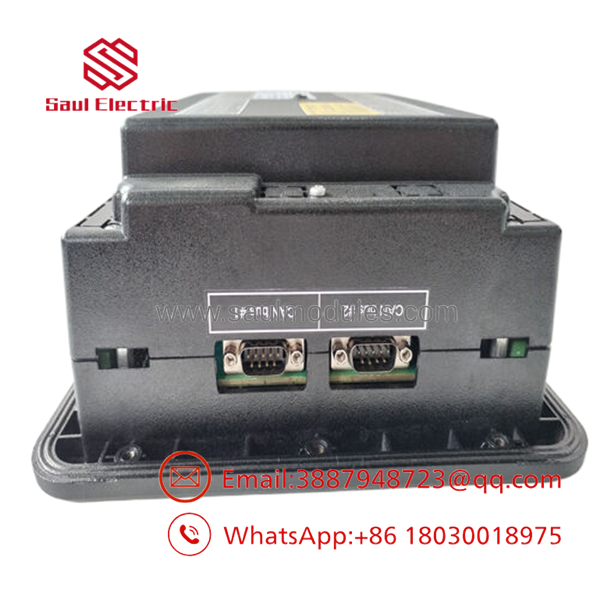
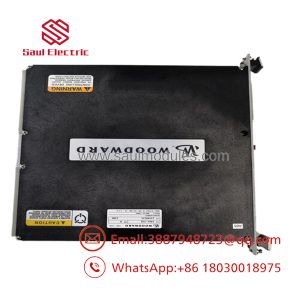
- 8440-2052H
The Veteran’s Tech Trap Guide
⚠️ Verify the CT rating before installation.
The 8440-2052H is the 5 A CT version. Installing it into a system designed for 1 A CTs will produce incorrect power calculations, unstable load sharing, and false protection trips.
⚠️ Back up the existing parameter file first.
Synchronizing limits, protection thresholds, breaker timing, and engine communication settings are usually customized during commissioning. Losing those values can turn a routine replacement into a lengthy recommissioning project.
❗ Don’t ignore revision letters.
The “H” suffix represents a hardware revision. Woodward states that settings files are generally transferable between revisions, but new or changed parameters should always be reviewed after loading an older configuration.
⚠️ Inspect PT polarity before replacing hardware.
Incorrect potential transformer wiring often produces synchronization failures that resemble a controller fault.
Frequently Asked Questions (FAQ)
Q1. What is the Woodward 8440-2052H?
The 8440-2052H is an easYgen-3200-5/P2 generator controller that provides automatic synchronization, generator protection, breaker management, engine monitoring, and load sharing for diesel and gas generator systems.
Q2. What does the “5/P2” designation mean?
The “5” identifies the controller as the 5 A current transformer version. P2 identifies the corresponding application package within the easYgen-3200 product family.
Q3. Which communication protocols are supported?
The controller supports Modbus RTU, SAE J1939, and CANopen, allowing communication with engine ECUs, PLCs, SCADA systems, and distributed control systems.
Q4. Can an H revision replace an earlier revision?
Generally, yes. Woodward explains that revision letters normally represent hardware or manufacturing updates rather than a completely different product. Existing configuration files can usually be reused, but any newly introduced parameters should be reviewed before commissioning.
Q5. Does the controller support utility-parallel operation?
Yes. The easYgen-3200 family supports standby, prime power, and utility-parallel generator applications with automatic synchronization and load-sharing capabilities.
Q6. Is this controller affected by the display contrast service bulletin?
Some easYgen-3000 controllers, including 8440-2052, were identified in a Woodward service bulletin regarding display contrast behavior after repeated power cycles. The issue affects display readability rather than generator control functions. Review the controller revision and service history during inspection.
Q7. What should be verified before installation?
Confirm the 8440-2052H part number, 5 A CT compatibility, hardware revision, firmware version, PT and CT ratios, breaker wiring, Modbus address, J1939 communication settings, synchronizing limits, and generator protection parameters. Before placing the generator back into service, perform synchronization verification, breaker functional testing, load-sharing validation, and a complete protection system test under controlled operating conditions.

 Start Chat


