





Description
Product Introduction
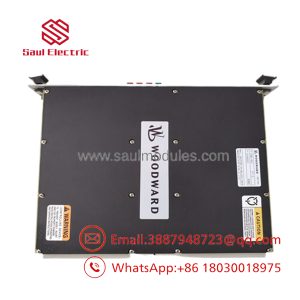
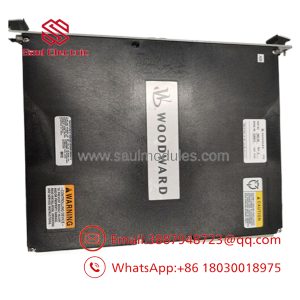
The Woodward 8444-1019F is a generator management controller from the easYgen-3200 platform, intended for diesel and gas engine generator sets requiring automatic synchronizing, breaker control, generator protection, and load-sharing functions. It is commonly used in standby power systems, industrial power plants, and utility-parallel generator applications.
Rather than acting as an engine governor, the 8444-1019F supervises the complete generating package. It measures generator electrical parameters, communicates with modern ECUs through SAE J1939, exchanges data using Modbus RTU, and coordinates breaker operation during synchronization. Verify the exact firmware revision and application file before installation because parameter sets may vary between hardware revisions.
Key Technical Specifications
| Parameter | Value |
|---|---|
| Manufacturer | Woodward |
| Model | 8444-1019F |
| Product Family | easYgen-3200 |
| Product Type | Generator Set Controller |
| Hardware Revision | F |
| Primary Function | Generator Synchronization & Power Management |
| Generator Modes | Standby, Prime Power, Utility Parallel |
| Synchronizing | Automatic Voltage, Frequency & Phase Matching |
| Load Sharing | Active (kW) & Reactive (kVAR) |
| Engine Communication | SAE J1939 |
| Industrial Protocols | Modbus RTU, CANopen |
| Display | Integrated HMI (model dependent) |
| Mounting | Panel Mount |
| Typical Applications | Diesel and Gas Generator Sets |
Important: Published Woodward documentation identifies controller capabilities by product family. Always verify the complete part number and hardware revision against the OEM documentation before ordering or installation.
Application Scenarios & The “Trench” Experience
A standby generator starts normally.
Oil pressure is healthy.
Voltage reaches nominal.
Frequency is stable.
Yet the breaker refuses to close.
I’ve watched maintenance teams spend hours replacing AVR modules and checking governors before discovering the controller was rejecting synchronization because of an incorrect PT ratio or mismatched configuration file.
The controller wasn’t defective.
The settings were.
Typical Applications
Data Centers — Emergency generator synchronization — Coordinates automatic breaker closing after utility failure.
Hospitals — Critical standby power — Maintains synchronized operation of multiple generator sets during emergency operation.
Industrial Manufacturing — Utility-parallel generation — Controls synchronization and load sharing between onsite generators and the electrical grid.
Oil & Gas Facilities — Remote power stations — Manages diesel and gas engine generators operating continuously under varying loads.
Commercial Buildings — Peak-shaving systems — Controls generator import/export power while protecting the electrical distribution system.
Field Replacement Example
An industrial cogeneration facility experienced repeated synchronization failures after replacing an aging controller. Voltage transformers, current transformers, breaker wiring, and engine controls all tested correctly. Engineers compared archived parameters with the replacement 8444-1019F and identified incorrect synchronizing tolerances that had been entered during commissioning. After restoring the original settings and verifying breaker timing, the generator synchronized successfully without replacing any additional hardware.
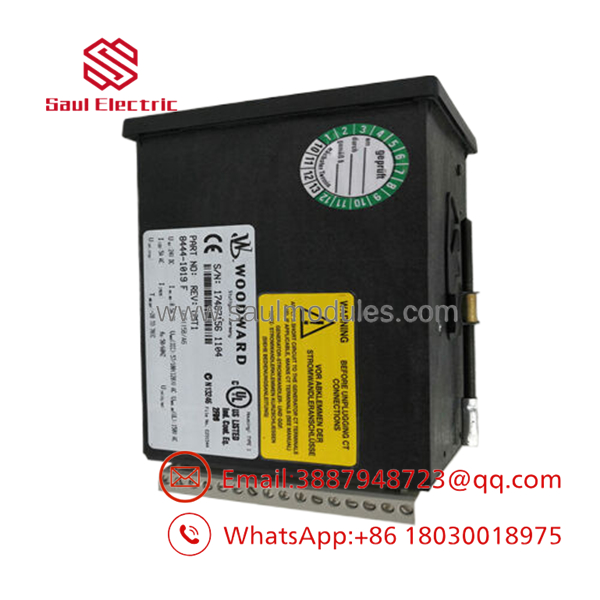
- 8444-1019F
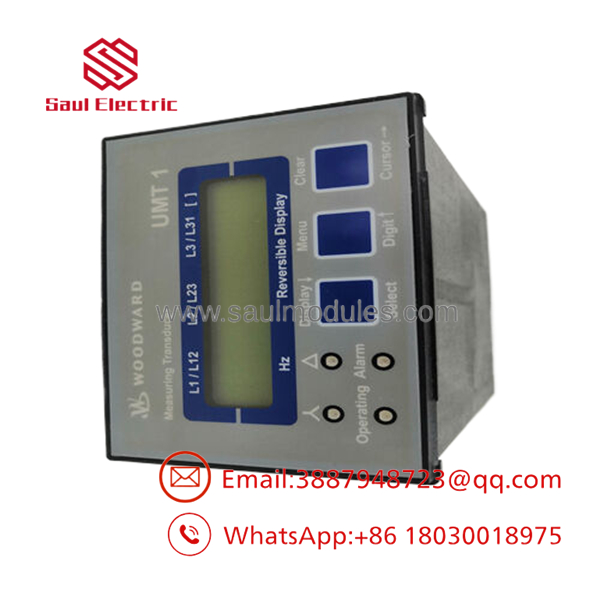
- 8444-1019F
Transparency SOP: Quality Assurance & Testing
We don’t just ship boxes; we test them on actual Woodward generator control platforms whenever practical.
- Inbound Inspection
- Verify Woodward serial number and part number.
- Inspect enclosure, keypad, display, and terminals.
- Check for corrosion, overheating, and unauthorized repairs.
- Live Rig Testing
- Verify controller startup.
- Simulate generator voltage and frequency.
- Confirm synchronization logic.
- Verify breaker control outputs.
- Test CANbus and Modbus communications.
- Electrical Parameter Checks
- Verify analog and digital I/O.
- Test relay operation.
- Confirm CT/PT measurement accuracy.
- Perform extended functional testing.
- Firmware Verification
- Record firmware version.
- Verify hardware revision.
- Confirm successful parameter upload.
- Final QC & Anti-static Packaging
- Functional inspection.
- ESD-safe packaging.
- Shock-resistant shipping.
- Complete serial-number traceability.
The Veteran’s Tech Trap Guide
⚠️ Save the original configuration before removing the controller.
Generator protection settings, synchronizing windows, breaker timing, and communication parameters are usually customized during commissioning.
⚠️ Verify PT and CT ratios first.
Incorrect transformer scaling causes false voltage readings, unstable load sharing, and synchronization failures that often get mistaken for controller faults.
❗ Don’t ignore the revision letter.
The “F” revision may contain hardware or firmware updates. Woodward recommends reviewing newly added parameters after loading configuration files created on older revisions.
⚠️ Check the J1939 network before replacing hardware.
Many communication alarms originate from CANbus wiring, missing termination resistors, or address conflicts instead of a failed controller.
Frequently Asked Questions (FAQ)
Q1. What is the Woodward 8444-1019F?
The 8444-1019F is a Woodward easYgen-3200 family generator controller used for automatic synchronizing, generator protection, breaker management, and load sharing in diesel and gas generator systems.
Q2. Does it support utility-parallel operation?
Yes. The easYgen platform supports standby, prime-power, and utility-parallel applications, including synchronization, import/export control, and generator load sharing when properly configured.
Q3. Which communication protocols are available?
Typical interfaces include SAE J1939, CANopen, and Modbus RTU, allowing integration with engine ECUs, PLCs, DCS platforms, and SCADA systems.
Q4. Can an F revision replace an earlier revision?
Usually, yes. Woodward states that hardware revisions generally preserve application compatibility. Existing parameter files can often be reused, but any new configuration items introduced by later revisions should be reviewed before commissioning.
Q5. Can the controller be replaced while the generator is online?
No. Replacing the controller while the generator is operating interrupts synchronization and protection functions. Shut down the generator and follow approved lockout/tagout procedures before replacement.
Q6. Why are surplus units still widely used?
Many industrial facilities continue operating proven easYgen installations. Maintaining qualified spare controllers is usually much less expensive than redesigning a functioning generator control system.
Q7. What should be verified before installation?
Verify the 8444-1019F part number, hardware revision, firmware version, PT and CT ratios, breaker wiring, J1939 communication, Modbus addressing, synchronization parameters, and generator protection settings. Before returning the generator to service, perform synchronization verification, breaker functional testing, load-sharing validation, and a complete protection test under controlled operating conditions.

 Start Chat


