





Description
Product Introduction & Engineering Value
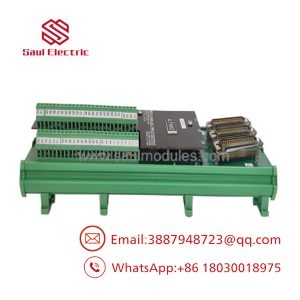
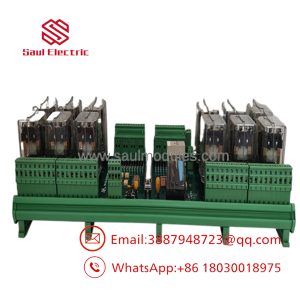
Nothing gets an on-site commissioning engineer sweating faster than running out of physical breaker status inputs on a power management panel during a critical upgrade. The Woodward 8440-2028 is the exact antidote for that bottleneck, providing seamless, localized I/O scaling over a standard CAN bus network without forcing you to re-wire the entire primary controller chassis.
I have leaned on this rugged little unit inside crowded control desks for over a decade because it handles the gritty realities of generator environments. It decouples your field wiring from sensitive processor brains, isolating faults before they can crash the primary easYgen power management network.
Technical Specifications
Because the IKD 1 relies heavily on transmission distances, interface options, and configuration structures, its parameters are best laid out as descriptive, bolded inline engineering constraints:
- Digital Inputs: 8 channels, completely isolated, configured to sense ground connection or internal excitation.
- Digital Outputs: 8 heavy-duty form-A relay contacts, independent wiring configurations allowed per channel.
- Contact Rating: 2.0 A at 24 VDC resistive, down-rated to 0.5 A for highly inductive loads.
- Network Communication: CAN bus interface running standardized CANopen protocols.
- Node ID Configuration: Selectable via hardware rotary switches located under the clear protective faceplate.
- Power Requirement: 24 VDC nominal operating range (18 to 30 VDC continuous).
- Mounting Options: Standard 35mm DIN rail mounting orientation.
- Isolation Rating: 500 VAC galvanic separation between internal logic circuitry and external field wiring.
Field Application & The “Trench” Experience
We were executing an emergency controls retrofit on a multi-engine prime power system at a remote mining facility. The project called for three auxiliary ventilation dampers and four distinct fire suppression status points to interface directly with the master gen-set synchronizer. The original installer had utilized all onboard I/O on the main controller panel. Instead of cutting a massive new wire run through three bulkheads back to the main console, we mounted a 8440-2028 right inside the local auxiliary marshalling panel, terminating all local switches to it and running a simple shielded twisted-pair CAN cable back to the main cabinet.
- Emergency Standby Gen-Set Upgrades: Adding external auxiliary block heater alerts and fuel tank high-low float switches.
- Distributed Breaker Cubicle Monitoring: Collecting auxiliary contact status bits from remote medium-voltage switchgear sections.
- Complex Marine Auxiliary Alarms: Integrating marine bilge level and engine room ventilation louver positions into the central power management system.
Transparency SOP: QA & Testing
Every single 8440-2028 module leaving our facility undergoes a rigorous automated hardware validation process:
- Visual checking under high magnification to catch micro-cracks on the screw terminal strips and housing tabs.
- Low-voltage logic injection to verify every single one of the 8 discrete inputs switches cleanly at its threshold value.
- Full load switching on the 8 output relays while hooked to a reactive load bank to confirm no contact welding occurs.
- CAN bus loopback stress testing to verify the module holds its configured Node ID without data dropping across peak frame rates.
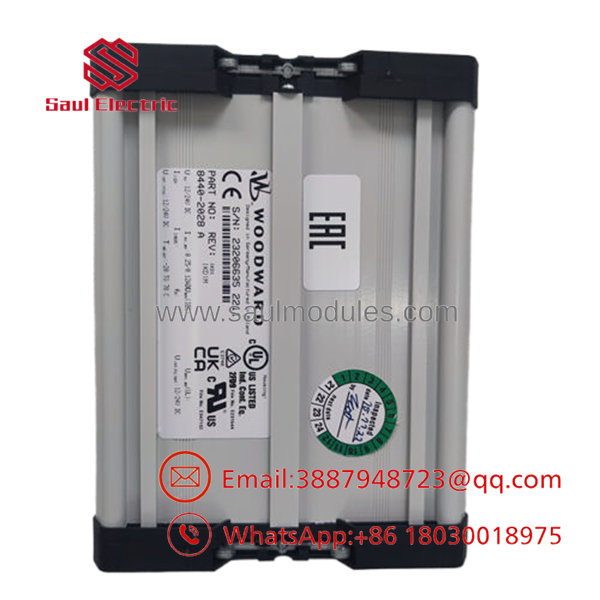
- 8440-2028
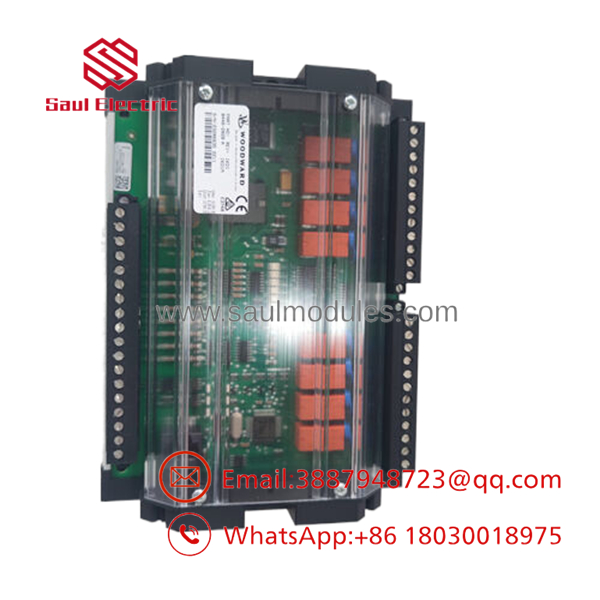
- 8440-2028
The Veteran’s Tech Trap Guide
⚠️ THE NODE ID PITFALL: Do not forget that the rotary hex switches inside the cover dictate the CAN identity. If you clone an old module’s wiring but fail to turn these dials to match the exact address defined in your easYgen application manager, the network will drop the packet entirely and flash a “Missing I/O Expansion” system fault.
PRO TIP: Watch out for the relay ratings when driving heavy inductive external inductive solenoids or large contactor coils. Always wire an external flyback diode or RC snubber directly across the external load; otherwise, inductive kickback will pit the miniature internal relays of the 8440-2028, leading to welded contacts within a few months of service.
Dynamic FAQ
- Q: Can I use multiple 8440-2028 modules on the exact same CAN network?
- A: Yes. By adjusting the internal rotary address selectors, you can stack multiple IKD 1 modules on a single network loop to drastically increase your overall field point density.
- Q: How can I tell if the module is actually communicating with the master unit?
- A: Look closely through the clear plastic cover; an integrated status LED flashes rhythmically when healthy CANopen cyclic data exchange is occurring. A solid red or completely dead LED indicates an address mismatch or physical bus failure.
- Q: Are the internal relay outputs dry contacts?
- A: Yes. They are completely isolated, meaning you can loop different voltage potentials through adjacent channels if your field instrumentation requires mixed sourcing.
- Q: What condition is this specific module sold under, and what is your return policy?
- A: We supply this unit as New Surplus or fully certified Refurbished stock. Every single item carries our complete 1-year replacement warranty coverage, backed by full multi-point bench test reports.

 Start Chat


