





Description
Product Introduction
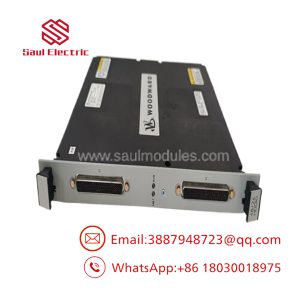
The Woodward 9907-1199 is a member of the 2301A 9907 Series Electronic Load Sharing and Speed Control family. It is designed to regulate engine speed while maintaining stable load sharing between generators operating in parallel. Typical applications include standby diesel generators, gas engine power plants, compressor drives, and industrial turbine systems.
Unlike synchronization controllers that manage breaker closing, the 9907-1199 performs closed-loop governor control. It receives engine speed feedback from a magnetic pickup, calculates the required fuel correction, and drives the governor actuator to maintain constant speed or droop operation. Before ordering a replacement, verify the complete part number, actuator type, control direction, supply voltage, and hardware configuration because multiple 2301A variants exist within the same product family.
Key Technical Specifications
| Parameter | Value |
|---|---|
| Manufacturer | Woodward |
| Model | 9907-1199 |
| Product Family | 2301A 9907 Series |
| Product Type | Electronic Speed Governor Controller |
| Primary Function | Engine Speed Control & Generator Load Sharing |
| Control Modes | Isochronous / Droop |
| Prime Movers | Diesel Engines, Gas Engines, Steam Turbines, Gas Turbines |
| Speed Feedback | Magnetic Pickup (MPU) |
| Generator Operation | Single Unit or Parallel Operation |
| Speed Ranges | 500–1500 / 1000–3000 / 2000–6000 / 4000–12000 Hz (switch selectable) |
| Typical Accessories | Current Transformer (CT), Potential Transformer (PT), Governor Actuator |
| Installation | Panel Mount |
Important: Woodward manufactures numerous 2301A variants with different actuator currents, supply voltages, forward/reverse-acting logic, and optional deceleration ramps. Always verify the exact specifications of 9907-1199 using the product nameplate or OEM documentation before installation.
Application Scenarios & The “Trench” Experience
The engine starts immediately.
Frequency reaches 60 Hz.
Synchronization completes.
Five minutes later, one generator begins carrying almost the entire plant load while the second generator idles along.
Someone blames the AVR.
Another engineer starts adjusting governor gain.
In our field experience, that’s usually the wrong place to begin. More often than not, the governor configuration, CT polarity, or load-sharing wiring is responsible—not the controller itself.
Typical Applications
Power Generation — Standby diesel generators — Maintains engine speed and stable generator frequency.
Industrial Plants — Multiple generator systems — Shares electrical load between parallel generators.
Oil & Gas — Gas compressor stations — Controls engine speed under varying process demand.
Marine Applications — Auxiliary generators — Maintains frequency stability while operating in parallel.
Utility Facilities — Peak-shaving installations — Supports base-load and parallel generator operation.
Field Replacement Example
A paper mill experienced unstable load sharing after replacing a governor controller during a scheduled outage. The actuator, magnetic pickup, and alternator all tested within specification. Engineers eventually discovered that the replacement controller had been configured for a different speed range than the original installation. After correcting the speed-range selection and restoring archived governor settings, the generators resumed stable load sharing without replacing any additional hardware.
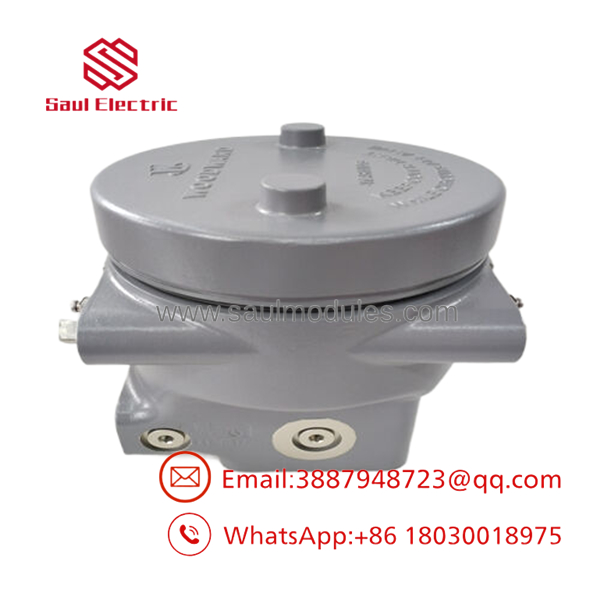
- 9907-1199
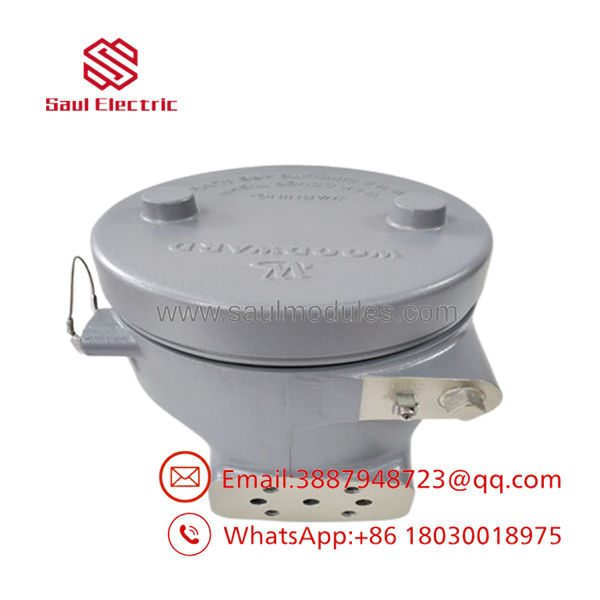
- 9907-1199
Transparency SOP: Quality Assurance & Testing
We don’t just ship boxes; we test them on actual Woodward governor platforms whenever practical.
- Inbound Inspection
- Verify Woodward part number and serial number.
- Inspect enclosure, connectors, and terminals.
- Check for corrosion, impact damage, and unauthorized repairs.
- Live Rig Testing
- Verify power-up sequence.
- Simulate magnetic pickup frequency.
- Test governor actuator output.
- Verify load-sharing functionality.
- Confirm stable control response.
- Electrical Parameter Checks
- Verify power supply operation.
- Measure actuator output current.
- Test digital and analog circuits.
- Confirm terminal integrity.
- Configuration Verification
- Record hardware identification.
- Verify calibration where applicable.
- Check adjustment potentiometers and switch settings.
- Final QC & Anti-static Packaging
- Complete operational inspection.
- ESD-safe packaging.
- Shock-resistant shipping.
- Full serial-number traceability.
The Veteran’s Tech Trap Guide
⚠️ Record every adjustment before removing the old controller.
Governor gain, stability, droop, rated speed, idle speed, and actuator calibration are rarely left at factory defaults.
⚠️ Verify the speed-range switch settings.
The 2301A family supports multiple selectable magnetic pickup frequency ranges. Selecting the wrong range can result in unstable speed regulation or overspeed conditions.
❗ Check CT polarity before replacing electronics.
Incorrect CT wiring can create poor load sharing even when the controller is operating normally.
⚠️ Confirm the exact part number—not just “2301A.”
Woodward produced many 2301A variants with different actuator outputs, supply voltages, forward/reverse-acting configurations, and optional functions. Installing the wrong version often creates problems that resemble controller failures.
Frequently Asked Questions (FAQ)
Q1. What is the Woodward 9907-1199?
The 9907-1199 is a member of the Woodward 2301A 9907 Series, designed to provide electronic engine speed control and generator load sharing for diesel engines, gas engines, steam turbines, and gas turbines.
Q2. Is it a synchronizer?
No. The 9907-1199 is a speed governor controller. It regulates engine speed and generator loading but does not perform automatic breaker synchronization.
Q3. Does it support parallel generator operation?
Yes. The 2301A family supports both isochronous and droop operation and is intended for single-generator as well as parallel-generator applications.
Q4. Can I replace another 2301A controller with the 9907-1199?
Only after verifying the specifications. Compare actuator current, control direction (forward or reverse acting), supply voltage, speed-range settings, and any optional features before installation. Different 2301A models are not always interchangeable.
Q5. Can the controller be replaced while the engine is running?
No. Removing the governor controller while the engine is operating interrupts closed-loop speed control and may trigger engine shutdown or overspeed protection.
Q6. Why are surplus units still widely used?
Many industrial power plants, marine vessels, and compressor stations continue operating 2301A governor systems because they have a long service history and are well understood by maintenance personnel. Maintaining qualified spare controllers is often less expensive than redesigning an existing governor system.
Q7. What should be verified before installation?
Verify the 9907-1199 part number, hardware configuration, supply voltage, actuator compatibility, magnetic pickup signal, CT/PT wiring, speed-range selection, governor tuning parameters, and load-sharing settings. Before returning the unit to service, perform idle-speed verification, rated-speed testing, load acceptance, and parallel load-sharing validation under controlled operating conditions.

 Start Chat


