





Description
Product Introduction & Engineering Value
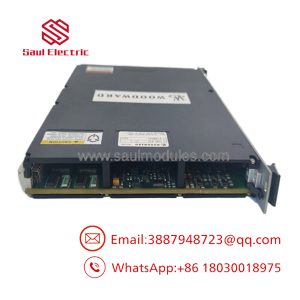
The 9907-164 is a complete Woodward 505 digital governor rather than a generic PLC CPU or I/O module. It uses a microprocessor-based control architecture to manage turbine speed and related operating functions, with configuration and operating interaction through its front-panel keypad/display. Woodward’s documentation covers installation, configuration, programming, and operation of the 505 controller.
For replacement work, power-supply identification is the first checkpoint. The 9907-164 is the low-voltage DC version. Installing an AC-powered 9907-162 or another 505 variant simply because it belongs to the same family is not an equivalent substitution.
Technical Specifications
| Specification | 9907-164 |
|---|---|
| Manufacturer | Woodward |
| Part Number | 9907-164 |
| Controller Family | 505 Digital Governor |
| Application | Steam turbine control |
| Power Configuration | LVDC |
| Supply Voltage | 18–32 VDC |
| Nominal System Voltage | 24 VDC |
| Power Consumption | Approximately 24 VDC / 1 A according to secondary technical listings |
| Display | 2 lines × 24 characters |
| Keypad | 30 multifunction keys |
| Serial Interface | RS-232 / RS-422 |
| Protocol | Modbus |
| Front Panel Protection | IP56 / IEC 60529 reported for the 505 enclosure |
| Operating Temperature | –20 to +60°C commonly specified for the 505 controller |
| Overspeed Function | Front-panel overspeed test capability |
| Software Interface | 505View / related Woodward configuration tools |
Woodward’s primary manual confirms the 9907-164 power variant and its 18–32 VDC rating. Secondary technical documentation identifies the 505 interface as a 30-key keypad with a 2 × 24-character display and RS-232/RS-422 Modbus communications.
Specification caution: Some reseller pages incorrectly list 9907-164 as a 240 VDC or 120/220 VAC unit. Those entries conflict with Woodward’s official part-number table. For the exact 9907-164, use 18–32 VDC LVDC as the primary identification criterion.
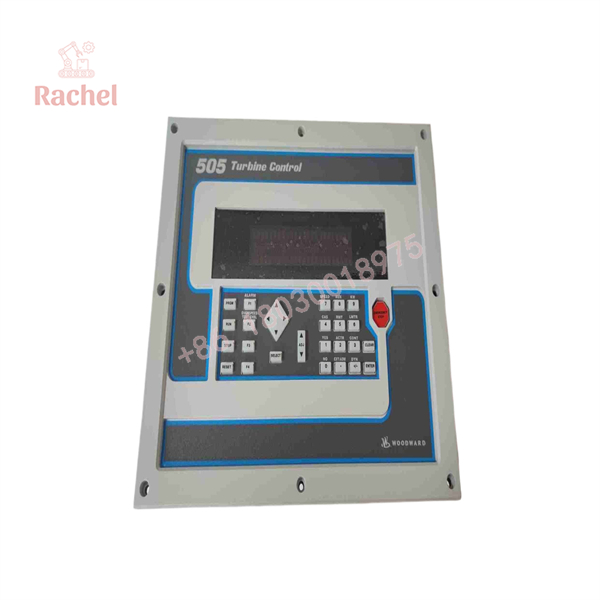
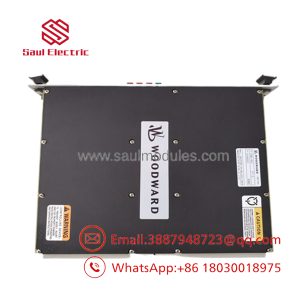
9907-164
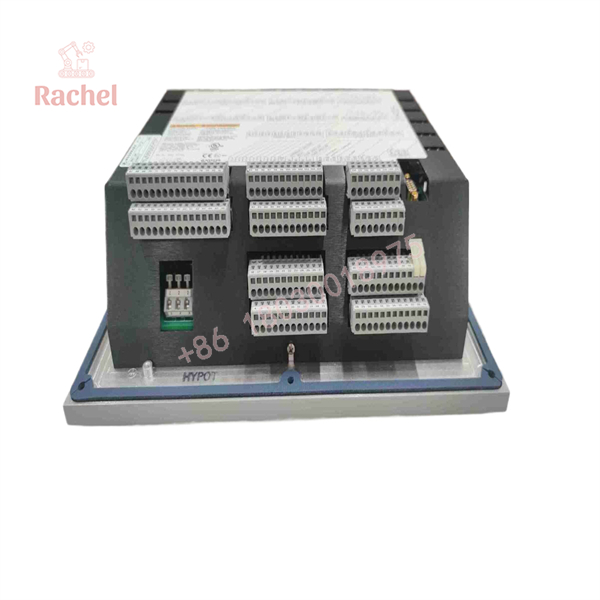
9907-164
What the 505 Controller Actually Does
The 505 is intended to function as the turbine’s primary digital governor/control platform.
Depending on the configured application, the controller can manage functions such as:
- Turbine speed control
- Load control
- Valve positioning
- Automatic startup sequencing
- Critical-speed avoidance
- Valve limiting
- Shutdown indication
- Extraction/admission control for applicable turbine configurations
- Operator setpoint and control adjustments
Woodward describes the 505 as a configurable digital control for steam turbines, while the 9907-164 is specifically one of the 505 hardware variants.
Single or split-range actuator applications
The 505 documentation includes applications using single or split-range actuators. The exact actuator arrangement must be matched to the turbine’s existing control configuration rather than inferred from the 9907-164 part number alone.
Field Application & Trench Experience
Example: Steam turbine governor replacement
A plant has a legacy steam turbine where the 505 controller begins exhibiting display or processor faults. The turbine itself and its hydraulic/electrohydraulic actuator system remain in service.
The replacement process should start with configuration preservation rather than immediately disconnecting the old controller.
A practical sequence is:
- Record the existing 9907-164 nameplate and serial number.
- Document the DC supply arrangement.
- Record all programmed turbine parameters.
- Document actuator configuration.
- Record speed-sensor settings.
- Preserve relevant control-loop and limit settings.
- Verify I/O wiring against the 505 documentation.
- Install the replacement controller.
- Restore and verify the configuration.
- Perform a controlled startup and verify speed response before returning the turbine to normal service.
The Woodward manual explicitly covers installation, configuration/programming, and operating procedures for the 505.
Other application scenarios
Industrial steam turbines
- Mechanical-drive turbines
- Process steam applications
- Utility steam turbines
Turbogenerators
- Generator prime-mover speed control
- Load regulation
- Turbine startup/shutdown control
Turboexpanders
- Speed control
- Valve-control applications
The 505 family is documented for steam turbines, turbogenerators, and turboexpander applications.
QA & Testing SOP for New Surplus / Refurbished Stock
A 9907-164 should be tested as a controller, not merely powered on to see whether the LCD lights.
Identity check
Verify:
- WOODWARD marking
- 9907-164 part number
- Revision suffix, if present
- Serial number
- LVDC designation
- Physical condition
Woodward’s documentation identifies 9907-164R and later revisions as versions that received the newer polyacrylate conformal coating. This can be useful when inspecting older inventory.
Electrical test
A qualified test bench should verify:
- 18–32 VDC input
- Startup sequence
- LCD operation
- Keypad operation
- Processor initialization
- Digital inputs
- Analog inputs
- Analog outputs
- Speed-sensor interface
- Actuator-control output
- Serial communications
Functional test
Where a suitable 505 test environment is available:
Power → I/O → speed simulation → control response → actuator output → communication
The test report should record actual measurements rather than simply stating “tested OK.”
Stock-condition documentation
For New Surplus inventory, request:
- Actual nameplate photograph
- Serial number
- Revision
- Packaging condition
- Power-up test report
- Functional test report
- Warranty terms
This is particularly important because secondary-market listings for 9907-164 contain inconsistent technical information.
Veteran’s Tech Trap Guide
⚠️ Trap 1 — Confusing 9907-164 with 9907-162 or 9907-163
These are all 505 controllers, but the power inputs differ:
| Part | Power Configuration |
|---|---|
| 9907-162 | 180–264 VAC |
| 9907-163 | 88–132 VAC or 90–150 VDC |
| 9907-164 | 18–32 VDC |
This distinction is directly documented by Woodward.
PRO TIP: When sourcing a replacement, verify the complete part number before checking price or stock.
⚠️ Trap 2 — Treating it like a PLC
The 9907-164 has programmable logic and configurable I/O, but it is a dedicated 505 turbine governor. Its configuration is tied to turbine-control functions, actuator behavior, speed sensing, limits, and sequencing.
Do not assume that a generic PLC programming workflow can reproduce the existing 505 application.
⚠️ Trap 3 — Losing the existing configuration
A replacement 505 is not necessarily ready to operate the turbine immediately after installation.
The application-specific configuration can include:
- Rated speed
- Speed-sensor characteristics
- Startup sequence
- Valve limits
- Critical-speed bands
- Actuator characteristics
- Load-control settings
- Extraction/admission parameters
- Shutdown settings
PRO TIP: Capture the existing configuration before removing a functioning controller whenever the plant procedure permits.
⚠️ Trap 4 — Ignoring conformal-coating revision
Woodward states that certain later 505 revisions used a polyacrylate conformal coating intended to improve protection against corrosive sulfur-based gases. For 9907-164, the documented transition revision is R.
This can be relevant when comparing older and later surplus inventory.
Dynamic FAQ
What is Woodward 9907-164?
It is the LVDC version of Woodward’s 505 Digital Governor, a microprocessor-based controller designed primarily for steam-turbine control.
What voltage does 9907-164 require?
The official Woodward part-number table specifies 18–32 VDC for 9907-164.
Is 9907-164 a PLC?
No. It is a dedicated Woodward 505 turbine governor/controller. Although it contains programmable control functions and multiple I/O interfaces, it is engineered around turbine-governor applications.
Does it control steam-turbine extraction?
The 505 family supports configurations for single or split extraction/admission applications. Whether a specific 9907-164 installation controls extraction depends on its application configuration and associated turbine hardware.
Does 9907-164 have Modbus?
The 505 technical documentation identifies RS-232/RS-422 serial communications with Modbus for the controller.
Is 9907-164 discontinued?
Secondary-market sources currently list it as discontinued, but lifecycle status should be verified against Woodward’s current support/product-history information for the specific serial number and revision.
What does New Surplus mean for 9907-164?
New Surplus generally indicates unused inventory outside the current factory-production channel. It does not by itself establish the manufacturing date, revision, or current Woodward warranty status.
For procurement, request actual nameplate/serial photographs, condition documentation, functional test results, and a written warranty.
Engineering Takeaway
The Woodward 9907-164 is best identified as a 505 Digital Governor, LVDC version, 18–32 VDC, used for steam-turbine control. The most important replacement check is the power variant: 9907-164 is fundamentally different from the AC-powered 9907-162 and the higher-voltage 9907-163.
For a field replacement, verify the exact part number, revision, turbine application, actuator arrangement, speed-sensor configuration, I/O wiring, and stored 505 configuration before commissioning the unit.

 Start Chat


