





Description
Product Introduction
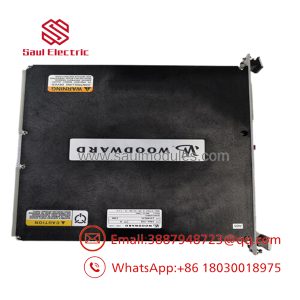
The Woodward 9907-167 is an upgraded variant of the classic 505 digital governor controller, engineered specifically for managing single-actuator steam turbines across power generation and industrial mechanical drive applications. Operating as a microprocessor-driven control hub, it processes dual magnetic pickup (MPU) speed inputs and executes precise PID governing algorithms to modulate electro-hydraulic turbine actuators. It provides accurate speed regulation, automated startup sequences, and critical overspeed protection for steam-driven assets.
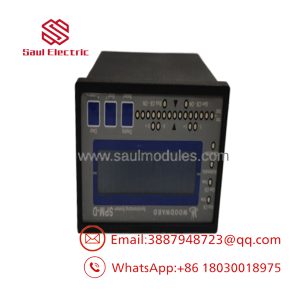
Unlike lower-voltage variants in the 505 lineup, the 9907-167 features an integrated high-voltage power supply accepting both 88–132 VAC / 90–150 VDC utility power or 180–264 VAC plant supplies. This makes it a direct fit for boiler rooms and turbine halls where 24 VDC control power is unavailable. With field-configurable, menu-driven software accessible via its front keypad and screen, the 9907-167 simplifies turbine speed calibration without requiring custom PLC code.
Key Technical Specifications
| Parameter | Specification |
| Manufacturer | Woodward |
| Part Number | 9907-167 |
| Control Family | 505 Digital Speed Control Series |
| Power Supply Input | High Voltage Input (88–132 VAC / 90–150 VDC or 180–264 VAC) |
| Speed Sensor Inputs | 2 Independent Passive MPU / Active Proximity Probe Channels (1 Hz to 15 kHz) |
| Analog Inputs | 4 Configurable Channels (4–20 mA, remote speed, load, or cascade control) |
| Actuator / Analog Outputs | 1 Dedicated Actuator Output (4–20 mA / 0–200 mA) + 2 Readout Channels (4–20 mA) |
| Discrete Inputs | 16 Optically Isolated Contact Inputs (Internal 24 VDC bus supply) |
| Discrete Relay Outputs | 8 Form C Relay Outputs (5 A @ 28 VDC / 250 VAC) |
| Communications | Dual Serial Ports (RS-232 / RS-422 / RS-485) running Modbus RTU |
| Operating Temperature | -20°C to +60°C ambient panel mounting range |
Application Scenarios & The “Trench” Experience
Picture this: It’s 11:30 PM on a winter weekend. An auxiliary boiler feed pump turbine at a municipal power plant drops off line due to a high-voltage power surge that fried the internal power supply board of the original 9907-167 controller. The plant can’t maintain steam drum water levels, threatening a total boiler shutdown costing $55,000 an hour in lost power sales. Having an exact high-voltage 9907-167 replacement ready on the shelf lets you swap the unit into the door cut-out, land the AC mains and MPU terminal strips, reload the site setup parameters, and restore feedwater pressure in under 45 minutes.
- Power Plant Auxiliary Turbines: Controlling speed on boiler feed pumps, forced draft fans, and lube oil pump drives.
- Chemical Plant Mechanical Drives: Regulating speed on high-pressure steam drives for synthesis gas compressors.
- Sugar & Food Processing Mills: Managing seasonal backpressure steam turbine drives under varying electrical grid demands.
- Refinery Utility Systems: Operating emergency steam turbine generators during grid failure conditions.
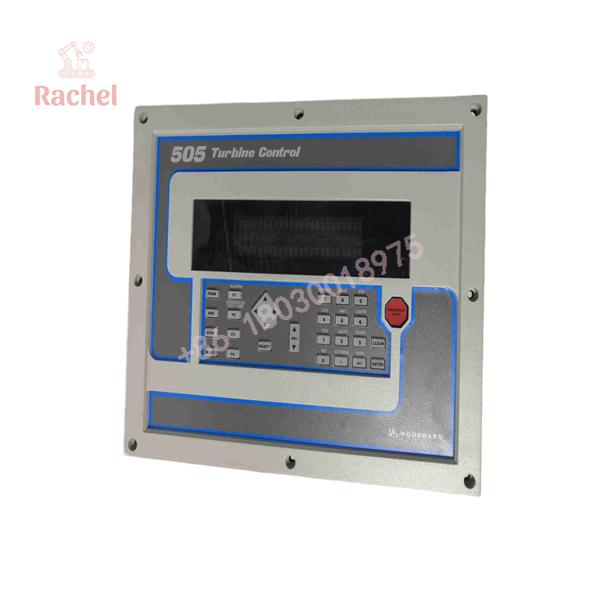
9907-167
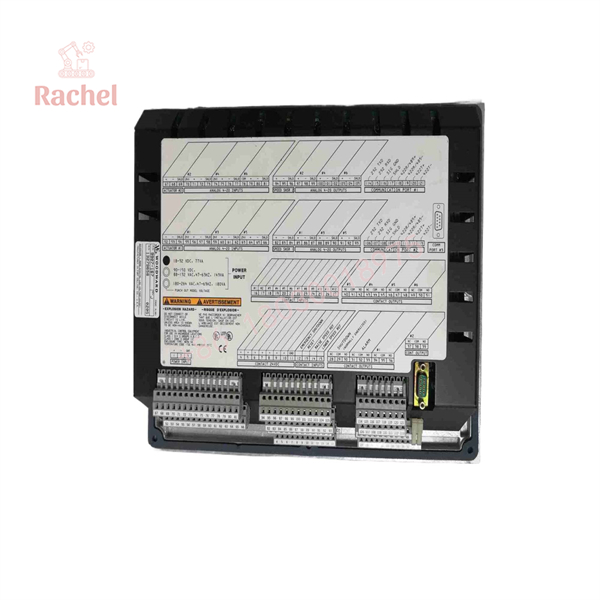
9907-167
Transparency SOP: Quality Assurance & Testing
Turbine controls require zero-defect reliability. Every Woodward 9907-167 unit undergoes a strict bench test process before leaving our facility:
- Inbound Visual & Mechanical Audit: We inspect keypad membranes, display backlights, chassis integrity, terminal screws, and OEM label serial numbers.
- High-Voltage Power Supply Bench Test: The internal power supply is energized under both 120 VAC and 230 VAC inputs to check DC voltage rail stability, transformer thermal rise, and soft-start circuitry.
- Dual Speed Frequency Injection: Using signal generators, pulse frequencies from 10 Hz to 15 kHz are fed into both MPU input channels to verify frequency measurement linearity, speed loop response, and overspeed trip points.
- Actuator Current Sweep: The 4–20 mA and 0–200 mA actuator driver channels are swept from 0 to 100% load while measuring loop output linearity and impedance handling.
- Relay Load & Modbus Communication Test: Every relay contact is cycled under electrical load, and serial communication ports are polled using a Modbus master simulator to ensure error-free register transfers.
The Veteran’s Tech Trap Guide
- ⚠️ Confirm Voltage Configuration Before Power-Up: The 9907-167 is a high-voltage unit. Applying 24 VDC logic power to its primary power terminals will result in a failure to boot, while feeding high-voltage AC into a 24 VDC unit (like a 9907-019) will blow the board instantly. Always double-check part numbers and supply voltage ratings before flipping the breaker.
- ❗ Backup Configuration Parameters First: Before removing a faulty 9907-167 module, manually record all valve position curves, speed ramps, overspeed trip limits, and PID gains from the front screen, or extract the file via Woodward WatchWindow software. Replacement modules arrive with default factory settings and must be programmed for your specific turbine dynamics.
- ⚠️ Ground Speed Cable Shields at One End Only: Connect MPU cable shielding strictly to the dedicated shield terminal on the 9907-167. Grounding the cable shield at both the sensor head and the controller chassis creates ground loops that introduce electrical noise, resulting in erratic speed feedback or false overspeed trips.
- ❗ Verify Actuator Coil Current Settings: Ensure internal board jumpers match your electro-hydraulic actuator specs (whether 4–20 mA or low-impedance 0–200 mA coils). Mismatched jumper settings will limit valve travel or cause actuator driver fault alarms.
Frequently Asked Questions
Q: What is the main difference between the Woodward 9907-019 and 9907-167?
A: Both are 505 digital controls for single-actuator steam turbines. The primary difference is input power supply voltage: the 9907-019 requires an 18–32 VDC supply, whereas the 9907-167 features a high-voltage power supply operating on 88–132 VAC / 90–150 VDC or 180–264 VAC.
Q: Can a 9907-167 be used on an extraction/admission steam turbine?
A: No. The 9907-167 is designed for single-actuator steam turbines. Dual-actuator extraction/admission turbines require a 505E series controller, such as the Woodward 9907-029.
Q: How do I clear an “Overspeed Trip” fault on the display?
A: Ensure turbine speed has dropped below the overspeed reset threshold, then press the front keypad RESET button or energize the configured discrete “Remote Reset” input contact.
Q: Does this unit support Modbus SCADA integration?
A: Yes. The 9907-167 includes serial communication ports running Modbus RTU protocol, allowing plant DCS and SCADA systems to monitor real-time turbine speed, valve position feedback, operating modes, and active alarms.
Q: What warranty is offered with surplus or refurbished 9907-167 units?
A: Every unit supplied carries a complete 12-month operational warranty covering all internal hardware components and functional performance.

 Start Chat


