





Description
Product Introduction
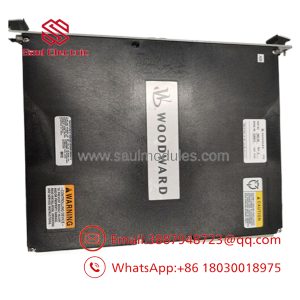
The Woodward PEAK200-HVAC 8200-1501 is a digital steam turbine controller designed for small and medium industrial steam turbines. It combines turbine speed control, load control, startup sequencing, protective logic, and operator interface into a single controller. The 8200-1501 variant is the bulkhead-mounted, low-voltage, ATEX Zone 2 version within the PEAK200 product family.
Unlike older analog governors or first-generation digital controls, the PEAK200 integrates a graphical HMI, configurable PID control loops, event logging, Ethernet networking, and distributed I/O expansion. This architecture reduces external hardware while supporting applications such as turbine-driven compressors, pumps, generators, and process steam systems.
Key Technical Specifications
| Parameter | Value |
|---|---|
| Manufacturer | Woodward |
| Model | PEAK200-HVAC 8200-1501 |
| Product Family | PEAK200 |
| Product Type | Digital Steam Turbine Controller |
| Mounting | Bulkhead Mount |
| Power Supply | Low Voltage (LV) |
| Hazardous Area Rating | ATEX Zone 2 |
| Speed Inputs | Dual MPU Speed Inputs |
| Analog Inputs | 4 Configurable Inputs (Expandable) |
| Analog Outputs | 3 Configurable Outputs (Expandable) |
| Communications | Ethernet, Modbus TCP/UDP, Modbus RTU/ASCII, CAN (LinkNet-HT) |
| Control Functions | Speed, Load, Pressure, Flow, Startup, Shutdown, Overspeed Protection |
| Operator Interface | Integrated Color Graphic Display |
| Expandability | LinkNet-HT Distributed I/O Modules Supported |
The PEAK200 family supports configurable applications including turbine speed/load control, inlet or exhaust header pressure control, compressor control, and pump process control. Exact hardware capabilities should be verified against the installed firmware and application configuration.
Application Scenarios & The “Trench” Experience
Here’s a situation many turbine engineers recognize.
A steam turbine refuses to synchronize after a scheduled shutdown. Operators assume the actuator has failed, maintenance suspects the speed probes, and hours disappear before someone discovers the controller has developed an internal fault after years of continuous service.
Replacing only the controller—without modifying field wiring or the control philosophy—often returns the turbine to operation much faster than redesigning the entire governor system.
Typical Applications
- Power Generation — Small Industrial Steam Turbines — Controls startup sequencing, speed regulation, and load sharing.
- Oil & Gas — Compressor Drive Turbines — Maintains stable compressor speed while regulating process pressure.
- Chemical Processing — Steam-Driven Pumps — Controls turbine speed according to process demand.
- Pulp & Paper — Backpressure Steam Turbines — Balances electrical generation with plant steam requirements.
- Refineries — Mechanical Drive Turbines — Provides integrated protection and process control for continuous-duty equipment.
Field Replacement Example
During a refinery turnaround, a legacy governor controller failed its startup self-test after nearly two decades of operation. Engineering already had validated control logic and field wiring, so replacing the defective controller avoided a complete control-system redesign. After restoring the configuration file, verifying speed probe calibration, and testing trip functions, the turbine returned to service within the planned maintenance window instead of extending the outage by several days.
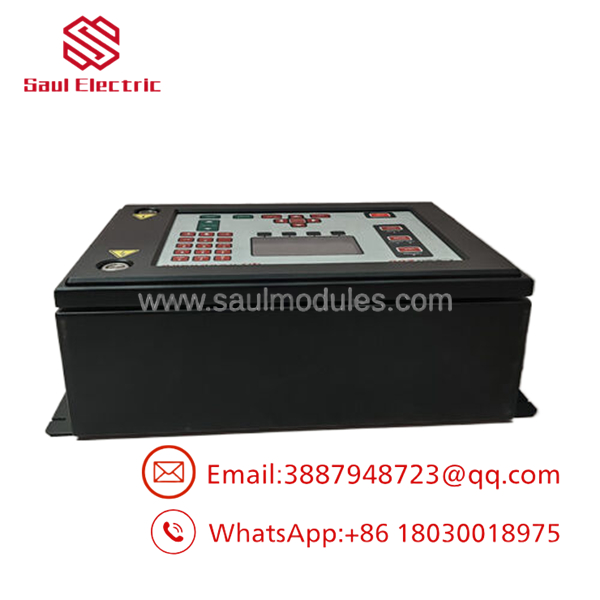
- PEAK200-HVAC 8200-1501
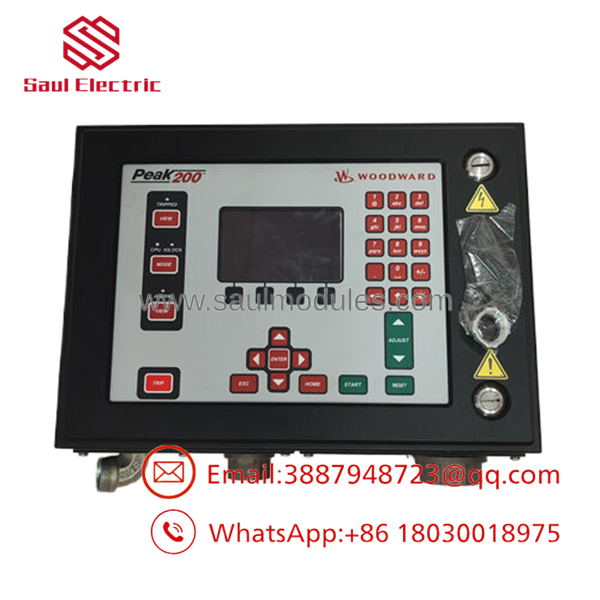
- -HVAC 8200-1501
Transparency SOP: Quality Assurance & Testing
We don’t just ship boxes; we test them on actual Woodward control platforms whenever compatible hardware is available.
- Inbound Inspection
- Verify OEM identification label and serial number
- Inspect display, keypad, enclosure, and connectors
- Check PCB for contamination, corrosion, or previous repair
- Live Rig Testing
- Power-on diagnostics
- Display and keypad verification
- Ethernet communication test
- Modbus communication handshake
- I/O simulation where applicable
- Electrical Parameter Checks
- Input voltage verification
- Analog input calibration check
- Relay output operation
- Communication port validation
- Firmware Verification
- Record firmware revision
- Record application version
- Verify hardware revision compatibility
- Final QC & Packaging
- Functional verification
- Anti-static packaging
- Industrial protective foam
- Serialized inventory record
- 12-month warranty documentation
The Veteran’s Tech Trap Guide
⚠️ Always Back Up the Application First
The stores site-specific configuration files. Before replacing the controller, save the application, tunable parameters, and event logs. Losing them can turn a one-hour replacement into a full recommissioning job. Woodward provides Control Assistant and AppManager procedures for retrieving tunables and updating applications.
⚠️ Verify the Mounting Variant
controllers are available in bulkhead and front-panel versions, as well as low-voltage, high-voltage, ATEX Zone 2, and hazardous-location variants. Two units may look similar but are not necessarily interchangeable. Confirm the complete part number before ordering.
❗Test Both Speed Sensors
The controller supports redundant magnetic pickup (MPU) inputs. A faulty speed sensor can produce symptoms that resemble a controller failure. Verify sensor signals before replacing the control hardware.
⚠️ Review Every Protection Setting
Overspeed limits, warm-up timers, valve travel limits, and trip logic should all be reviewed after installation. Never assume the replacement controller contains the correct application file.
Frequently Asked Questions (FAQ)
Q1. Does the -HVAC 8200-1501 support hot swapping?
No. Remove control power before replacing the controller. Replacing it while energized can interrupt turbine protection and damage connected equipment.
Q2. Is the intended only for speed control?
No. It also supports load control, pressure control, flow control, startup sequencing, shutdown sequencing, overspeed protection, and configurable PID process control.
Q3. Can the controller communicate with a DCS or SCADA system?
Yes. The supports Ethernet networking along with Modbus TCP/UDP, Modbus RTU/ASCII, and CAN-based LinkNet-HT communications for integration with plant control systems.
Q4. Why is firmware compatibility important?
Application files, firmware revisions, and hardware revisions determine compatibility. Before replacing the controller, compare the installed firmware and restore the correct application configuration.
Q5. Is this controller still supported?
The family remains documented by Woodward, and software assets, manuals, and product support resources are available. Lifecycle status should be confirmed using Woodward’s Product History Lookup with the controller serial number and part number.
Q6. Why is surplus inventory less expensive than purchasing directly from the OEM?
Many units come from canceled projects, plant upgrades, or unused maintenance inventories. Lower pricing reflects the sourcing channel rather than reduced functionality.
Q7. Is every controller tested before shipment?
Yes. Functional testing typically includes power-up verification, communication testing, display inspection, firmware recording, and final quality inspection before anti-static packaging.
Veteran’s advice: Before removing the old controller, export the application file, label every field cable, and photograph each terminal block. The hardware swap is usually the easy part. Recovering lost configuration data is what keeps engineers at the plant long after everyone else has gone home.

 Start Chat


