





Description
Product Introduction
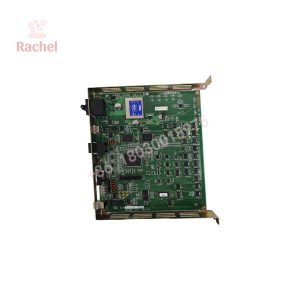
The Yaskawa CPS-150F is a rugged, rack-mounted industrial power supply module designed specifically for powering system backplanes, CPU controllers, and expansion racks in Yaskawa CNC and motion control systems. It acts as the central power conversion engine, stepping down wide-range utility AC power into tightly regulated DC rails required by delicate onboard logic circuits and digital I/O interfaces.
Built for harsh factory-floor environments, the CPS-150F incorporates heavy-duty filtering to isolate sensitive control electronics from industrial line noise, voltage spikes, and harmonic distortion caused by neighboring VFDs or servo drives. Unlike standard DIN-rail switchers, its integrated edge connectors and keyed mounting chassis ensure seamless thermal dissipation and steady current delivery during heavy multi-axis motion demands.
Key Technical Specifications
| Parameter | Value / Description |
|---|---|
| Manufacturer | Yaskawa Electric Corporation |
| Model Number | CPS-150F |
| Product Type | System Power Supply Unit |
| Nominal Input Voltage | 100 to 240 VAC (Wide Range Single-Phase) |
| Input Frequency | 50 / 60 Hz |
| Output Power Rating | 150 Watts Maximum Continuous |
| DC Voltage Outputs | Multi-channel regulated logic and I/O bus voltages |
| Protection Features | Overcurrent (OCP), Overvoltage (OVP), Thermal Shutdown |
| Status Indicators | LED Status Display (POWER OK, ALARM / FAULT) |
| Form Factor | Proprietary Yaskawa Controller Rack Slot / Backplane Insert |
Application Scenarios & The “Trench” Experience
A multi-axis CNC gantry drops dead mid-tool-change with a blank operator panel. The maintenance team spends two hours chasing ghost encoder errors, only to realize the internal 5V logic rail supplied by an aging power supply module collapsed down to 3.8V under load. In automated production cells, a degraded power unit doesn’t always fail cleanly—it creates random, infuriating system lockups.
- Automotive Stamping & Robotics – Supplies uninterrupted logic power to multi-axis robot controllers and safety interlock circuits.
- Precision CNC Machining Centers – Drives main processor racks and high-speed encoder feedback processing cards without voltage ripple.
- Packaging & Material Handling Systems – Maintains clean bus power across high-vibration sorting and conveyor automation lines.
- Semiconductor Wafer Processing – Ensures ultra-stable, transient-free DC rails for motion controllers running sub-micron positioning equipment.
Real-World Field Case Study
During a busy shift at a midwestern automotive component plant, a critical CNC milling station repeatedly tripped with intermittent “System Bus Failure” codes. The plant technician initially suspected a blown main CPU board, which would have meant days of re-flashing parameters and thousands in hardware costs.
In our field experience, fluctuating logic rails are the primary hidden cause of intermittent bus errors. A quick meter check on the CPS-150F module revealed that its internal filter capacitors had dried out over 10 years of continuous heat exposure, causing severe output voltage ripple. The maintenance crew swapped in a tested surplus CPS-150F unit, restored stable DC power to the rack backplane, and got the line producing parts again in under 45 minutes without losing a single line of machine code.
Transparency SOP: Quality Assurance & Testing
We don’t just ship boxes; we test them on actual Yaskawa controller test racks under real electrical loads. Every CPS-150F power supply module undergoes a rigorous multi-point testing regimen prior to dispatch:
- Inbound Visual & Component Audit: Inspect the metal housing, backplane pin arrays, and front connectors for thermal discoloration, swollen electrolytic capacitors, or pin corrosion.
- AC Line Insulation & Megger Testing: Perform high-potential insulation resistance checks between AC input terminals and chassis ground to verify isolation safety.
- Full-Load Thermal & Voltage Stress Test: Mount the module in a Yaskawa backplane and pull a continuous 100% rated amp load across all output rails for a minimum of 4 hours while monitoring thermal dissipation.
- Output Ripple & Dynamic Load Analysis: Measure DC output quality using an oscilloscope to guarantee voltage ripple stays strictly within OEM millivolt tolerances under sudden load steps.
- Final Quality Check & Anti-Static Packaging: Apply protective port caps, seal the unit in heavy-duty ESD shielding bags, and pack it with high-density foam for safe transport.
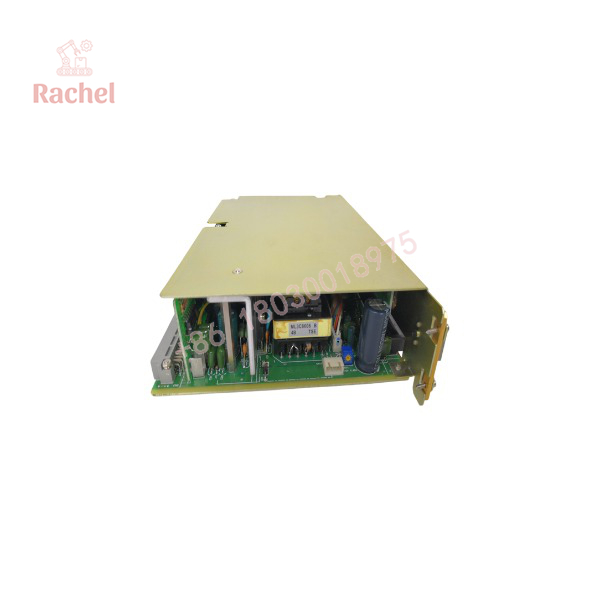
CPS-150F
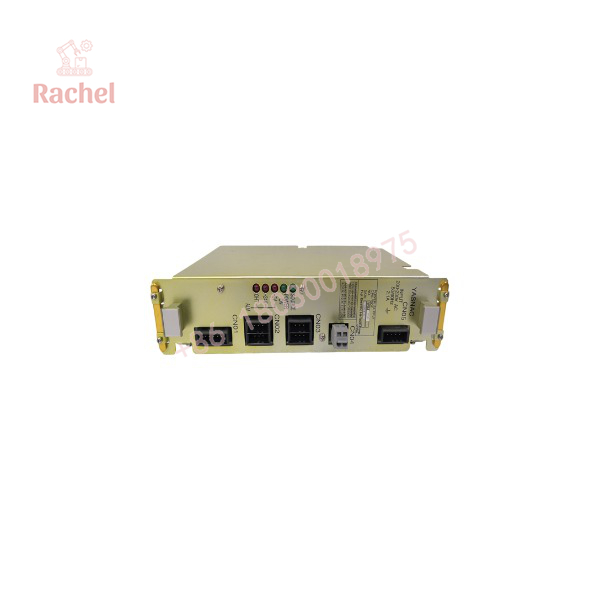
CPS-150F
The Veteran’s Tech Trap Guide (Crucial Value-Add)
⚠️ Never Hot-Swap Power Modules: Shut down main 3-phase power and allow the system’s bus capacitors to discharge fully before pulling or inserting the CPS-150F. Removing this module live will arc the backplane connector pins and permanently damage downstream CPU and axis cards!
❗ Check for Downstream Shorts First: If a CPS-150F immediately trips its internal protection or blows an line fuse upon installation, do not force it. You likely have a shorted I/O card or shorted field sensor drawing excessive current from the 24V supply. Unplug downstream cards one by one to isolate the fault.
⚠️ Mind the Heat Dissipation: These units rely on clear airflow through the controller cabinet. If the cabinet cooling fans fail or filters become clogged with machine shop oil mist, the CPS-150F will thermal-throttle, lowering its output voltage and causing random processor resets. Clean those fan filters!
❗ Verify Backplane Alignment: Slide the unit smoothly along the chassis guide rails. If you meet firm resistance before the module sits flush, stop. Forcing it will bend or snap the rear connector pins on the backplane motherboard.
Frequently Asked Questions (FAQ)
Q: Can I use a standard 24V DIN-rail power supply to replace the CPS-150F? A: No. The CPS-150F is a dedicated rack module that supplies multiple internal system voltages directly to the controller backplane edge connectors. A generic external 24V power supply lacks the necessary multi-rail pinouts and form factor.
Q: What are the primary signs that a CPS-150F power supply is starting to fail? A: Common symptoms include erratic controller reboots during heavy motor acceleration, “Power Fault” or “Bus Error” LED alarms on the main CPU, visible bulging/leaking of internal capacitors through the ventilation slots, or a complete lack of front panel LED illumination.
Q: Does the CPS-150F accept both 110V and 220V AC input? A: Yes. The module features an auto-ranging/wide-input AC front end designed to handle standard global utility voltages from 100VAC to 240VAC without needing manual jumper or switch adjustments.
Q: Is it possible to repair an existing CPS-150F unit instead of replacing it? A: Yes. Common failure points like worn-out electrolytic capacitors, blown input rectifiers, or failed switching transistors can be repaired. However, replacing the unit with a pre-tested, warrantied surplus module is usually the fastest route to eliminate costly machine downtime.
Q: What warranty coverage is provided with this module? A: All new surplus and fully refurbished Yaskawa CPS-150F modules come standard with our 12-month comprehensive replacement warranty.
Q: Why buy surplus Yaskawa modules rather than ordering direct from the OEM? A: Legacy CNC and motion control hardware often carries excessive OEM lead times and steep price markups. Sourcing tested surplus or refurbished stock provides immediate delivery of original components at a fraction of the cost, keeping your existing machinery running without expensive panel retrofits.

 Start Chat


