





Description
Product Introduction & Engineering Value
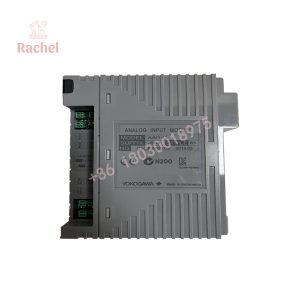
The Yokogawa AAI835-H50 is intended for FIO-based CENTUM control architectures where both process measurement and analog control output are required in the same module. Its four inputs and four outputs handle standard 4–20 mA loops, while the HART variant adds digital communication for compatible field instruments.
The important selection point is the complete suffix: H50 means HART communication, no explosion protection, and basic configuration. That distinction matters when replacing an AAI835-S50 or selecting a module for an existing terminal-board and cable arrangement.
Technical Specifications
| Specification | AAI835-H50 |
|---|---|
| Module function | Analog current I/O |
| Input channels | 4 |
| Output channels | 4 |
| Input signal | 4–20 mA DC |
| Output signal | 4–20 mA DC |
| Isolation | Isolated channels |
| HART | Supported |
| Allowable input current | 25 mA |
| Input resistance, power ON | 290 Ω at 20 mA to 450 Ω at 4 mA |
| Input resistance, power OFF | ≥500 kΩ |
| Input accuracy | ±16 µA |
| Output accuracy | ±48 µA |
| Output load resistance | 0–750 Ω |
| Data update period | 10 ms |
| Transmitter supply | ≥15.0 V at 20 mA; ≤29.3 V at 0 mA |
| Circuit-open detection | Output current <0.65 mA |
| Maximum current consumption | 360 mA at 5 VDC; 450 mA at 24 VDC |
| Weight | Approximately 0.2 kg |
| Temperature drift | ±16 µA/10 °C |
These values are consistent across available AAI835 technical documentation and secondary reproductions of the Yokogawa specification.
Model Code Breakdown
AAI835-H50
- AAI835 — 4-channel analog input / 4-channel analog output module with isolated channels.
- H — digital communication using the HART protocol.
- 5 — no explosion protection.
- 0 — basic type.
Do not interpret the 5 as an explosion-protection designation. Yokogawa’s suffix structure specifically distinguishes the non-explosion-protected 5 version from the explosion-protected E version.
Field Application & Practical Engineering Use
A typical application is a CENTUM FCS cabinet where several field transmitters provide 4–20 mA process values while final control elements require analog current outputs. Using AAI835-H50 keeps four input loops and four output loops within the same isolated I/O module.
A second use case is an instrument loop where the 4–20 mA signal is the primary control variable but maintenance personnel also need HART access to compatible smart instruments. The HART capability is part of the -H module configuration rather than a generic feature of every AAI835 variant.
For redundant architectures, Yokogawa documentation identifies AAI835 as a module that can be incorporated into dual-redundant configurations. The associated terminal-board documentation also lists AAI835 among the modules supported by the A1BA4D and AEA3D/AEA4D terminal arrangements, depending on the connection architecture.
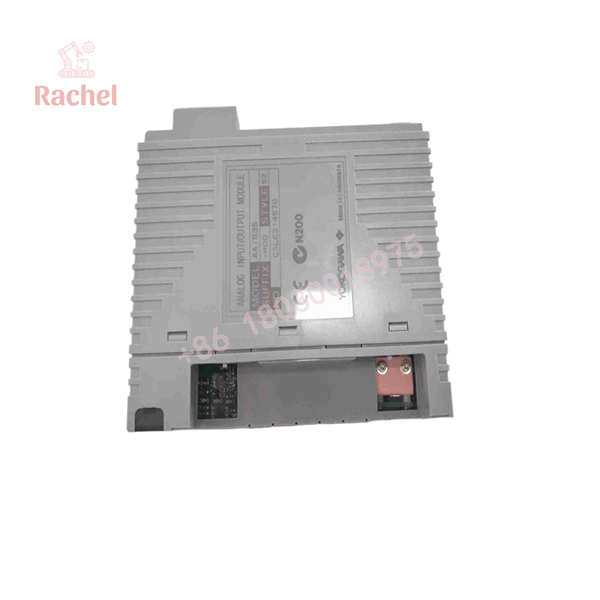
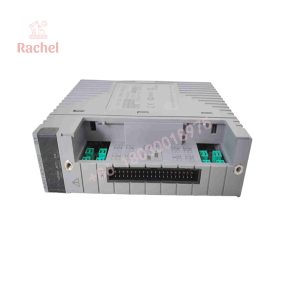
AAI835-H50
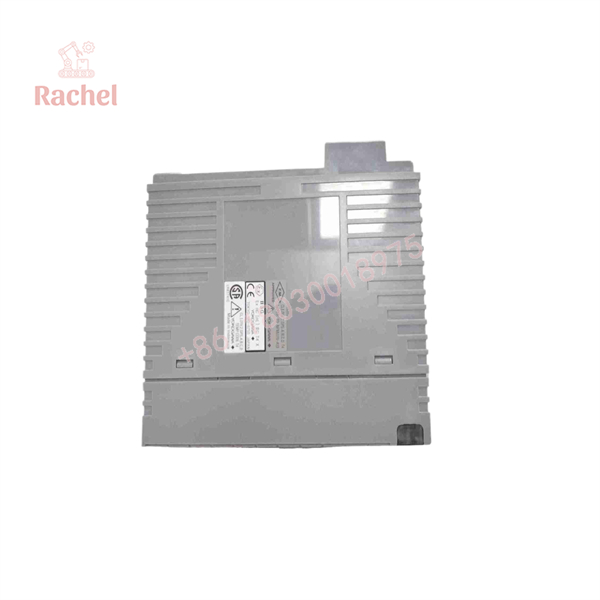
AAI835-H50
Connection and Terminal Considerations
The AAI835 family can be paired with several connection arrangements, including:
- /B3A00 — ATB3A-00 KS Cable Interface Adapter
- /K4A00 — ATK4A-00 KS Cable Interface Adapter
- /13S00 — ATI3S-00 pressure-clamp terminal block
- /13S10 — ATI3S-10 pressure-clamp terminal block with surge absorber
- /13D00 — ATI3D-00 dual pressure-clamp terminal block
- /13D10 — ATI3D-10 dual pressure-clamp terminal block with surge absorber
- /CCC01 — ACCC01 connector cover for MIL cable
These option codes are important when replacing a complete installed assembly. A bare AAI835-H50 and an -H50/K4A00 identify the same basic I/O module but do not represent the same supplied connection configuration.
QA & Testing SOP
For New Surplus or previously installed inventory, the useful inspection is more than a visual power-on check.
1. Identity verification
- irm marking.
- Check suffix configuration and revision information.
- Verify connectors and option hardware against the purchase specification.
2. Physical inspection
- Inspect PCB surfaces, connectors, terminal interfaces, and retaining hardware.
- Check for corrosion, bent contacts, contamination, or evidence of rework.
- Confirm that unused connectors are properly protected during storage and installation.
3. Analog input test
- Apply calibrated 4–20 mA signals to each input channel.
- Verify measured values at multiple points rather than checking only 4 mA and 20 mA.
- Record channel-to-channel results against the expected accuracy.
4. Analog output test
- Command representative output values across the 4–20 mA range.
- Verify the output into a controlled load within the specified 0–750 Ω range.
- Confirm circuit-open detection behavior where the test setup supports it.
5. HART verification
- Test HART communication with a compatible field-device simulator or instrument.
- Verify communication independently on applicable channels rather than assuming that analog loop operation proves HART functionality.
6. System-level verification
- Where practical, install the module in the appropriate FIO test environment and verify module recognition, analog values, output commands, and diagnostics.
For New Surplus inventory, authenticity should be established from the physical Yokogawa identification, model/suffix markings, packaging or traceability records where available, and electrical test results—not simply from a supplier’s product-page description.
Veteran’s Tech Trap Guide
⚠️ Trap 1 — Buying AAI835-S50 when the system requires HART
The difference between S and H is functional. AAI835-H50 is the HART version; do not substitute an S50 merely because the channel count and 4–20 mA ranges look identical.
⚠️ Trap 2 — Treating H50 as explosion protected
It is not. The 5 suffix denotes the configuration with no explosion protection. The explosion-protected version uses the E suffix. Hazardous-area installation therefore requires checking the actual system design and applicable barriers/field wiring rather than relying on the HART designation.
⚠️ Trap 3 — Ignoring the connection option
AAI835-H50/K4A00 includes the ATK4A-00 KS Cable Interface Adapter. If the existing cabinet uses a different terminal arrangement, ordering only the module can leave a mechanical or wiring-interface mismatch.
PRO TIP: When replacing an installed AAI835, photograph the module label, terminal interface, connector arrangement, and adjacent terminal board before ordering. The base model alone does not always capture the complete cabinet connection configuration.
FAQ
What is the Yokogawa AAI835-H50?
It is an isolated analog current I/O module with 4 analog inputs and 4 analog outputs, all using 4–20 mA signals. The H suffix identifies the HART-capable version.
oes support HART?
Yes. The H50 configuration includes digital communication using the HART protocol.
Is isolated?
Yes. The AAI835 is specified with isolated input/output channels, including isolation between the field/system and between channels.
What is the differenceen and -S50?
Both are 4-input/4-output, 4–20 mA AAI835 configurations, but H50 includes HART communication, while S50 is the standard non-HART configuration.
Is AAI835-H50 explosion protected?
No. The 5 suffix identifies the no-explosion-protection configuration. Yokogawa separately defines E as the explosion-protection suffix.
Can AAI835-H50 be used in a redundant FIO configuration?
Yokogawa’s AAI835 documentation states that the module can be used in a dual-redundant configuration, provided the associated system architecture and terminal arrangement are correctly configured.
What should be verified when purchasing New Surplus AAI835-H50?
At minimum, verify the physical marking, suffix, connector/terminal configuration, condition of the PCB and connectors, and electrical test results. For HART applications, include a communication test rather than relying solely on a 4–20 mA loop test.
What warranty should I expect?
Warranty terms depend on the supplier and stock condition. For New Surplus inventory, the purchase documentation should explicitly state the warranty period and return conditions. Do not treat a third-party supplier’s warranty as a Yokogawa OEM warranty; one supplier listing, for example, advertises its own one-year warranty rather than an OEM warranty.

 Start Chat


