





Description
Product Introduction
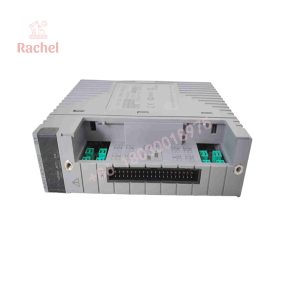
The Yokogawa ALE111-S01 is an Ethernet communication module used with Yokogawa safety control stations and ESB bus-connected node units. It provides a 10 Mbps IEEE 802.3 10BASE-T, half-duplex, point-to-point RJ-45 link for Modbus and DNP3 communication with external subsystems.
The -S01 suffix identifies the standard, non-explosion-protected basic type with style code S1. It is intended for integration into SSC50, SSC60, and SSC57 safety control units or an SNB10D safety node unit—not as a general-purpose office Ethernet switch or fieldbus gateway.
Key Technical Specifications
| Parameter | Value |
|---|---|
| Manufacturer | Yokogawa Electric Corporation |
| Model | ALE111-S01 |
| Product type | Ethernet communication module |
| Communication protocols | Modbus and DNP3 |
| Physical layer | IEEE 802.3 10BASE-T, half-duplex |
| Transmission speed | 10 Mbps |
| Connector | RJ-45 |
| Connection method | Point-to-point |
| Cable type | 100-ohm unshielded twisted-pair cable |
| Maximum cable length | 100 m |
| Mounting locations | SSC50, SSC60, SSC57 safety control units; SNB10D safety node unit |
| Style code | S1 |
| Unit revision requirement | U:2 or later |
| Suffix code | -S standard type |
| Explosion protection | None |
| Typical power requirement | 24 VDC, approximately 0.5 A, per one supplier listing; verify against installed system documentation |
| Weight | Approximately 0.3 kg, per one supplier listing |
Application Scenarios & The “Trench” Experience
A Yokogawa safety control station suddenly loses communication with a third-party PLC or SCADA interface. The controller is healthy, but Modbus polling stops and the operator sees stale data. Before replacing the entire safety node, check the ALE111: a failed Ethernet module, marginal RJ-45 connection, or incorrect 10BASE-T link configuration can isolate the subsystem while leaving control logic intact.
- Oil and gas – Safety instrumented system (SIS) integration with third-party PLCs and RTUs – Required for Modbus and DNP3 communication from a Yokogawa safety control station.
- Power generation – Turbine, boiler, and plant auxiliary-system interfaces – Required for reliable Ethernet data exchange between Yokogawa control hardware and external subsystems.
- Chemical and petrochemical – Safety control station to SCADA or PLC integration – Required for point-to-point 10BASE-T communication and DNP3/Modbus protocol support.
- Water, wastewater, and utilities – Remote node communication to SCADA or RTU systems – Required for ESB bus-connected node integration and industrial Ethernet connectivity.
- Legacy Yokogawa DCS maintenance – Replacement of a failed ALE111-S01 in an existing SCS or SNB10D installation – Required because style code, unit revision, and mounting location are system-specific.
Field case study: A plant’s Yokogawa safety control station intermittently lost DNP3 communication with a downstream RTU. Network technicians replaced switches and cables with no improvement. The ALE111-S01’s RJ-45 latch was damaged and the link intermittently dropped during vibration. A tested replacement module restored stable communication in under an hour. The original cable run was fine; the module connector was not.
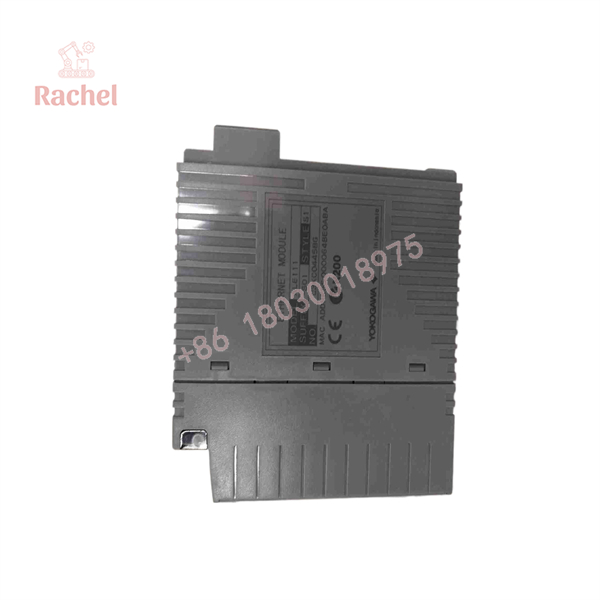
ALE111-S01
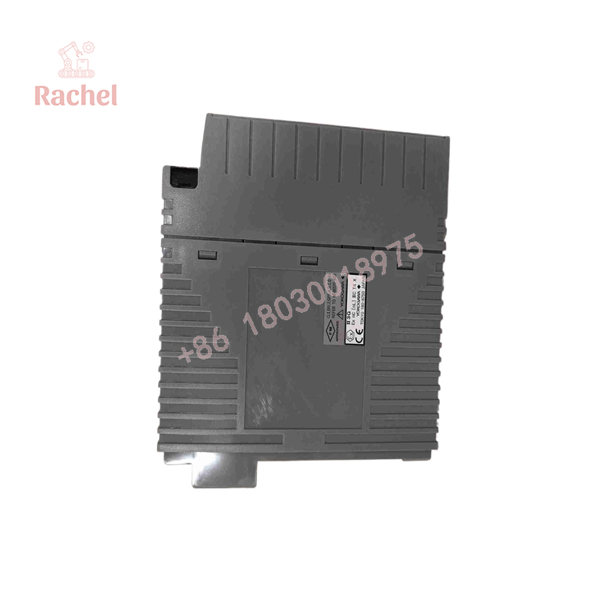
ALE111-S01
Transparency SOP: Quality Assurance & Testing
We don’t just ship boxes; we test them in a compatible Yokogawa SCS/ESB environment or equivalent communication rig where available.
- Inbound inspection: Verify model marking, style code S1, RJ-45 condition, ESB connector integrity, PCB damage, and evidence of prior repair.
- Anti-counterfeit check: Compare label format, housing construction, connector hardware, and PCB layout against known Yokogawa ALE111 examples.
- Live rig testing: Install in a compatible SSC50/SSC60/SSC57 or SNB10D configuration; verify module recognition and communication initialization.
- Protocol testing: Exercise Modbus and DNP3 communication where the test system supports them; confirm stable polling, response timing, and error-free data transfer.
- Link testing: Verify 10BASE-T link establishment, cable-length behavior, and stable half-duplex operation over a known-good RJ-45 connection.
- Redundancy/configuration verification: Confirm the installed unit revision and style code meet the system’s compatibility requirements.
- Final QC and packaging: Record test results, protect RJ-45 and backplane connectors, and ship in anti-static packaging.
The Veteran’s Tech Trap Guide
- ⚠️ Do not assume it is a 10/100 Mbps module. The OEM documentation specifies IEEE 802.3 10BASE-T at 10 Mbps, half-duplex. Some reseller pages incorrectly advertise 10/100 Mbps operation.
- ❗ Check the style code and unit revision. Yokogawa requires ALE111 style code S1 with unit revision U:2 or later for the documented application. Mixing revisions can create configuration or compatibility problems.
- ⚠️ Use a point-to-point cable, not a switched office network. This module is specified for point-to-point 10BASE-T communication over 100-ohm unshielded twisted-pair cable.
- ❗ Inspect the RJ-45 latch and cable boot. Vibration and repeated patching can crack the latch or damage the jack, producing intermittent DNP3/Modbus communication that looks like a software fault.
- ⚠️ Confirm the mounting location. The ALE111 is documented for SSC50, SSC60, SSC57, and SNB10D installations. Do not assume it mounts in every Yokogawa FIO or CENTUM VP node.
Frequently Asked Questions
Q: Is the ALE111-S01 hot-swappable?
A: Treat it as a powered-down replacement unless your specific Yokogawa system documentation explicitly permits online module replacement. Removing it can interrupt Modbus or DNP3 communication and affect the safety/control subsystem.
Q: Does it support Modbus TCP?
A: The OEM documentation describes Modbus and DNP3 communication over a 10 Mbps 10BASE-T link. Do not assume full Modbus/TCP functionality without confirming the exact firmware, system configuration, and Yokogawa documentation.
Q: Can I connect it to a modern gigabit switch?
A: It is specified as 10BASE-T, half-duplex, point-to-point. A modern switch may negotiate a link, but that is not the documented operating arrangement. Use the Yokogawa-approved point-to-point configuration and cable specification.
Q: What is the maximum cable length?
A: 100 m over 100-ohm unshielded twisted-pair cable, consistent with the 10BASE-T physical-layer specification.
Q: Is -S01 the same as -S00?
A: No. The suffix defines configuration differences. The -S01 is commonly identified as the standard S1 basic type; verify the exact suffix, style code, and unit revision before ordering.
Q: Why is surplus stock cheaper than direct OEM supply?
A: Surplus suppliers source retired DCS inventory, excess project stock, and decommissioned systems. The price can be lower, but condition and test coverage vary—so require communication, link, and protocol test evidence.
Q: What warranty should I expect?
A: For a tested refurbished or surplus unit, 12 months is a reasonable baseline. Some suppliers advertise 12-month coverage; confirm whether it covers functional failure, replacement, repair labor, and exclusions for incorrect installation or configuration.

 Start Chat


