





Description
Product Introduction & Engineering Value
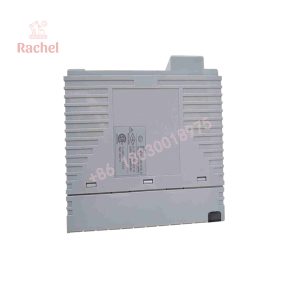
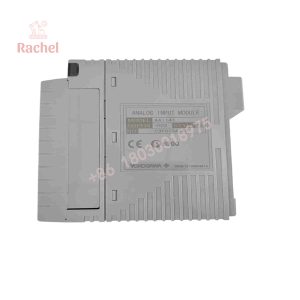
The Yokogawa AAI143-H50K4A00 is designed for process transmitters that deliver standard 4–20 mA signals into a Yokogawa FIO control system. Unlike the non-isolated AAI141, AAI143 provides isolated analog inputs, while the HART-enabled -H configuration allows compatible smart transmitters to exchange digital device information over the analog loop.
The /K4A00 configuration is equally important during replacement. It identifies the ATK4A-00 KS Cable Interface Adapter, used with the applicable AEA4D terminal-board arrangement. A replacement should therefore match the complete ordering code rather than only the AAI143 base model.
Technical Specifications
| Specification | AAI143-H50K4A00 |
|---|---|
| Manufacturer | Yokogawa Electric Corporation |
| Model | AAI143 |
| Input Type | Analog current input |
| Input Range | 4–20 mA DC |
| Input Channels | 16 |
| Isolation | Isolated |
| HART | Supported |
| Explosion Protection | None; suffix 5 |
| Basic Type | 0 |
| Transmitter Type | 2-wire / 4-wire |
| Transmitter Configuration | Channel-selectable |
| Data Update Period | 10 ms |
| Accuracy | ±16 µA |
| Transmitter Supply | ≥19.0 V at 20 mA; ≤25.5 V at 0 mA |
| Transmitter Supply Current Limit | 25 mA |
| Maximum Current Consumption | 230 mA at 5 VDC; 540 mA at 24 VDC |
| Interface | KS Cable Interface Adapter |
| Adapter Model | ATK4A-00 |
| Terminal Board | AEA4D |
| Approx. Weight | 0.3 kg |
The core electrical values above are supported by Yokogawa documentation and corroborating technical listings. The official documentation specifies 16 isolated 4–20 mA channels, ±16 µA accuracy, a 10 ms data-update period, and HART capability for the -H configuration.
Ordering-code breakdown
AAI143-H50K4A00
- AAI143 — 16-channel isolated 4–20 mA analog input module
- H — HART digital communication
- 5 — no explosion protection
- 0 — basic type
- /K4A00 — KS Cable Interface Adapter, ATK4A-00, for the AEA4D terminal-board connection
Yokogawa’s model table confirms these suffix meanings.
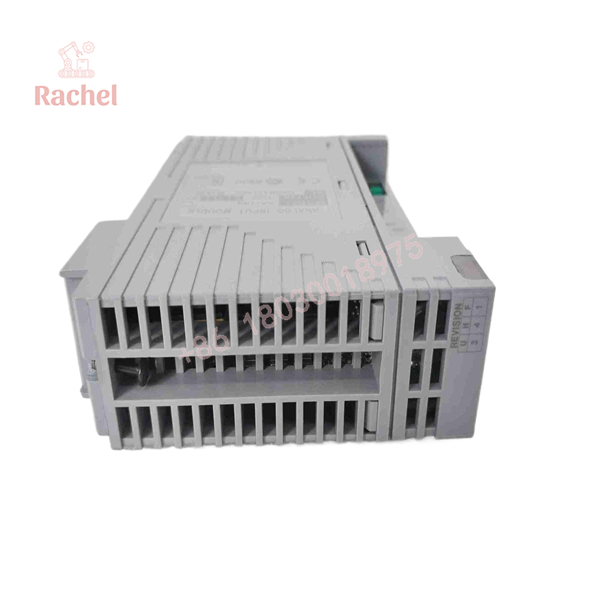
AAI143-H50K4A00
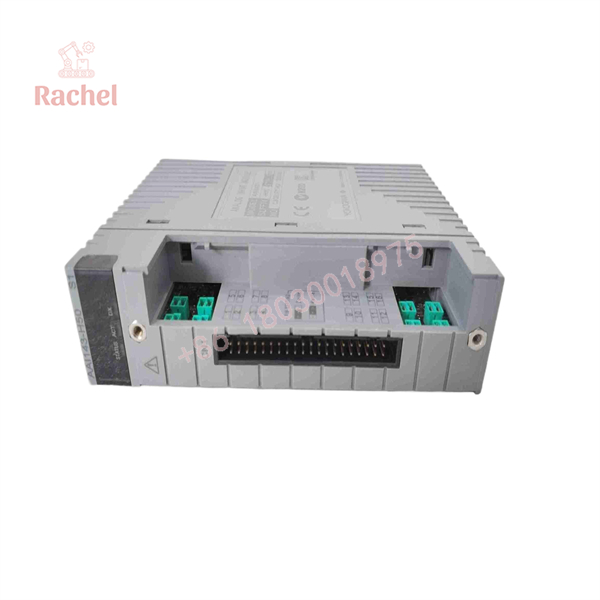
AAI143-H50K4A00
Field Application & Practical Engineering Scenario
A typical application is a CENTUM VP FIO cabinet receiving 4–20 mA signals from smart pressure, flow, level, or process analyzers. The AAI143-H50K4A00 can acquire the analog process value while the HART function provides an additional digital communication path for compatible field devices.
Application scenarios
Smart transmitter loops
Useful where the control system needs both the conventional 4–20 mA process variable and HART device information.
Process measurement cabinets
The 16-channel density allows multiple transmitter loops to be concentrated within the FIO architecture.
Electrically separated field signals
The isolated AAI143 architecture is appropriate where isolation between field input circuits and system electronics is required.
Legacy CENTUM VP maintenance
The exact /K4A00 configuration is relevant when the existing cabinet uses the AEA4D terminal-board and KS-cable arrangement.
One important distinction: AAI143 is not simply an HART version of AAI141. The AAI141 is non-isolated, whereas Yokogawa specifies AAI143 as isolated.
QA & Testing SOP
For New Surplus, unused, or refurbished AAI143-H50K4A00 stock, inspection should cover both the module and its configuration.
Step 1 — Full identification
Verify the complete marking:
AAI143-H50K4A00
Do not accept “AAI143” alone as sufficient identification.
Step 2 — Physical inspection
Check:
- Yokogawa identification label
- Model and suffix code
- PCB and enclosure condition
- Connector condition
- KS interface hardware
- Mounting points
- Signs of corrosion or previous repair
Step 3 — Analog input simulation
Use a calibrated current source to apply representative 4–20 mA signals to selected channels.
Verify that the DCS or approved test system reports the expected process value.
Step 4 — Channel coverage
Do not validate a 16-channel module by checking only one input. Test representative channels across the module and investigate any channel-to-channel deviation.
Step 5 — Isolation test
Where the appropriate test equipment and Yokogawa procedure are available, verify the isolation characteristics without exceeding the specified test conditions.
Step 6 — HART verification
For the -H configuration, connect a compatible HART field device or approved HART test instrument and verify digital communication.
Step 7 — 2-wire / 4-wire verification
Confirm that the channel configuration corresponds to the intended transmitter type. The AAI143 supports channel-level selection between 2-wire and 4-wire transmitter arrangements.
Step 8 — Interface verification
Check that the ATK4A-00 / K4A00 connection is compatible with the installed AEA4D terminal-board architecture before commissioning.
New Surplus authenticity
For a New Surplus AAI143-H50K4A00, the unit should be unused original Yokogawa hardware. Ask for photographs of the actual label, suffix code, connectors, and interface adapter, rather than relying on a generic product photograph.
Veteran’s Tech Trap Guide
⚠️ Trap 1: Buying AAI143 without checking the suffix
AAI143 is the base model. The suffix determines important characteristics.
For this part:
H50 = HART + no explosion protection + basic type.
Changing the suffix can change the application requirements. Yokogawa separately documents the E suffix for explosion-protected configurations.
PRO TIP: Match the complete ordering code, not just “AAI143.”
⚠️ Trap 2: Confusing AAI143 with AAI141
Both are 16-channel 4–20 mA analog input modules, but the isolation architecture is different.
- AAI141: non-isolated
- isolated
Yokogawa lists them as separate module types.
⚠️ Trap 3: Treating /K4A00 as a minor accessory
It is part of the physical interface configuration. Yokogawa specifies /K4A00 as the ATK4A-00 KS Cable Interface Adapter, used for connecting to the AEA4D terminal board.
PRO TIP: Photograph the existing terminal-board and cable arrangement before ordering a replacement.
⚠️ Trap 4: Assuming HART automatically means explosion protection
It does not.
The H suffix indicates HART communication. The 5 in H50 identifies the no-explosion-protection configuration. An intrinsically safe application requires the appropriate system/barrier arrangement and compatible hardware.
⚠️ Trap 5: Connecting a Zener barrier directly
Yokogawa documentation specifically warns that a Zener barrier is not permitted to be connected directly with this module for intrinsically safe applications; an isolation barrier should be used.
Dynamic FAQ
Q1. WhYokogawa ?
It is a 16-channel isolated 4–20 mA analog input module with HART communication, configured with the ATK4A-00 KS Cable Interface Adapter for the applicable AEA4D terminal-board arrangement.
Q2. How many inputs does AAI143-H50K4A00 have?
It provides 16 analog input channels, with 4–20 mA DC as the standard input signal.
Q3. Does support HART?
Yes. The H suffix specifies digital communication using the HART protocol. Yokogawa also notes firmware requirements for HART use in certain remote-node configurations.
Q4. Is isolated?
Yes. AAI143 is specified as a 16-channel isolated analog input module. This is a major distinction from AAI141, which is the corresponding non-isolated 16-channel 4–20 mA module.
Q5. What does K4A00 mean?
/ identifies the KS Cable Interface Adapter ATK4A-00, used to connect the module to the applicable AEA4D terminal-board arrangement.
Q6. Can it handle both 2-wire and 4-wire transmitters?
Yes. The AAI143 supports 2-wire and 4-wire transmitter configurations, selectable for each channel according to the installation configuration.
Q7. Is AAI143-H50K4A00 explosion protected?
No. The 5 suffix indicates the no-explosion-protection configuration. For hazardous-area applications, the required Yokogawa module suffix, isolation-barrier arrangement, and system certification must be checked against the project design.
Q8. How should New Surplus authenticity be verified?
Request photographs of the actual module showing , Yokogawa labeling, connectors, and the / interface arrangement. New Surplus should mean unused original hardware, not a newly manufactured generic equivalent.
Q9. What warranty should be expected?
Warranty depends on the supplier and stock condition. Current secondary-market listings for this exact part advertise warranties ranging from supplier-specific one-year coverage to other commercial terms. Confirm the warranty period, DOA coverage, test status, and return conditions before purchase.

 Start Chat


