





Description
Product Introduction
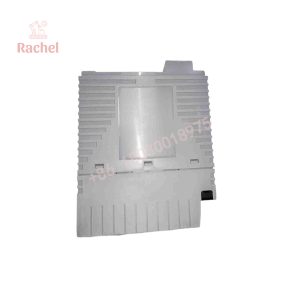
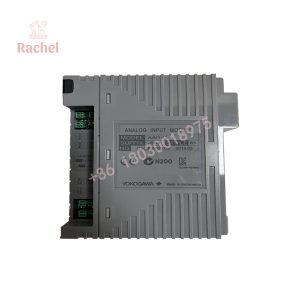
The Yokogawa ANBI1D-225/BU2A is an ESB bus interface node unit used in Yokogawa CENTUM VP and CS3000 FIO architectures. It provides the interface between the control network’s ESB bus and connected FIO I/O units, allowing the field control station to communicate with remote process I/O.
The 225 and BU2A portions define the hardware configuration and bus/power options; they are not interchangeable suffixes. In practice, this unit is a rack-level interface component: if it fails or its ESB connection degrades, multiple I/O units can appear offline even though individual field modules remain healthy.
Key Technical Specifications
| Parameter | Value |
|---|---|
| Manufacturer | Yokogawa |
| Model | ANBI1D-225/BU2A |
| Product type | ESB bus interface node unit |
| System family | Yokogawa CENTUM VP / CS3000 FIO |
| Primary function | ESB bus interface between control system and FIO I/O units |
| Power supply | 24 VDC |
| ESB bus configuration | Redundant ESB bus support |
| Associated expansion hardware | ANB11D-225/BU2A optical repeater / expansion basket references |
| Typical application | Process control, PLC integration, and data acquisition in DCS architectures |
| Mounting | Yokogawa FIO node-unit / cabinet-mounted architecture |
| I/O compatibility | Yokogawa FIO I/O modules |
| Configuration | Model suffix and installed system documentation determine bus, power, and redundancy arrangement |
| Condition availability | New surplus or refurbished, depending on supplier inventory |
Application Scenarios & The “Trench” Experience
A CENTUM VP system reports several FIO I/O units offline after a brief power disturbance. Technicians replace one I/O module, then another, but the alarms persist. The real issue is often the ESB interface node unit or its redundant bus path—not the individual I/O modules.
- Oil and gas – CENTUM VP FIO I/O communication for process units, compressor stations, and terminal automation – Required because the ANBI1D provides the ESB bus interface for remote I/O.
- Chemical and petrochemical – Distributed I/O communication in large process plants – Required for reliable redundant ESB bus operation and centralized FCS control.
- Power generation – Balance-of-plant, turbine auxiliary, and plant-wide I/O integration – Required for stable FIO node communication in a redundant control architecture.
- Water and wastewater – Remote I/O and SCADA-linked process control – Required for FIO node-unit communication and process data acquisition.
- Legacy DCS maintenance – Replacement of a failed ANBI1D-225/BU2A in an existing CENTUM VP/CS3000 system – Required because suffix, bus configuration, and redundancy wiring are system-specific.
Field case study: A refinery’s CENTUM VP node began intermittently losing multiple I/O units during hot afternoons. Maintenance replaced two I/O modules with no improvement. Inspection found a marginal ESB connector and degraded redundant-bus cable at the node unit. After repairing the bus path and verifying the ANBI1D-225/BU2A, the node returned to stable operation. The I/O modules were never the problem.
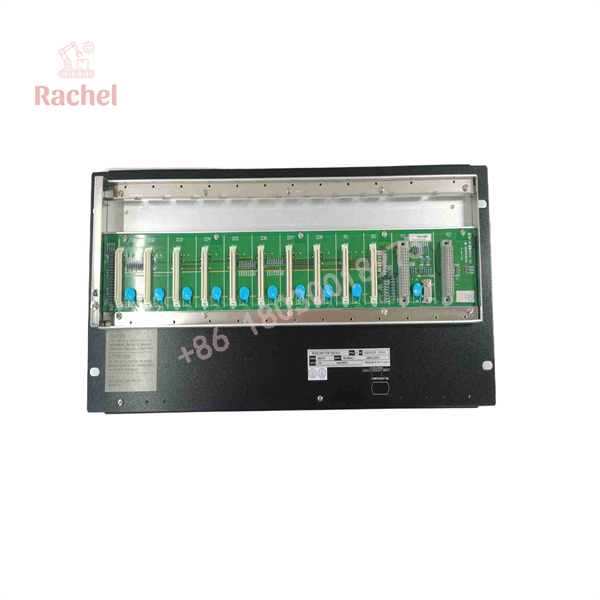
ANBI1D-225/BU2A
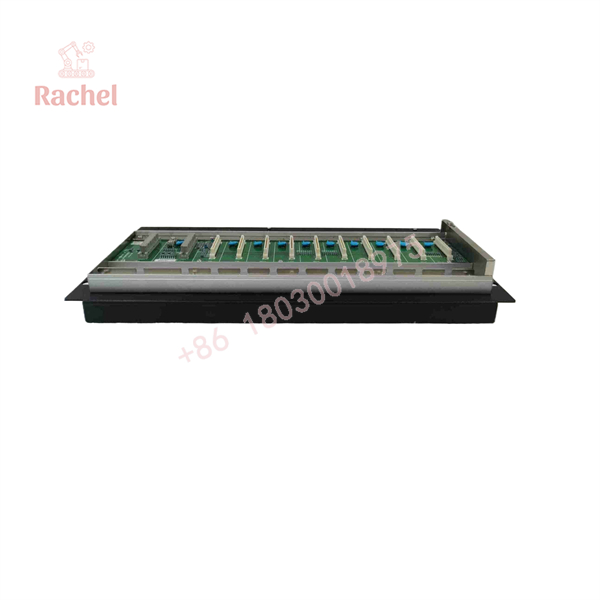
ANBI1D-225/BU2A
Transparency SOP: Quality Assurance & Testing
We don’t just ship boxes; we test them in a compatible Yokogawa FIO/ESB environment or equivalent bench rig where available.
- Inbound inspection: Verify model marking, suffix code, ESB connector condition, power terminals, PCB damage, and evidence of prior repair.
- Anti-counterfeit check: Compare label format, housing construction, connector hardware, and PCB layout against known Yokogawa ANBI1D examples.
- Live rig testing: Install in a compatible CENTUM VP/CS3000 FIO configuration; verify node recognition, ESB communication, and I/O-unit enumeration.
- Redundancy testing: Where configuration permits, verify primary/standby ESB bus behavior and failover without loss of I/O communication.
- Power checks: Apply the specified 24 VDC supply and verify stable operation, current draw, and protection against voltage transients.
- Communication checks: Confirm stable ESB bus communication, diagnostic status, and correct data exchange with connected FIO I/O units.
- Final QC and packaging: Record test results, protect ESB and power connectors, and ship in anti-static packaging.
The Veteran’s Tech Trap Guide
- ⚠️ Do not treat the suffix as cosmetic.
-225/defines the node-unit hardware and bus/power configuration. A different suffix can mean a different ESB, power, or redundancy arrangement. - ❗ Check the ESB cable and connectors before replacing the node unit. A loose connector, damaged shield, or degraded redundant-bus path can make multiple I/O units appear failed.
- ⚠️ Verify 24 VDC under load. A no-load reading can look normal while the node unit drops out under real I/O and communication load.
- ❗ Confirm redundancy wiring before swapping. The unit is associated with redundant ESB bus configurations; incorrect cabling can leave one path unavailable or cause unexpected failover behavior.
- ⚠️ Use ESD precautions. This is a DCS interface unit. A grounded wrist strap, anti-static bag, and protected connector handling are mandatory.
Frequently Asked Questions
Q: Is the ANBI1D-225/BU2A hot-swappable?
A: Treat it as a powered-down replacement unless your specific Yokogawa FIO system documentation explicitly permits online replacement. Removing it can interrupt ESB communication for multiple connected I/O units.
Q: Is it an I/O module?
A: No. It is an ESB bus interface node unit. It interfaces the control system’s ESB bus with FIO I/O units rather than directly terminating field signals.
Q: Does it support redundant ESB communication?
A: Yes. It is associated with redundant ESB bus configurations, and the installed system documentation should define the primary/standby arrangement.
Q: Can I use it with CENTUM VP and CS3000?
A: It is intended for Yokogawa CENTUM VP/CS3000 FIO architectures. Confirm the exact FCS revision, node-unit configuration, and suffix compatibility before installation.
Q: Is it the same as ANB11D-225/BU2A?
A: No. The ANB11D is referenced as an optical repeater/expansion-basket component in related system documentation, while the ANBI1D is the ESB bus interface node unit. Do not substitute one for the other.
Q: Why is surplus stock cheaper than direct OEM supply?
A: Surplus suppliers source retired DCS inventory, excess project stock, and decommissioned systems. The lower price reflects limited availability and variable cosmetic condition, not necessarily poor electrical performance—provided the unit passes ESB, redundancy, and power testing.
Q: What warranty should I expect?
A: For a tested refurbished or surplus unit, 12 months is a reasonable baseline. Confirm whether it covers functional failure, replacement, repair labor, and exclusions for incorrect bus configuration or physical damage.

 Start Chat


