





Description
Product Introduction
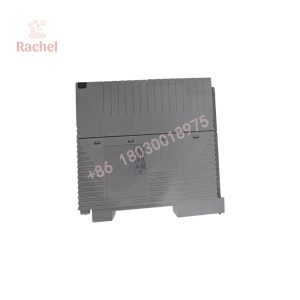
The Yokogawa CP451-10 is the processor module at the heart of the Field Control Unit in a CENTUM VP or CENTUM CS 3000 DCS. It runs the whole show at the station level — continuous PID loops, sequence logic, alarm management, and the I/O subsystem scan. You’ll find it in refineries, chemical plants, and power stations where the FCS rack sits between the operator consoles and the field wiring.
The reason this module matters is redundancy. Two CP451s pair in an FCS rack as a duplexed configuration, giving you hot-standby failover: when the primary faults, the backup picks up control execution without a bump to the process. That’s the difference between a station alarm and a unit trip. Compared with the older CP345 generation, the CP451 brings faster logic execution and native Vnet/IP integration, which is what modern CENTUM VP architectures are built around. If you’re maintaining a legacy CS 3000 R3 system, the CP451-10 is the spare you cannot afford to be without.
Key Technical Specifications
| Parameter | Value |
|---|---|
| Module Type | Processor Module (FCU), part of Field Control Station |
| CPU | 32-bit RISC processor |
| Control Cycle | Down to 10 ms scan, deterministic execution |
| Redundancy | Duplex configuration — two modules per FCU for hot-standby failover |
| Control Network | Vnet/IP (redundant pairs supported) |
| Power | Supplied via rack power supply modules (PW481 / PW482 / PW484) |
| Redundant Power | Two power supply modules in dual-redundant configurations |
| I/O Subsystem | Manages local and remote I/O via communication modules |
| System Support | CENTUM VP and CENTUM CS 3000 |
| Dimensions | Approx. 32 x 148 x 200 mm (verify against the OEM GS document) |
| Weight | Approx. 0.74 kg |
| Country of Origin | Japan |
Verify exact specifications and installation limits against the Yokogawa General Specifications (GS) document for your FCS revision before ordering.
Application Scenarios & The “Trench” Experience
Midnight call. Unit at 80% load, and the standby FCS processor drops a fault flag — then, twenty minutes later, the primary starts throwing intermittent Vnet/IP errors. Now you’re running a live plant on a single processor with no backup, and the OEM tells you the CP451-10 is discontinued with a 12-week lead on the replacement part number. We’ve taken that call more than once. It’s why discontinued DCS spares are our core business, not a side line.
- Oil & Gas Refining — Crude unit FCS control — Every major refinery running CENTUM VP has CP451s executing fractionator loops and burner management interlocks; without a duplexed healthy pair, the unit runs “unprotected” and most corporate operating policies forbid that.
- Petrochemical — Reactor/sequencer control — Exothermic reactor sequences depend on deterministic 10 ms-class scan execution; a slow or faulting processor forces a controlled shutdown, which can take hours of purge and requalification to recover.
- Power Generation — Balance-of-plant DCS — BOP stations use CP451-10 pairs for feedwater, draft, and auxiliary control; hot-standby failover keeps the unit online during a module swap instead of tripping the turbine.
- Steel / Metals — Process line control — Continuous caster and rolling line stations tolerate zero control bumps; duplexed FCUs make online module replacement routine maintenance instead of an event.
Field case (fictionalized, plausible): A Gulf Coast chemical plant lost the standby CP451-10 in a duplexed FCU to a power supply transient. Operations kept running on the primary, but corporate risk policy gave them 72 hours to restore redundancy or bring the unit down — and an unplanned outage was quoted at roughly $400K per day. A tested new surplus CP451-10 shipped that evening, was installed the next morning during a shift lull, and the station re-synchronized to duplex state in under two hours. Redundancy restored, no downtime, no trip. The spare on the shelf paid for itself a hundred times over in that single event.
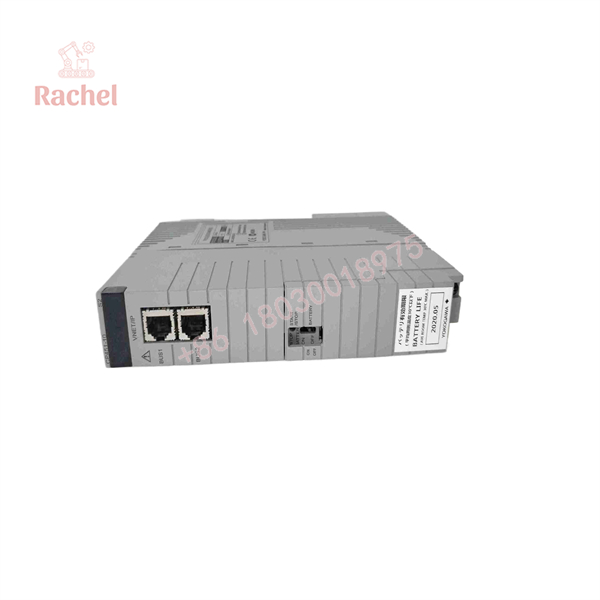
CP451-10
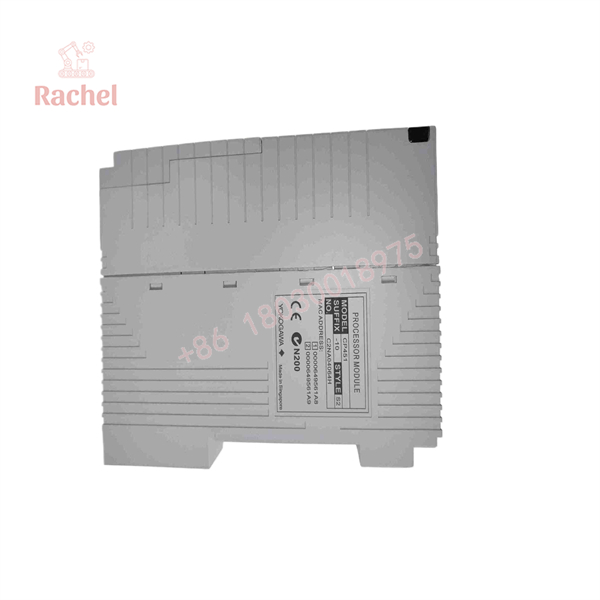
CP451-10
Transparency SOP: Quality Assurance & Testing
We don’t just ship boxes; we test them on actual Yokogawa FCU hardware.
- Inbound Inspection — Serial number and lot code cross-checked against Yokogawa records, OEM label and casing mold verified, anti-counterfeit screening at intake.
- Live Rig Testing — Full power-on self-test in a genuine FCU rack, followed by Vnet/IP communication handshake to confirm the module joins the control network and reports healthy status.
- Electrical Parameter Checks — Supply rail current draw measured under load; connector pin continuity and backplane interface verified against the OEM pinout before any power-up.
- Redundancy Verification — Module tested in a duplexed pair to confirm standby-to-primary failover executes cleanly, not just that the card powers up.
- Firmware Verification — Exact system software/firmware revision logged in the shipment paperwork so your reliability engineer can validate it against the station’s target build.
- Final QC & Packaging — Wrist-strapped handling throughout, conformal-cleaned contacts, then anti-static bag and foam-packed for transit.
The Veteran’s Tech Trap Guide
- ⚠️ Match the -S suffix before you pull the trigger. CP451-10 and CP451-10 S2 are not interchangeable in every CS 3000 system generation. Check your existing module’s nameplate and the system’s build sheet. Ordering the wrong suffix means a card that powers up and refuses to synchronize. Ask us, we’ll confirm before shipping.
- ❗ Never replace just one side of a duplex pair blindly. Insert a mismatched firmware revision into a running pair and you can get a comm fault or — worse — an unnecessary failover that bumps the process. Log the running revision first, then verify the spare matches or follow Yokogawa’s documented upgrade procedure.
- ⚠️ ESD kills these cards quietly. The CP451 is dense SMT. A static hit might not fail it on the bench — it fails three weeks later in the rack. Grounded wrist strap, grounded mat, no synthetic sleeves. Non-negotiable.
- ❗ Re-seat Vnet cables and check the rear connectors. Half the “failed processor” calls we see are actually dirty or half-seated Vnet/IP or backplane connectors. Take a photo of the cable routing before you pull the old module, clean the connectors with approved contact cleaner, and torque per the manual. Trust me, it saves a second midnight call.
Frequently Asked Questions (FAQ for Conversion)
Q1: Is the CP451-10 hot-swappable in a duplexed FCS?
Yes — that’s the entire point of the duplex architecture. With a healthy primary running, you can pull the standby module and insert the replacement online; the pair re-synchronizes automatically. What you cannot do is pull the only processor in a simplex station live. That station — and everything downstream of it — goes dead until the new card boots. Plan a controlled outage for simplex stations.
Q2: Is it discontinued? Can I still get one?
Yes, Yokogawa has discontinued the CP451-10 in favor of newer processor generations. That’s exactly why we stock it. Our units come from global surplus — de-commissioned plants, cancelled projects, and OEM overstock — and every one is tested on a real FCU rack before it ships.
Q3: Will a CP451-10 work in a CP451-50 station?
Not a drop-in. The -10 and -50 suffixes represent different hardware revisions with different system-generation compatibility. We’ll verify your target system (CS 3000 R3 vs. CENTUM VP release) against our stock before you order. Don’t guess on this one.
Q4: Does the firmware revision need to match my existing station?
It needs to be compatible, not necessarily identical — but the safe rule in a running plant is: match what’s in the healthy side of the pair, or follow Yokogawa’s documented redundancy upgrade path. We log the exact revision of every unit we ship so your engineers can make that call with real data.
Q5: Is this refurbished or new? What if it was pulled from a working system?
We list condition honestly per unit: factory-sealed new surplus, or tested pulls from decommissioned systems. Either way, every module passes the full rig test described above. DCS processors from well-maintained environments routinely give another 10+ years of service — these racks were engineered for 20-year plant lifecycles.
Q6: Why is your price lower than the OEM channel?
The OEM channel for discontinued parts routes you into migration programs and new hardware. We buy surplus inventory at distressed pricing globally and pass it on. You get the genuine Yokogawa module, tested, at a fraction of the migration quote.
Q7: What warranty do I get?
12 months from delivery, covering functional failure under normal use. For a discontinued DCS processor that typically runs for decades, a tested unit with 12 months of coverage is about as low-risk as an industrial purchase gets.

 Start Chat


