





Description
Product Introduction
The ABB 3AXD50000183012 is the ZCU-12 control unit used in ABB ACS880 variable frequency drives. It serves as the primary processor for drive control, handling motor regulation, system diagnostics, communication, and I/O management within the inverter platform.
Unlike passive interface boards, the ZCU-12 is the operational core of the drive. It manages application software, executes control algorithms, and interfaces with option modules and fieldbus networks. When replacing this unit, verify both the hardware revision and application firmware before commissioning.
Key Technical Specifications
| Parameter | Value |
|---|---|
| Manufacturer | ABB |
| Part Number | 3AXD50000183012 |
| Product Name | ZCU-12 Control Unit |
| Product Family | ACS880 Industrial Drives |
| Primary Function | Drive Control Processor |
| Compatible Drive Family | ABB ACS880 Frequency Converters |
| Installation | Internal Drive Control Assembly |
| Functions | Motor Control, I/O Processing, Diagnostics |
| Communication | Supports optional fieldbus and control interfaces through ACS880 architecture |
| Spare Part Status | Active ABB Spare Part |
| Country of Origin | Romania (supplier data) |
| Typical Applications | Industrial AC Variable Frequency Drives |
Application Scenarios & The “Trench” Experience
It usually happens during startup.
The power section checks out. DC bus voltage is normal. The inverter has no obvious hardware damage. Yet the drive refuses to boot because the control unit has failed or its firmware no longer matches the power hardware. Production waits while everyone wonders whether the fault is in the inverter or the PLC.
That’s where the ZCU-12 becomes the focus.
Typical Applications
Pulp & Paper – High-power process drives – Executes motor control and communicates operating status to the plant control system.
Mining – Conveyor drives – Maintains drive logic and fault handling for continuous material transport.
Oil & Gas – Compressor packages – Coordinates drive operation while supporting process communication.
Water & Wastewater – Large pumping stations – Controls variable-speed motors to match changing flow demand.
General Manufacturing – Extruders and production lines – Provides deterministic drive operation for continuous-duty equipment.
Field Replacement Example
A steel processing facility experienced repeated startup failures after a lightning event affected an ACS880 cabinet. The power module passed inspection, but the drive stopped during initialization. The ZCU-12 control unit had sustained logic damage.
After installing a matching replacement, engineers restored the original parameter backup, confirmed firmware compatibility, verified encoder settings, and completed commissioning without replacing the entire drive. The repair was finished within one maintenance shift instead of waiting several weeks for a complete inverter assembly.
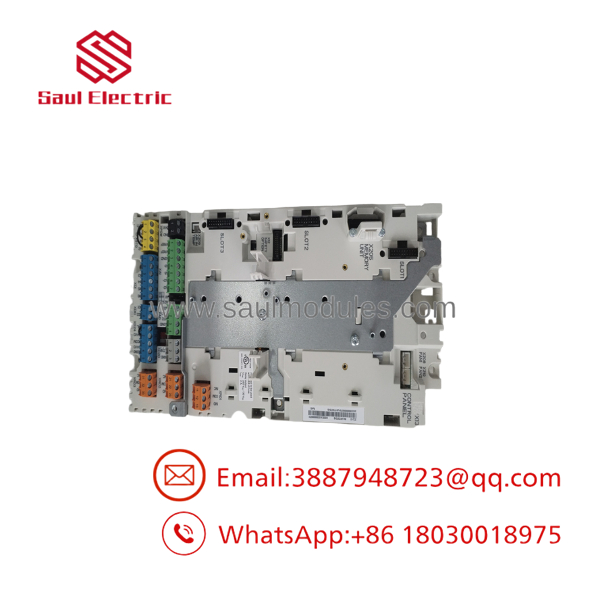
- 3AXD50000183012
Transparency SOP: Quality Assurance & Testing
We don’t just ship boxes; we test them on actual ABB ACS880 drive platforms whenever configuration allows.
- Inbound Inspection
- Verify ABB labels and serial numbers.
- Inspect PCB condition and connectors.
- Confirm there are no signs of overheating or repair work.
- Live Rig Testing
- Install the control unit in an test drive.
- Verify normal startup.
- Confirm keypad recognition and internal communication.
- Electrical Parameter Checks
- Verify power rails.
- Test digital and analog interface operation where applicable.
- Inspect connector continuity.
- Firmware Verification
- Record firmware revision.
- Verify hardware compatibility.
- Document software version before shipment.
- Final QC & Anti-static Packaging
- Complete functional inspection.
- Package in anti-static materials.
- Protect connectors against shipping damage.
The Veteran’s Tech Trap Guide
⚠️ Never assume every ZCU-12 is identical.
Hardware may fit physically while firmware or application software differs. Always compare the existing software package before powering up.
⚠️ Back up parameters first.
If the original controller is still accessible, save every parameter set. Rebuilding a complex drive configuration from memory usually takes much longer than expected.
❗ Verify option board compatibility.
Communication adapters, encoder modules, and safety options must match the replacement control unit. Missing option detection during startup usually points to configuration or hardware mismatch.
⚠️ Watch the cooling environment.
Control boards often fail because cabinet cooling deteriorates over time. Before installing a replacement, inspect filters, fans, and cabinet temperature. Otherwise the replacement may suffer the same failure months later.
Frequently Asked Questions (FAQ)
Q1. Can the be replaced while the drive remains energized?
No. Remove all control and power voltages before servicing the control unit. Live replacement can permanently damage the electronics.
Q2. Is firmware preloaded?
Many spare units include factory firmware, but the application version may differ from the installed drive. Verify firmware revision and reload the required application if necessary.
Q3. Does replacing the restore my original drive parameters?
No.
Drive parameters, application settings, and fieldbus configuration should be restored from a backup or recommissioned manually.
Q4. Is this compatible with every drive?
It is designed for compatible drive configurations using the platform. Always verify the complete drive type code, hardware revision, and spare parts list before ordering.
Q5. What warranty is typically available?
Most professional industrial surplus suppliers provide a 12-month warranty covering functional defects after installation.
Q6. Why is surplus inventory less expensive than purchasing directly from ABB?
Most surplus inventory originates from cancelled projects, plant expansions, or unused maintenance stock. These are genuine industrial spare parts distributed outside the standard OEM sales channel.
Q7. Is this an I/O module?
No.
The is the central drive control unit. It executes control software, manages internal communications, supervises I/O processing, and coordinates the operation of the drive system rather than acting as a standalone expansion module.

 Start Chat


