





Description
Product Introduction & Engineering Value
When troubleshooting a DC drive, engineers often focus on the armature converter first. However, unstable motor speed, weak torque at low speed, or poor field current regulation frequently originates from the excitation circuit rather than the main power section. The ABB DCF803-0035 is designed specifically to provide controlled field excitation for separately excited DC motors in ABB DCS800 and DCS880 drive systems.
Unlike a general-purpose power supply, the DCF803-0035 communicates directly with the armature converter through ABB’s DCSLink/DSL interface. This allows the drive to supervise excitation current, perform diagnostics, and coordinate motor control without requiring separate field control hardware.
Technical Specifications
| Parameter | Specification |
|---|---|
| Manufacturer | ABB |
| Model | DCF803-0035 |
| Product Type | External Field Excitation Converter |
| Compatible Drives | ABB DCS800 and DCS880 DC Drives |
| Converter Topology | Half-controlled thyristor/diode bridge (1-Q) |
| Supply Configuration | Single-phase or Three-phase |
| Rated Field Current | Up to 35 A |
| Communication | DCSLink / DSL serial communication |
| Control Method | Microprocessor controlled |
| Control Supply | 24 VDC supplied from armature converter |
| Insulation Voltage | 600 VAC |
| Excitation Response | Fast excitation with controlled de-excitation by field time constant |
| Installation | Integrated or separate excitation cabinet depending on drive configuration |
Field Application & The “Trench” Experience
A rolling mill began experiencing unstable motor speed whenever production demanded rapid acceleration. The armature converter showed no faults, and replacing encoder components produced no improvement. Engineers eventually monitored the field current and discovered intermittent excitation instability caused by a deteriorating external field converter.
After installing a replacement DCF803-0035, the drive immediately restored stable field current regulation. Motor torque recovered across the complete speed range, and no additional tuning of the DCS800 control parameters was required.
Typical applications include:
- Steel rolling mill DC main drives
- Paper machine section drives
- Mine hoist DC motor excitation systems
- Cement kiln DC drive packages
- Marine propulsion DC motor control
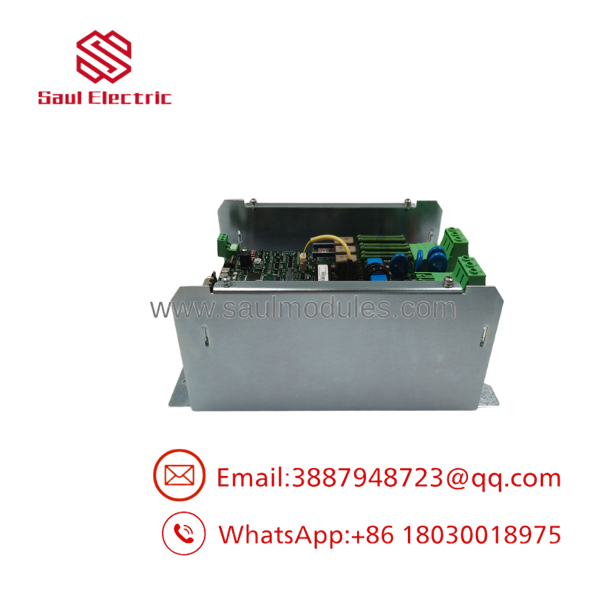
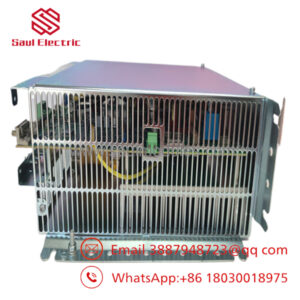
- DCF803-0035
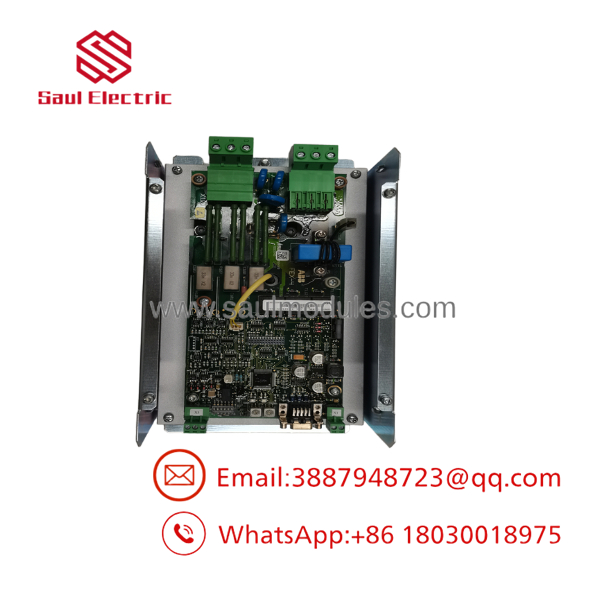
- DCF803-0035
Transparency SOP: QA & Testing
Before shipment, every follows a documented inspection process.
- Verify the ABB model identification and hardware revision.
- Inspect thyristors, heat sinks, power terminals, and control connectors.
- Check insulation resistance and power terminal integrity.
- Verify communication through the DSL/DCSLink interface using compatible ABB test equipment.
- Perform controlled power-up and functional diagnostics where available.
- Package the converter using anti-static protection and heavy-duty shock-resistant materials suitable for power electronics.
The Veteran’s Tech Trap Guide
⚠️ This is not an armature converter.
The regulates the motor field circuit, not the armature output. Ordering the wrong converter is a common mistake during emergency maintenance. Always verify whether the failed hardware belongs to the field or armature section.
⚠️ Check the motor field winding before replacing the converter.
Ground faults, open field windings, or deteriorated insulation can produce excitation alarms that resemble converter failures. Measuring field resistance before replacing the module can prevent unnecessary downtime.
PRO TIP:
If your DC motor repeatedly reports minimum field current alarms, inspect the external field circuit—including fuses, field wiring, and contactors—before replacing the . ABB’s drive diagnostics monitor the complete excitation loop, not just the converter itself.
⚠️ Verify transformer selection.
For installations operating above 500 VAC, ABB specifies using an appropriately rated autotransformer to match the field converter input voltage and reduce voltage ripple. Selecting the wrong transformer can shorten excitation component life.
Dynamic FAQ
Q1. What is the primary function of the ABB ?
The provides regulated field excitation for separately excited DC motors used with ABB DCS800 and DCS880 drive systems, allowing precise control of motor magnetic flux.
Q2. Which ABB drive families support the ?
The converter is used with ABB DCS800 and DCS880 DC drive platforms equipped with external field excitation capability. Communication with the main converter is handled through the DCSLink/DSL interface.
Q3. What converter topology does the use?
It uses a half-controlled thyristor/diode bridge (1-Q) and supports both single-phase and three-phase operation, depending on the application.
Q4. Are New Surplus units genuine ABB products?
Yes. New Surplus inventory consists of unused original ABB hardware stored in controlled warehouse conditions. Each converter is inspected for identification, connector condition, and overall physical integrity before shipment.
Q5. Can the be replaced without reprogramming the drive?
In most applications, yes. Since the converter is managed by the main DCS800 or DCS880 drive through serial communication, replacing the hardware generally does not require changes to the application parameters. However, commissioning checks and field current verification are recommended after installation.
Q6. Is warranty available?
Yes. Both New Surplus and professionally refurbished converters are supplied with warranty coverage. Warranty duration depends on inventory condition and is confirmed with the quotation.

 Start Chat


