





Description
Product Introduction & Engineering Value
One of the biggest challenges during a DCS modernization project is preserving existing control hardware while introducing Ethernet-based engineering and operator stations. The ABB INIET800 was developed specifically for that transition.
Rather than replacing a functioning INFI-Net infrastructure, the INIET800 serves as a communication bridge between legacy Bailey INFI 90 networks and Ethernet clients. This approach reduces engineering effort, minimizes production interruptions, and extends the service life of installed control assets.
Technical Specifications
| Parameter | Specification |
|---|---|
| Manufacturer | ABB |
| Model | INIET800 |
| Product Type | INFI-Net to Ethernet Transfer Module |
| Processor | Freescale ColdFire® MCF5475, 32-bit, 256 MHz |
| Memory | 4 MB ROM, 64 MB RAM, 2 MB NVRAM |
| Ethernet Port | 1 × 10/100 Mbps TCP/IP |
| Serial Interfaces | 2 × RS-232 |
| Serial Speeds | 19.2, 38.4, 57.6, or 115.2 kbps |
| Typical Power Consumption | 5.25 W |
| Maximum Power Consumption | 6.25 W |
| Operating Temperature | 0°C to +70°C |
| Relative Humidity | 20–95% non-condensing (temperature dependent) |
| Network Capacity | Up to 30,000 HMI/OPC tags and 10 Composer engineering connections |
| Security | Twofish 128-bit encryption and optional SSL3/TLS 256-bit security |
Field Application & The “Trench” Experience
During a refinery control system upgrade, engineers wanted to deploy a new operator interface while keeping dozens of existing Bailey INFI 90 controllers online. Replacing every controller was neither technically necessary nor economically practical.
The solution was to install an ABB INIET800 between the INFI-Net backbone and the plant Ethernet network. Within one maintenance window, engineering workstations, OPC servers, and HMI clients began communicating with the existing controllers without disturbing field I/O. Production resumed on schedule, and the migration was completed in stages rather than during a single high-risk outage.
Common deployment scenarios include:
- Migration of Bailey INFI 90 systems to Symphony Plus architecture
- Connecting OPC servers to legacy INFI-Net controllers
- Engineering workstation access through Ethernet during plant modernization
- Control room upgrades while preserving installed controller cabinets
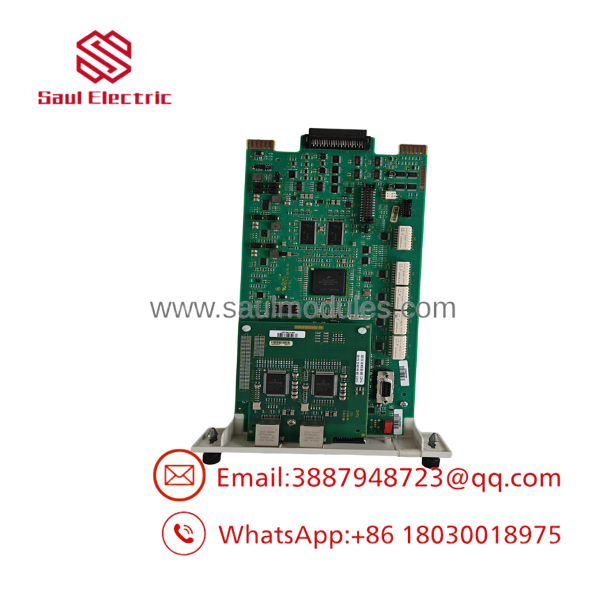
- INIET800
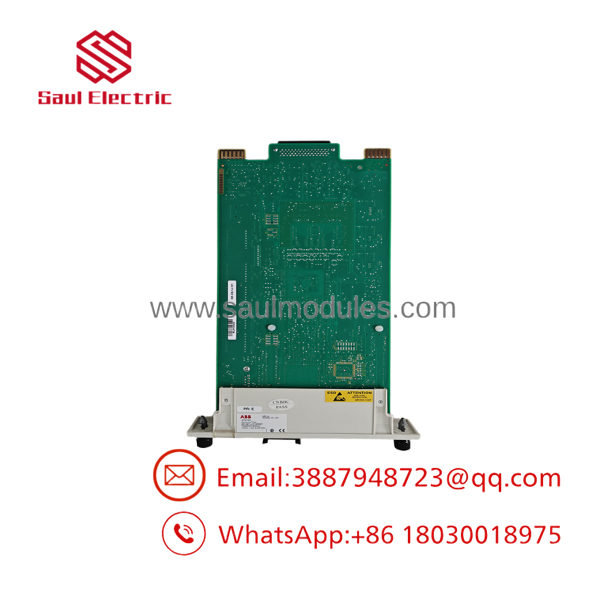
- INIET800
Transparency SOP: QA & Testing
Every New Surplus and professionally Refurbished follows a documented verification procedure before shipment.
- PCB inspected under magnification for damaged components and connector wear.
- Hardware revision, serial number, and product identification verified.
- Ethernet interface tested at 10/100 Mbps with communication validation.
- Dual serial ports verified across supported baud rates.
- Memory diagnostics performed to confirm ROM, RAM, and NVRAM operation.
- Module operated in a compatible Harmony/INFI 90 communication test environment.
- Final ESD-safe packaging with complete inventory traceability.
The Veteran’s Tech Trap Guide
⚠️ Don’t assume the gateway fixes network issues. The transfers data between Ethernet and INFI-Net, but it cannot compensate for faulty twinax cabling, poor network termination, or failing INNIS21 interface modules.
⚠️ Verify IP addressing before commissioning. Duplicate IP addresses frequently appear after replacing communication modules during plant outages and can make the gateway appear defective.
PRO TIP: Before disconnecting the original communication hardware, record every Ethernet parameter, node address, and serial configuration. Most commissioning delays are caused by configuration mismatches rather than hardware failures.
PRO TIP: During migration projects, monitor Ethernet traffic after startup. Excessive OPC polling rates can increase communication loading and unnecessarily consume controller bandwidth.
Dynamic FAQ
Q1. What is the primary purpose of the ABB ?
The transfers data between legacy INFI-Net control networks and Ethernet-based clients, allowing engineering workstations, HMI systems, OPC servers, and Symphony Plus software to communicate with existing Bailey controllers.
Q2. Does the replace an INNIS21 Network Interface Module?
No. The complements the existing INFI-Net architecture by providing Ethernet connectivity. It is designed as a communication bridge rather than a direct replacement for controller network interface hardware.
Q3. How many engineering workstations can connect through one module?
The platform supports up to 10 Composer engineering tool connections and approximately 30,000 HMI or OPC database tags, depending on the overall system architecture.
Q4. Does the support secure communications?
Yes. The module supports Twofish 128-bit encryption as standard, with optional SSL3/TLS 256-bit encrypted communications for enhanced cybersecurity.
Q5. How is New Surplus authenticity verified?
Each module undergoes hardware identification, cosmetic inspection, communication testing, memory verification, and functional operation in a compatible test environment before shipment.
Q6. What warranty is normally offered?
Warranty terms vary by supplier. Most industrial automation distributors provide a functional warranty for New Surplus and professionally refurbished modules after documented inspection and operational testing.


 Start Chat


