





Description
Key Technical Specifications
| Parameter | Specification |
|---|---|
| Part Number | 3AFE61320946P0001 (Hardware Board Revision: 61320946C) |
| Model Code | LDMUI-01 |
| Module Type | High-Speed Analog I/O and Interface Board |
| Signal Input Types | Current (0–20 mA, 4–20 mA), Voltage (±2.5 V, ±10 V) |
| Communication Interface | RS-485 Serial Network, Profibus protocol support |
| Network Security | Supports ring redundancy topologies for high-availability systems |
| Diagnostics | Optical output indicators for physical line signal strength monitoring |
| Operating Temperature | −40∘C to +70∘C (Extended industrial range) |
| Net Weight | ~0.50 kg |
| Country of Origin | Switzerland |
Product Introduction
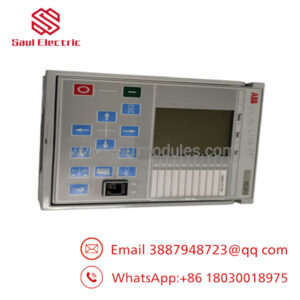
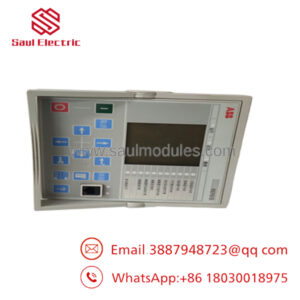
The ABB LDMUI-01 (part numbers 3AFE61320946P0001 and 61320946C) is a high-speed, multi-channel analog input and network communication card. Designed for legacy ABB distributed control systems (DCS), PLCs, and heavy industrial drive platforms, the LDMUI-01 is a critical interface board. It reads analog telemetry from field transmitters—such as flow meters, pressure sensors, and thermal controllers—operating under standard 4–20 mA current or ±10 V voltage configurations.
The LDMUI-01 features integrated support for RS-485 serial communication and Profibus networks, allowing it to act as a high-speed link back to the host processing rack. It supports ring redundancy, protecting industrial operations against network drops. If a single cable breaks, data instantly reroutes via the redundant pathway to keep systems online. Additionally, the module has physical optical diagnostic ports to monitor signal strength in real time, making troubleshooting simple.
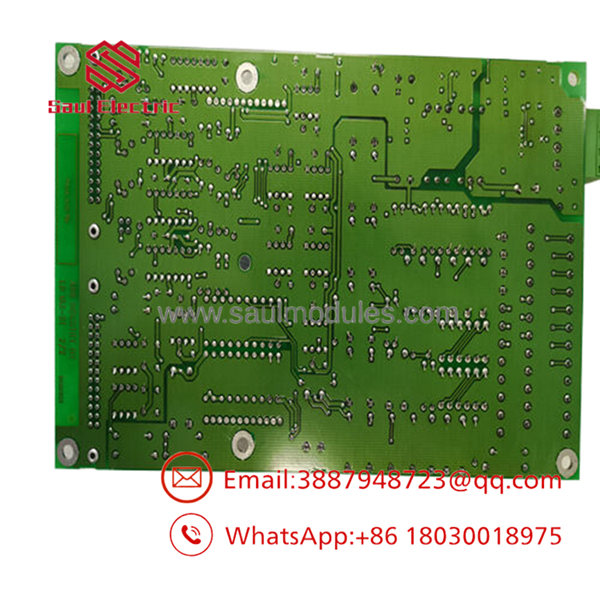
- LDMUI-01
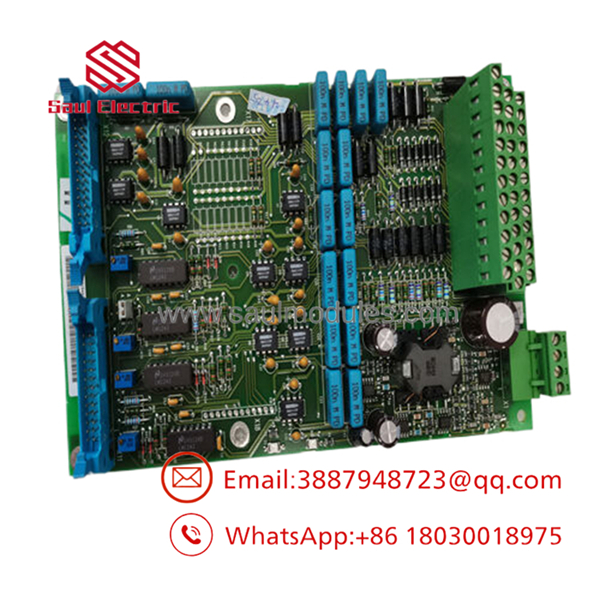
- LDMUI-01
Troubleshooting Quick Reference
| Symptom | Possible Cause | Relevance to this Part | Quick Check Method | Recommendation |
|---|---|---|---|---|
| Host controller reports “I/O Module Missing” or bus timeout | Loose backplane connection, damaged RS-485 transceiver, or wrong node address | ✅ High | Check if the status LEDs are lit. Measure the physical communication lines using an oscilloscope to verify data traffic. | Clean the backplane gold pins and reseat the card. If the module does not respond, swap the board. |
| Drifting, noisy, or completely frozen analog channel readings | Damaged optocouplers or analog-to-digital converter (ADC) chip failure | ✅ High | Inject a calibrated 12 mA current signal directly into the analog input pins. Check if the register values update. | If the loop current is stable but the PLC shows erratic values, replace the module to restore channel accuracy. |
| “Communication Ring Fault” warning on the network switch | Fiber optic link degrade or optical transceiver failure | ✅ Medium | Check the optical diagnostic outputs on the faceplate. Verify that physical fiber runs are free of sharp bends or micro-cracks. | Clean the optical connectors. If the signal remains below the required threshold, replace the module’s transceiver or the board itself. |
| The entire PLC or drive rack loses 24 V DC supply | Faulty primary power supply or short circuit in field wiring | ❌ Low | Measure the auxiliary power rail voltage directly at the rack distribution blocks. | The does not manage main power. Focus on isolating external sensor short circuits or repairing the main power supply. |
[!NOTE] When replacing the , verify that any onboard address pins or DIP switches match the configuration of the old module to ensure the controller recognizes it on the network.
Frequently Asked Questions (FAQ)
What is the relationship between 3AFE61320946P0001 and 61320946C?
The designation 3AFE61320946P0001 is ABB’s formal, global ordering part number, while 61320946C (often stamped directly onto the PCB) is the internal hardware board layout code. They refer to the same functional physical assembly, meaning a module marked with either number will drop directly into your existing system.
Does the support hot-swapping?
No. In most legacy ABB drive systems and PLC chassis architectures, plugging or unplugging the while the rack is powered can cause data corruption on the common RS-485 bus, triggering an emergency stop. Always isolate power to the local sub-rack before removing or installing modules.
How does the ring redundancy feature work on this board?
The supports a ring network topology. If a communication line breaks, the board uses its secondary interface path to route telemetry back to the controller in milliseconds. This prevents a single cable failure from shutting down the entire facility.
Do I need to program this card during commissioning?
No firmware or software installation is required. The is a hardware-level converter and transmitter. All operational configuration—such as scaling, filtering, and channel scanning—is managed by the main CPU program and pushed to the board during system startup.
Why choose New Surplus stock over ordering from the factory?
Since the belongs to a legacy series, ordering directly from the manufacturer often involves high pricing and lead times of several months. Our New Surplus modules are brand new, unused, and stored in a climate-controlled warehouse. They are ready to ship immediately to minimize your downtime and are backed by our 1-year replacement warranty.

 Start Chat


