





Description
Key Technical Specifications
| Parameter | Value |
| Manufacturer | ABB |
| Model Number | PFTL101B 10KN |
| Product ID | 3BSE004197R1 |
| Measurement Direction | Horizontal force components only |
| Nominal Load (Capacity) | 10.0 kN (2,248 lbs) |
| Extended Measurement Range | up to 15.0 kN (3,372 lbs) |
| Overload Limit (Meas. Direction) | 50.0 kN (11,240 lbs) |
| Max Permitted Transverse Load | 30.0 kN (6,744 lbs) |
| Accuracy Class | 0.5% |
| Repeatability Error | Less than 0.05% |
| Deflection (At Nominal Load) | 0.020 mm (0.8 x 10⁻³ in) |
| Spring Constant | 500 kN/mm |
| Housing Construction | Stainless Steel (SIS 2383 high-grade industrial formulation) |
| Operating Temperature | -25°C to +90°C |
| Net Weight | 22.00 kg (Heavy industrial frame variant) |
Product Introduction
The ABB PFTL101B 10KN (3BSE004197R1) is a high-capacity horizontal PillowBlock load cell engineered for heavy-section industrial web processes. It is prominently utilized in the wire, press, and dryer sections of high-output paper mills, as well as on high-tension metal strip rolling lines, industrial laminators, and wide-format winders.
Unlike standard strain-gauge options, the PFTL101B uses a single, solid block of stainless steel operating via ABB’s electromagnetic Pressductor principle. With an ultra-stiff internal spring constant of 500 kN/mm, this sensor experiences a deflection of only 0.020 mm at its full 10.0 kN rating. This mechanical rigidity completely isolates the sensor from structural high-speed machine harmonics, preventing resonance tracking errors and protecting your automation electronics from premature component fatigue.
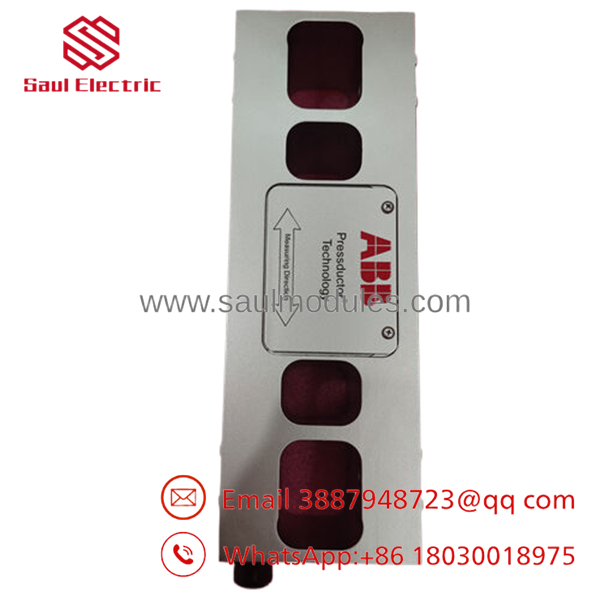
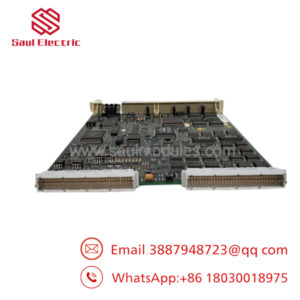
- PFTL101B 10KN 3BSE004197R1
Troubleshooting Quick Reference
| Symptom | Possible Cause | Relevance to this Part | Quick Check Method | Recommendation |
| Zero output across processing board | Broken internal primary/secondary winding or cut cable | ✅ High | Unplug mating harness. Measure resistance across internal coil terminals with a Fluke multimeter. | If open circuit or dead short to the stainless housing is detected, swap the load cell. |
| Unstable, shifting zero reference | Friction or mechanical binding from uneven mounting bed | ❌ Low | Remove load cell. Check for flatness tolerances on machine frame beam. Look for debris shards. | Grind base plate flat if warpage is present; torque anchor bolts to exact footprint spec. |
| Saturated or maxed out analog output | Extreme horizontal wrap angle or unintended axial binding | ✅ High | Re-calculate vector geometry. Verify that thrust rings or bearing housings are not jammed sideways. | Adjust roll wrap angles or reset physical bearing float to restore native horizontal travel. |
| High frequency signal oscillation | Interference from neighboring high-power AC motor drives | ❌ Low | Confirm sensor cable shield terminates only at the PFEA sub-panel ground bar. | Re-route signal paths through isolated conduits away from high-voltage motor lines. |
Note: For complex multi-roller synchronization problems, please forward your raw system configuration data and sensor layout prints directly to our technical support division.
Frequently Asked Questions (FAQ)
Q: What is the functional difference between the PFTL101A and PFTL101B series?
A: The difference comes down to physical scale, housing footprint, and maximum load capacity. The PFTL101A covers lighter tension zones, typically topping out at 2.0 kN. The PFTL101B uses a much wider, heavier steel chassis (weighing approximately 22 kg) to safely accommodate nominal force ranges up to 10.0 kN and higher, featuring much higher spring stiffness to counter industrial machinery vibrations.
Q: Can I use this 10.0 kN module on a line that runs down to only 0.5 kN of tension?
A: To be completely transparent, that is a bad design choice. While the can accurately trace forces below its rating due to its low 0.05% repeatability threshold, operating down at 5% of nominal capacity sacrifices your effective measurement resolution. If your normal running tension is that low, you risk drowning out real web fluctuations in basic mechanical line noise. You should step down to a lower-capacity sensor frame for ideal resolution.
Q: Does the solid steel Pressductor block require routine calibration or fluid seal checks?
A: No, and that is a massive benefit in harsh mill environments. Because there are no moving parts, physical strain elements, or elastomeric fluid seals to degrade, the internal magnetic core is completely protected from environmental contaminants. It does not exhibit the calibration drift typical of foil strain gauges, meaning it requires zero recurring physical maintenance once correctly bolted and calibrated at initial startup.
A: Yes. The is rated for continuous operation up to +90°C (+194°F). It uses high-temperature internal coil insulation and potting compounds to prevent structural breakdown under severe thermal cycling. If your operating temperature routinely exceeds this limit, you will need to look into customized heat-shielding or thermal insulation pads to protect the structural integrity of the internal core.
Q: How do I handle the shield grounding for the load cell wiring?
A: It is critical that the signal cable shield is grounded at one end only—specifically at the ground bus bar inside the PFEA tension electronics enclosure. Grounding both ends of the shield creates a closed loop that will capture magnetic noise from nearby heavy machinery, motors, and switchgear, corrupting the low-voltage AC measurement signals coming out of the Pressductor block.
Due to the substantial 22 kg mass of these heavy-duty units, we utilize specialized protective crating to ensure they arrive undamaged. Would you like me to verify our current warehouse stock count and provide an estimated freight transit time to your facility?

 Start Chat


