





Description
Key Technical Specifications
| Parameter | Value |
| Manufacturer | ABB |
| Model Number | PM665 |
| Product ID | 3BDS005799R1 |
| Core Architecture | PowerPC-based high-speed processing engine |
| Redundancy Support | Hardware-integrated redundancy voter circuitry |
| Communication Links | High-speed link interface for multi-processor clustering |
| Dedicated Inputs | Direct pulse-speed frequency measurement input |
| System Compatibility | Advant Controller 160 (AC160) Version 2.2 and legacy hubs |
| Input Nominal Power | 24 V DC backplane draw |
| Dimensions (W x H x D) | 40 mm x 273 mm x 252 mm (1.57 in x 10.75 in x 9.92 in) |
| Net Weight | 2.04 kg (4.50 lbs) |
| RoHS Compliance | Exempt under Article 2(4) specialized industrial guidelines |
Product Introduction
The ABB PM665 (3BDS005799R1) is a specialized, high-performance central processing unit module engineered for the ABB Advant Master Open Control System, specifically within Advant Controller 160 (AC160) sub-racks. Utilizing a dependable PowerPC processor core, this card executes heavy processing algorithms and closed-loop process sequencing with absolute deterministic consistency.
What sets the PM665 apart from baseline controllers is its integrated hardware redundancy voter alongside a dedicated, autonomous high-speed serial link. These features allow dual processor modules to operate back-to-back in a tight hot-standby pair. It monitors inputs, cross-checks logic output states instantly, and handles failovers with no cycle-to-cycle transition bumps. Furthermore, its specialized on-board speed input channel permits direct connection of industrial speed pickup sensors, tracking high-frequency rotating equipment pulses without needing external pulse-counter input modules.
Troubleshooting Quick Reference
| Symptom | Possible Cause | Relevance to this Part | Quick Check Method | Recommendation |
| “RUN” LED off; “FAULT” light solid red | Internal power-on self-test failure or checksum error | ✅ High | Power down the rack. Reseat the module. If it fails to boot past the internal watchdog timer, it is bricked. | Internal hardware block or RAM corruption. Replace the processor unit. |
| Redundancy link down; secondary unit tracks error | Failed high-speed link port or damaged fiber/coax link | ✅ High | Inspect the physical link cables between the primary and secondary PM665 units. Check link diagnostic bits in software. | Replace the interconnecting link cable first; if port remains dead, the transceiver circuit on the card is fried. Swap the card. |
| Turbine or motor speed readout reads zero | Blown optocoupler on the dedicated pulse-speed input | ✅ High | Disconnect speed sensor line. Inject a known low-voltage frequency signal directly into the speed input pins. | If the diagnostic buffer fails to update frequency counts, the onboard processing path is dead. Swap module. |
| Erratic module dropouts or intermittent resets | Severe sub-rack backplane voltage dip or loose chassis seating | ❌ Low | Measure the main sub-rack power supply lines to verify stable 24 V DC delivery under heavy card loads. | Clean sub-rack contact fingers and tighten all module faceplate retention screws. |
Note: When replacing a core processor in an active dual-redundant cluster, always capture your current system backup files and check task execution rates before modifying hardware states. Contact our technical support crew with diagnostic log dumps if you suspect backplane data corruption.
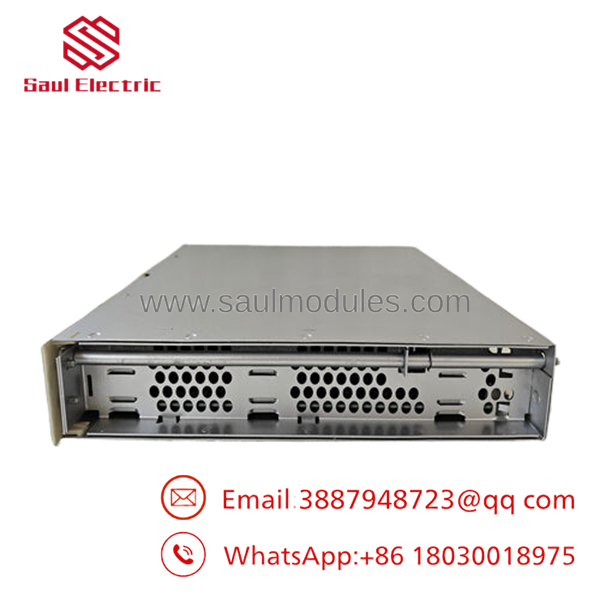
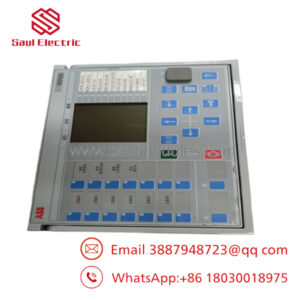
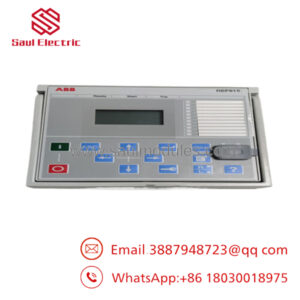
- PM665 3BDS005799R1
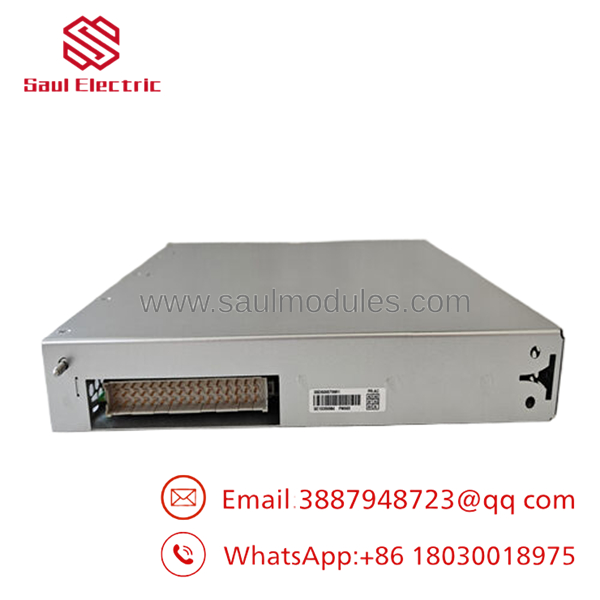
- PM665 3BDS005799R1
Frequently Asked Questions (FAQ)
Q: Can I replace a legacy PM663 or PM645 processor with this unit?
A: To be completely straightforward, you cannot just drop it in blind. While they fit into the same physical AC160 backplane slot, the uses a completely different PowerPC hardware layout and underlying firmware execution engine compared to older generation processors. You must verify that your system engineering tool version (AMPL / Control Builder) supports the , and you will need to recompile the source application code to match the new hardware target parameters.
Q: How does the integrated redundancy voter operate on this specific module?
A: The onboard hardware voter continuously mirrors data states with its matching redundant partner over the dedicated high-speed link channel. Rather than waiting for a slow software-driven handshake, the physical voting circuitry handles fault assessment at the silicon layer. If the primary processor experiences an internal cycle exception, the voter passes full active bus rights to the standby module within milliseconds, keeping your critical valves or turbine trips completely active.
A: Yes. It is a common rookie oversight to slide a fresh surplus module out of the box and slap it straight into the rack. You must pull the module out and physically copy the exact jumper configurations or DIP switch positions found on the side or back plane of the old unit. Failing to match these configurations will result in a node address conflict or communication failure across the master network.
Q: Does this processor module require an active internal battery to retain its program during shipping?
A: No. Our New Surplus modules ship cleanly inside sealed anti-static bags with no volatile RAM program loaded. The operating application is stored in the rack’s non-volatile memory structure or pushed directly down from your system engineering workstation upon startup. You can store these units on your warehouse shelf for years without worrying about dead batteries leaking or erasing critical system settings.
A: We do not just power it up to see if the lights turn on. Every goes onto our dedicated ABB Advant Master AC160 verification rack. We load test the PowerPC chip, establish a live dual-redundant link handshake with a control unit, cycle the high-speed input pins with a signal generator, and run the module inside a heated testing chamber for 24 hours to ensure it does not exhibit thermal drift or drop-out under real operating loads.
We monitor global stock availability for these crucial legacy Advant Master processors to keep older processing plants safe from unexpected outages. Would you like me to look up our current ready-to-ship stock levels and extract the original engineering pinout diagram for this specific module revision?

 Start Chat


