





Description
Key Technical Specifications
| Parameter | Value |
| Part Number | 3BSE003816R1 |
| Module Type | SC520 Submodule Carrier |
| Capacity | 2 slots for communication/interface submodules (e.g., CS513) |
| Backplane Interface | Standard Advant Controller 400 series subrack connector |
| Power Consumption | Typically 0.5 A @ 5 VDC (excluding installed submodules) |
| Isolation | Galvanic via backplane interface circuitry |
| Operating Temperature | 0 to +55 °C (32 to 131 °F) non-condensing |
| Storage Temperature | −40 to +70 °C (−40 to 158 °F) |
| Relative Humidity | 5% to 95% (non-condensing) |
| Dimensions (H x W x D) | Standard full-height Advant module slot dimensions |
| Weight | 0.45 kg (1.0 lbs) |
Product Introduction
The ABB SC520 (3BSE003816R1) is a specialized submodule carrier board designed for the Advant OCS (Open Control System) family, primarily utilized within MasterPiece 200, Advant Controller 410, and Advant Controller 450 systems. The carrier acts as the physical and electrical bridge between the main controller subrack backplane and up to two plug-in communication or interface submodules, such as the CS513 RCOM module.
Engineers rely on the SC520 to expand their controller’s connectivity matrix without consuming multiple full-sized subrack slots. By channeling high-speed bus communication directly from the plug-in daughterboards to the central processor, this module ensures zero-latency data throughput for critical supervisory control links. It remains a standard component for maintaining legacy infrastructure where process availability cannot be compromised.
Installation & Configuration Guide
Stage 1: Pre-Installation Preparation (Estimated Time: 10 minutes)
- ⚠️ Safety First: Notify the control room and plant operations that you are modifying a controller node. Ensure the process loops affected by this node are placed in manual or a safe state. Turn off all power to the target Advant subrack before starting work.
- Tools Required: Grounded ESD wrist strap, flat-head screwdriver (for rack chassis screws), digital multimeter (Fluke 115 or equivalent), and a smartphone for reference photographs.
- Data Backup: Ensure you have a recent backup of the application logic (
.cmdfiles or Advant Station backup). Photograph the existing carrier card layout, noting the exact slots and any submodules installed.
Stage 2: Removing the Old Module (Estimated Time: 5 minutes)
- Disconnect any external communication cables running to the submodules hosted on the SC520. Label each cable clearly.
- Unfasten the top and bottom retaining screws securing the SC520 to the subrack chassis.
- Attach your ESD wrist strap to a verified ground point on the cabinet frame.
- Gently but firmly pull the card straight out of the subrack slots using the module plastic pull tabs. Do not rock the card horizontally, or you risk bending the backplane pins.
- ⚠️ Note: Place the removed card immediately into an ESD protective bag. Keep it nearby for configuration verification.
Stage 3: Installing the New Module (Estimated Time: 10 minutes)
- Maintain strict ESD discipline. Remove the new SC520 from its anti-static packaging and inspect it for physical transit damage.
- Configuration Clone: Check the board for any hardwired jumpers or address switches. Compare them directly against the unit you just pulled. Match them exactly.
- If submodules (such as CS513) are being transferred from the old carrier, carefully unseat them from the old board and press them firmly into the new slots until their locking mechanisms click into place.
- Align the with the upper and lower guide rails of the subrack. Slide the carrier card back into the slot smoothly until the rear connectors seat into the backplane.
- Fasten the retaining screws to lock the card into the chassis. Reattach the communication cables to the submodules.
Stage 4: Power-On & Testing (Estimated Time: 5 minutes)
- Before turning on power, use your multimeter to check resistance across the 24 VDC/5 VDC lines at the rack test points to confirm no direct ground shorts exist.
- Flip the subrack power switch back to the ON position.
- Monitor the LED status indicators on both the carrier assembly and the host CPU module. The Run LED should illuminate steady green, and the Fault/Err LEDs must remain off.
- Open your engineering workstation (e.g., Advant Station 100 Series Engineering tool) and verify that the slot containing the shows an “OK” status with no communication timeout alarms.
- ⚠️ Troubleshooting Note: If the CPU throws a hardware mismatch or a configuration error immediately after power-up, power down the rack and re-verify the submodule alignment and jumper configurations on the .
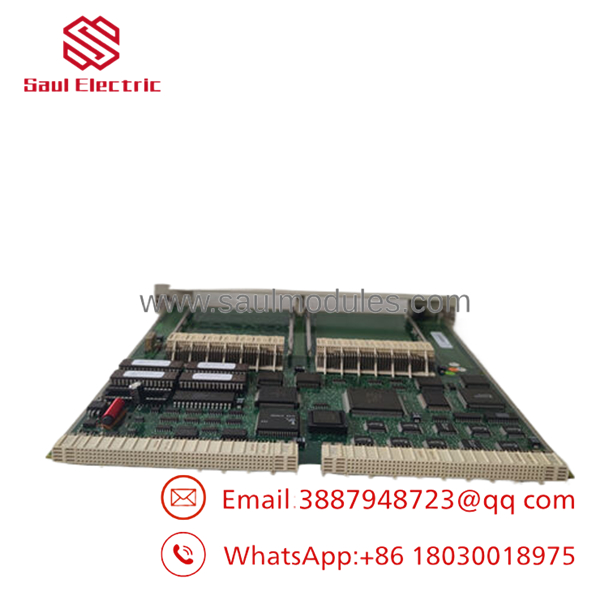
- 3BSE003816R1
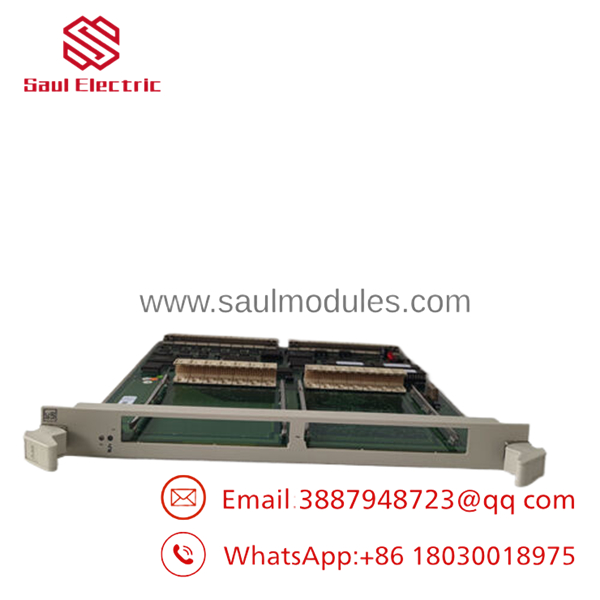
- 3BSE003816R1
Frequently Asked Questions (FAQ)
Can I hot-swap the module while the Advant Controller is running?
Absolutely not. The connects directly to the parallel backplane bus of the MasterPiece/Advant Controller rack. Pulling this module while the system is energized will cause electrical transients across the bus lines, which will freeze the CPU or immediately trip the redundant controller into a hard fault state. You must completely power down the subrack containing the card before removal or insertion.
This model is obsolete from ABB. Are these parts genuinely new?
Yes. These units are what we classify as “New Surplus” or “New Original.” They originate from cancelled capital projects, decommissioned facility spares inventory, or factory overstock. While ABB no longer manufactures the , these units have never been installed in a live process and have spent their lifespan in climate-controlled storage.
What is the difference between an and other carrier modules like the SC510?
The difference comes down to the subrack generation, bus architecture, and the specific daughterboard form factors they accept. The is specifically designed for the Advant Controller 400 series architecture and accommodates a different footprint of communication submodules compared to older MasterPiece 200 carriers. They are not interchangeable. Always replace like-for-like using the exact 3BSE003816R1 part number.
Will I lose my controller’s programming logic when I pull this module?
No. The application program lives inside the volatile/non-volatile memory of the main CPU module (such as the PM450) or its associated memory cards, not on the carrier card. The simply passes signals between the submodules and the CPU. However, any communication links run through the submodules attached to the carrier (e.g., RCOM or MasterFieldbus links) will drop the moment you cut rack power.
Why is your price for this carrier significantly lower than OEM factory list prices?
Because we source these directly from industrial surplus stocks, bypass corporate procurement markups, and do not bundle them with mandatory software licensing or field service contracts. We pass those direct savings on to maintenance teams who simply need a reliable replacement part to get their line back up and running.
Strategic Quality Control & Testing Protocol
To ensure field reliability and zero-out-of-box failures on legacy hardware, every (3BSE003816R1) carrier card undergoes a structured five-stage quality assurance process before being packaged for shipment.
1. Inbound Inspection & Traceability
- Source Validation: Every incoming carrier board is matched against original warehouse records and OEM packing documentation to verify chain of custody.
- Anti-Counterfeit Check: We verify the authenticity of the ABB silkscreen markings, inspection stamps, and the unique 3BSE003816R1 serial tracker.
- Visual Audit: Technicians inspect the card under magnification for micro-fissures, traces of solder rework, component yellowing, or chemical corrosion on the edge pins.
2. Physical and Electrical Parameter Testing
- Insulation Resistance: A 500V Megger test is executed across non-conductive boundary layers to guarantee an insulation resistance of >10 MΩ.
- Ground Continuity: We use a Fluke 115 multimeter to verify a clear path of zero resistance from the front panel grounding screws through to the card’s grounding plane.
3. Functional Testing on Live Racks
- Test Bench Setup: The card is installed into an authentic, operational ABB Advant Controller test subrack.
- Power-On Self-Test (POST): The board is energized to confirm that stable voltage distributions arrive at the submodule sockets without causing voltage drops across the rack power supply.
- Communication Loopback: Real submodules (such as CS513 modules) are plugged into the carrier slots. We run continuous data transfer routines through the carrier to confirm the backplane data lines manage standard bus traffic without dropping packets or generating checksum errors.
- Thermal Stress Cycle: The system runs continuously for 24 hours under communication load while being monitored with thermal imaging tools to spot localized component overheating.
4. Hardware Configuration Mapping
- Jumper Settings: Technicians log and photograph the default jumper configurations on the board.
- Documentation: A formal, serialized Test Report is compiled, recording all electrical values and test rack pass signatures. Copies of this report, along with configuration photos, are kept on file and are available upon request.
5. Final Quality Control & Packing
- ESD Sealing: Upon final QC sign-off, the is wrapped in a heavy-duty anti-static (ESD) protective bag.
- Industrial Packaging: The sealed bag is cocooned in multi-layer shock-absorbent bubble wrap and placed into a thick, double-walled corrugated shipping box engineered to survive international freight transport. A “QC Passed” security seal is affixed to the exterior box closure.


 Start Chat


