





Description
Key Technical Specifications
- Manufacturer: ABB
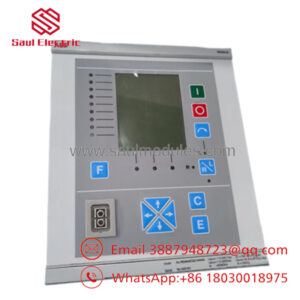
- Model: SPAJ140C
- Product Type: Combined overcurrent and earth-fault relay
- Series: SPACOM product family
- Application: Selective short-circuit and earth-fault protection of radial feeders in solidly-earthed, resistance-earthed, or impedance-earthed power systems
- Protection Functions: Three-phase overcurrent, earth-fault protection, breaker-failure protection
- Measurement Inputs: Phase currents and neutral current
- Features: Flexible tripping and signaling, fault recording, communication support
- Condition: New original / new surplus
Product Introduction
ABB SPAJ140C is a combined overcurrent and earth-fault protection relay for radial feeders. ABB states it is used for selective short-circuit and earth-fault protection in solidly-earthed, resistance-earthed, or impedance-earthed power systems.
It also includes breaker-failure protection, flexible tripping and signaling, and fault recording. In field replacement work, the main concern is exact variant matching and correct CT settings, because old SPACOM relays are sensitive to wiring and setting errors.
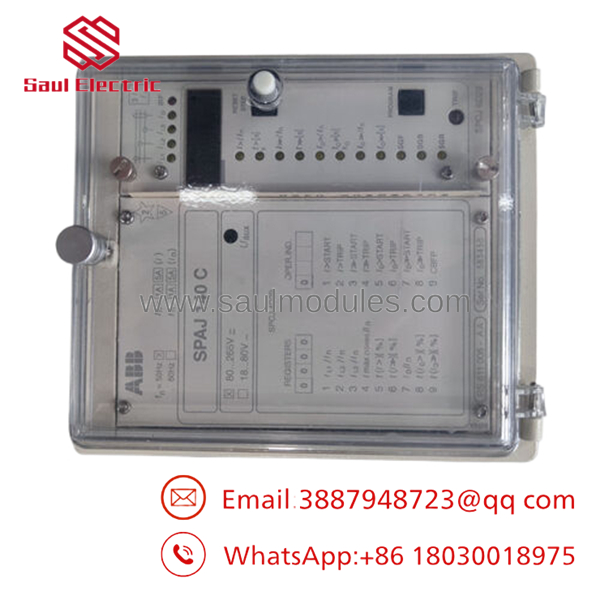
- SPAJ140C
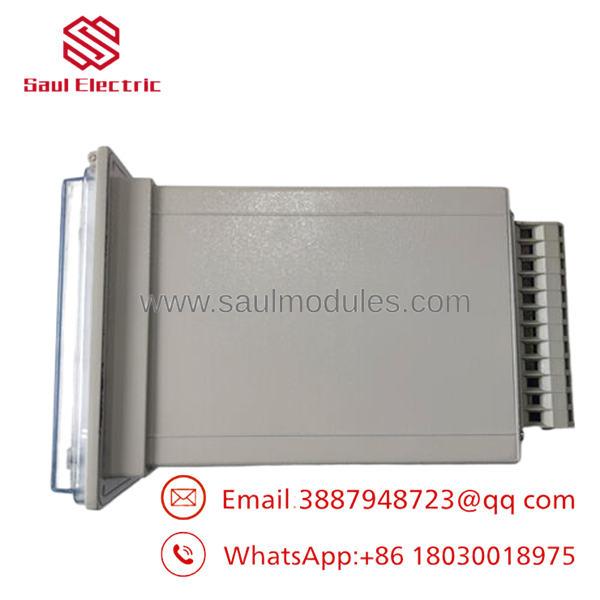
- SPAJ140C
Installation & Configuration Guide
Stage 1: Pre-Installation Preparation
- Notify operations and create downtime. Verify the feeder is de-energized, apply lockout/tagout, and wait for discharge where applicable.
- Gather an ESD strap, PH1 screwdriver, multimeter, wire labels, and a smartphone for photos.
- Record CT ratios, relay settings, trip circuit wiring, and every front-panel setting before removal.
- Photograph the relay front, terminal wiring, and setting dials or menu values.
Stage 2: Removing the Old Module
- Remove the panel cover or relay bezel.
- Label all wires before disconnecting them. Do not pull on CT wiring or trip circuits.
- Release the mounting hardware and remove the relay carefully.
- Inspect terminals, CT wiring, and the panel cutout for heat damage, corrosion, or loose connections.
- Keep the old relay until the new one is fully tested and the feeder is stable.
Stage 3: Installing the New Module
- Put on the ESD strap and verify the exact model match.
- Copy every setting from the reference photos. That includes pickup values, time curves, earth-fault stages, and breaker-failure logic.
- Mount the relay securely and confirm the panel cutout fits correctly.
- Reconnect CTs, trip wiring, and auxiliary supply with correct polarity and tight terminals.
- Check off the install list: [] Settings matched, [] Wiring secure, [] Mounting locked.
Stage 4: Power-On & Testing
- Use a multimeter to verify auxiliary supply and check CT secondary wiring before energizing.
- Power the relay and confirm display, LEDs, and self-supervision status.
- Verify pickup and trip logic with secondary injection or a controlled test source.
- Confirm trip circuit operation, alarms, and event memory.
- Return the feeder to service only after protection tests pass.
- If the relay misbehaves, suspect wrong settings, CT polarity issues, or an auxiliary supply mismatch first.
Frequently Asked Questions
Can I hot-swap the SPAJ140C?
No. This is a protection relay on an energized feeder, and live removal is a bad idea. De-energize the circuit first.
Is SPAJ140C obsolete?
Yes, it is a legacy ABB SPACOM relay. That means stock is usually limited and exact-type matching matters.
What does the relay protect?
It handles combined overcurrent and earth-fault protection for medium-voltage feeders. ABB also states breaker-failure protection and fault recording are included.
Will my settings survive a replacement?
Not automatically. You need to record pickup values, time curves, CT ratios, and any external blocking logic before removal.
Is this a direct replacement for other SPAJ 140 versions?
Not always. The SPAJ 140 family has multiple variants, and the wrong suffix can change sensitivity, logic, or auxiliary supply range. Verify the exact type before ordering.
What condition is it usually sold in?
Commercial stock is typically New Original or New Surplus. If someone offers refurbished stock, ask for test records and return terms.
Why is the price lower than ABB list price?
Because surplus inventory usually trades below OEM pricing. That lower price only makes sense if the relay is the correct variant, tested, and supported by a real warranty.

 Start Chat


