





Description
Product Introduction
The Nokia / Alcatel-Lucent 3HE07305AA 20 (often designated as 3HE07305AA) is a carrier-grade network interface module engineered for Nokia’s industry-standard 7750 Service Router (SR) and 7450 Ethernet Service Switch (ESS) platform series. Designed for high-availability telecom central offices, data centers, and critical infrastructure networks, this module provides reliable packet routing and service aggregation under heavy network loads.
Featuring advanced hardware-based packet processing, quality of service (QoS) enforcement, and hardware redundancy support, the 3HE07305AA 20 enables service providers to deliver high-bandwidth IP/MPLS, Ethernet, and cloud transport services. Its hot-swappable architecture allows network administrators to perform maintenance and capacity upgrades without interrupting active network traffic.
Key Technical Specifications
| Parameter | Specification / Value |
| Manufacturer | Nokia / Alcatel-Lucent (ALU) |
| Part Number | 3HE07305AA / 3HE07305AA 20 |
| Hardware Series | 7750 SR Series / 7450 ESS Series |
| Equipment Class | Carrier-Grade Core / Edge Router Interface Module |
| Architecture | High-Density Packet Processing Line Card |
| Form Factor | Modular Slot-In Interface Card |
| Features | Hot-Swappable, Non-Disruptive Insertion / Removal |
| Protocols & Routing | IP/MPLS, BGP, OSPF, IS-IS, RSVP-TE, L2VPN/L3VPN, Carrier Ethernet |
| Cooling & Airflow | Managed via Chassis Forced-Air Fan Trays |
| Operating Temperature | Standard Telecommunications Central Office Conditions (0°C to 40°C) |
Application Scenarios & The “Trench” Experience
Picture this: It’s 3:15 AM on a maintenance window night for a regional telecom operator. An optical transponder card or interface card in a central office core router rack suffers an unexpected ASIC hardware fault, dropping primary 10G/100G transport links for multiple cellular towers and municipal ISP connections. Having an exact-match 3HE07305AA 20 line card pre-staged on the shelf allows senior network engineers to perform a live hot-swap into the 7750 SR chassis. The card initializes, syncs configuration files from the active Control Processing Module (CPM), and re-establishes MPLS LSP paths in minutes without requiring a full rack power cycle.
- Carrier Ethernet & Service Provider Core – Aggregates high-volume subscriber traffic across regional fiber networks while maintaining strict SLA-based Quality of Service (QoS).
- IP/MPLS Mobile Backhaul – Connects 4G LTE / 5G cell site router networks back to the core packet gateway.
- Large-Scale Mission-Critical Networks – Deployed in utility, rail, and governmental WAN backbones requiring zero-downtime hardware redundancy and long product lifecycles.
Transparency SOP: Quality Assurance & Testing
Every module undergoes a strict telecom bench testing procedure before dispatch:
- Physical & Component Audit: Visual examination of gold finger backplane connectors, front-panel latching mechanisms, optical cage housings, and board surface components to ensure zero physical damage.
- Chassis Insertion & Boot Test: Mounted into a dedicated test chassis (e.g., Nokia 7750 SR-12 / SR-7) to verify clean boot-up sequences, EEPROM recognition, and firmware initialization.
- Full-Traffic Loopback Stress Test: All optical/copper interface ports are tested using BERT (Bit Error Rate Testing) and full wire-speed traffic generation to confirm zero packet loss under peak throughput.
- Thermal & Diagnostic Verification: System diagnostics log checks to ensure normal operating temperatures, correct voltage rails, and zero hardware alarm flags (
show card,show portverification). - ESD Cleaning & Protective Packaging: Cleaned of static potential, fitted with dust plugs in all optical slots, sealed in anti-static ESD shielding bags, and packed inside custom telecom-grade foam containers.
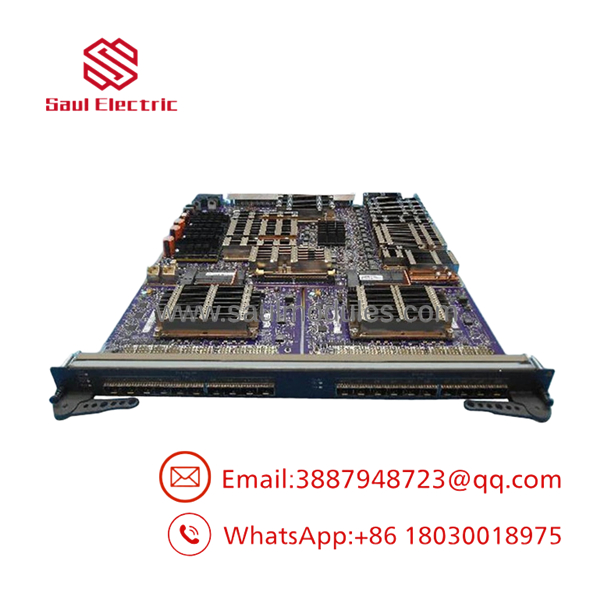
3HE07305AA 20
The Veteran’s Tech Trap Guide (Crucial Value-Add)
- ⚠️ Verify SR-OS Software Compatibility Release!
Before installing the 3HE07305AA 20 into your active 7750 SR or 7450 ESS chassis, verify that your current SR-OS software version supports this specific card revision (
20). Inserting a newer card revision into a chassis running older SR-OS maintenance releases can cause the card to remain in anunprovisionedorboot-failedstate. - ❗ Inspect Backplane Connectors Prior to Insertion
Carrier chassis line cards feature high-density pin/socket backplane connectors. Always inspect the backplane pins on the chassis side and the connector header on the 3HE07305AA 20 for bent pins or debris. Align the side guides carefully and engage the ejector handles smoothly—never force a line card into the slot.
- ⚠️ Observe Static Electricity (ESD) Precautions
Telecom router line cards contain sensitive high-speed ASICs vulnerable to static discharge. Always wear a grounded ESD wrist strap connected to the chassis ESD grounding jack before handling or swapping the module.
- ❗ Verify Power & Cooling Headroom
Ensure the chassis power supplies and fan trays meet the power draw and airflow requirements for the installed card density. Check system hardware alarms (
show chassis/show power) before adding high-density interface modules to populated chassis configurations.
Frequently Asked Questions (FAQ)
Q: What is the difference between part number 3HE07305AA and 3HE07305AA 20?
A: 3HE07305AA is the base Nokia / Alcatel-Lucent hardware part number, while 20 (or REV 20) specifies the hardware revision / generation level. They belong to the same functional line card family, but revision numbers denote updated component manufacturing batches or revised internal circuitry.
Q: Is this card hot-swappable in a live chassis?
A: Yes. The Nokia 7750 SR and 7450 ESS platforms fully support In-Service Software Upgrades (ISSU) and hot-swappable line cards. Opening the front ejector latches signals the operating system to gracefully offload traffic before physical disconnection.
Q: Which software environment drives this hardware?
A: Operating system management, routing protocol execution, and interface provisioning for this module are handled by Nokia SR-OS (Service Router Operating System).
Q: Does this unit include optical transceivers (SFPs / XFPs / CFP)?
A: Unless explicitly bundled, telecom line cards are supplied as base hardware modules. Optical transceivers (SFP/SFP+/XFP) matching your required distance and wavelength must be installed separately into the front-panel cages.

 Start Chat


