





Description
Product Introduction
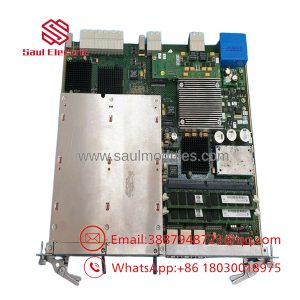
The Alcatel-Lucent 11058L-128 (Manufacturing Part Number 810-00320-28) is an OC-3c/STM-1 Asynchronous Transfer Mode (ATM) line processor card specifically designed for the legacy Lucent / Alcatel-Lucent CBX 500 Multiservice Edge Switch platform. Engineered for high-reliability telecommunications cores and critical enterprise networks, this module processes SONET/SDH framed optical signals, executing ATM cell segmentation, reassembly (SAR), and traffic shaping at 155.52 Mbps.
Equipped with 128MB of onboard packet buffer memory, the 11058L-128 variant eliminates cell dropping during transient burst congestion on carrier-grade WAN backbones. Unlike basic optical physical interface cards (IOPs), this board integrates local processing capabilities to manage Quality of Service (QoS) parameters, Virtual Path (VP) shaping, and circuit emulation directly on the card. If you are maintaining mission-critical legacy telecom grids, utility control networks, or legacy aviation routing systems, this card serves as an essential drop-in replacement.
Key Technical Specifications
| Parameter | Specification / Value |
| Model Code | 11058L-128 |
| Manufacturing Part Number | 810-00320-28 |
| HECI Code | BAA9Y1RBAA / BAA5CC0AAA |
| Platform Compatibility | Alcatel-Lucent / Lucent CBX 500 Multiservice Switch |
| Interface Rate | OC-3 / STM-1 (155.52 Mbps) |
| Onboard Buffer Memory | 128 MB RAM |
| Framing Standards | SONET STS-3c / SDH STM-1 |
| Operating Voltage | -48V DC Backplane Feeds |
| Form Factor | Single-Slot CBX 500 Line Module |
| Status Indicators | LED (Power, Module Status, Active, Line Loopback, Link Alarm) |
Application Scenarios & The “Trench” Experience
It is 3:00 AM at a regional telecom switching station. An old CBX 500 shelf hosting legacy municipal emergency circuits throws an unrecoverable red light on its primary OC-3 uplink card. Cell traffic is dropping, and local voice channels are degrading. Sourcing an original Lucent card for a platform declared end-of-life years ago feels like looking for a needle in a haystack. But you cannot simply pull the CBX chassis out; migrating those active circuits to modern Ethernet routing would take months of planning and regulatory approvals. Dropping a tested 11058L-128 card into the open slot restores line synchronization in under 10 minutes.
Target Applications
- Telecom Core & Access Network Backhaul: Provisioning legacy OC-3/STM-1 ATM transport links across regional service provider rings.
- Utility SCADA & Control Links: Managing legacy power utility telemetry and teleprotection transport over optical networks.
- Air Traffic & Maritime Communication Grids: Maintaining deterministic, ultra-low-latency ATM virtual circuits for critical transport monitoring.
- Defense & Government Networks: Supporting legacy crypto-secured SONET/SDH optical backbones where equipment certification is locked.
Field Case Study
A municipal infrastructure provider suffered a sudden laser driver failure on an OC-3 processor board inside a CBX 500 node during routine maintenance. The line went dark, disrupting traffic control communications. The OEM no longer offered replacement hardware. We dispatched a bench-tested, refurbished 11058L-128 (810-00320-28) module overnight. The technician hot-swapped the module, pushed the saved card profile via the CLI console, and re-established full OC-3 link lock with zero bit errors.
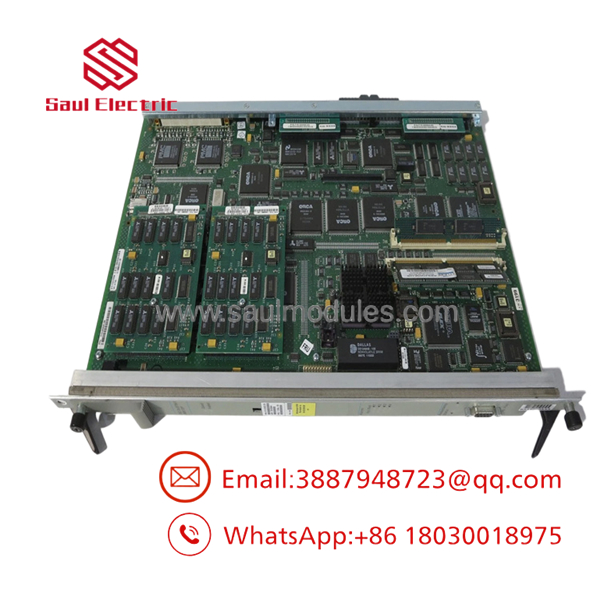
810-00320-28

810-00320-28
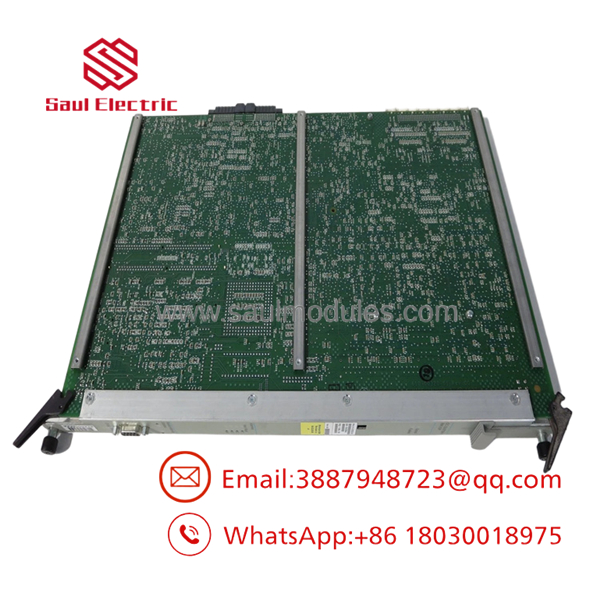
810-00320-28
Transparency SOP: Quality Assurance & Testing
Legacy ATM hardware requires thorough stress testing to guarantee reliability. We put every 11058L-128 board through strict bench validation:
- Inbound Visual & Physical Audit: Microscopy check of PCB traces, backplane pin arrays, surface-mount capacitors, and optical transceiver alignment for thermal stress or damage.
- Chassis Live-Rig Handshake: Card insertion into a powered Lucent CBX 500 test chassis to verify EEPROM identification, HECI code readout (
BAA9Y1RBAA), and self-test boot sequences. - ATM Traffic Load & BERT Testing: Connecting optical attenuators and pattern generators to run continuous bit-error rate testing (BERT) across OC-3 ports to confirm zero frame drops under 100% bus utilization.
- Memory Diagnostics: Running deep RAM read/write routines to verify the full integrity of the onboard 128MB payload buffer memory.
- Anti-Static Packaging: Ultrasonic edge cleaning, sealing in anti-static shielding material, and packing in custom high-density foam for safe shipping.
The Veteran’s Tech Trap Guide (Crucial Value-Add)
⚠️ 1. Pay Attention to the Memory Suffix (-128 vs -64)
Do not confuse the 11058L-128 with older 11058L-64 cards. The -128 suffix designates 128MB of onboard buffer memory. If your CBX 500 configuration requires high-capacity cell buffer allocation for heavy QoS traffic shaping, dropping a 64MB card into that slot can lead to immediate buffer exhaustion and dropped cells under load.
❗ 2. Watch the Backplane Alignment
The CBX 500 chassis backplane uses tight pin-density connectors. Slide the 11058L-128 card smoothly along the plastic card guides. Never force the locking levers down if you feel hard mechanical resistance before the board sits completely flush—forcing it will bend or shear backplane pins.
⚠️ 3. Match the Revision and HECI Code
Verify your existing card’s HECI code (e.g., BAA9Y1RBAA or BAA5CC0AAA) and manufacturing revision. While most CBX 500 firmware releases support the 810-00320-28 card, mixing drastically different card revisions without verifying system boot software can throw a software mismatch error on boot-up.
❗ 4. Use Grounded ESD Protection
The onboard ATM SAR processing ASICs are sensitive to static shock. An unseen ESD blast while handling the card by its rear pin connectors can degrade input gates, leading to erratic link drops days or weeks after installation. Clip an ESD wrist strap to the shelf ground before touching the board.
Frequently Asked Questions (FAQ)
Q: Is the 11058L-128 / 810-00320-28 card hot-swappable?
A: Yes, the CBX 500 platform supports online insertion and removal (OIR) of line modules. However, you should administratively disable the OC-3 interface in the network management software prior to pulling the module to prevent false link-down alarms across adjacent nodes.
Q: What is the difference between part number 11058L-128 and 810-00320-28?
A: They refer to the exact same physical board. 11058L-128 is the top-level assembly/marketing model number, while 810-00320-28 is the internal Lucent/Alcatel-Lucent manufacturing part number printed on the PCB barcode label.
Q: Can I use this card in platforms other than the CBX 500?
A: No. The card form factor, pinout, and backplane bus architecture are specifically designed for the Lucent / Alcatel-Lucent CBX 500 multiservice chassis family.
Q: How do you verify that these legacy boards are reliable?
A: Every board undergoes full visual inspection, chassis live-rig testing, memory test routines, and optical traffic verification on an actual CBX 500 shelf prior to stock placement.
Q: What warranty is provided with this module?
A: All our New Surplus and Refurbished Alcatel-Lucent / Lucent cards come backed by a 12-month advance replacement warranty. If a module fails functional or traffic checks during normal operation, we ship out a replacement unit immediately.

 Start Chat


