





Description
Product Introduction
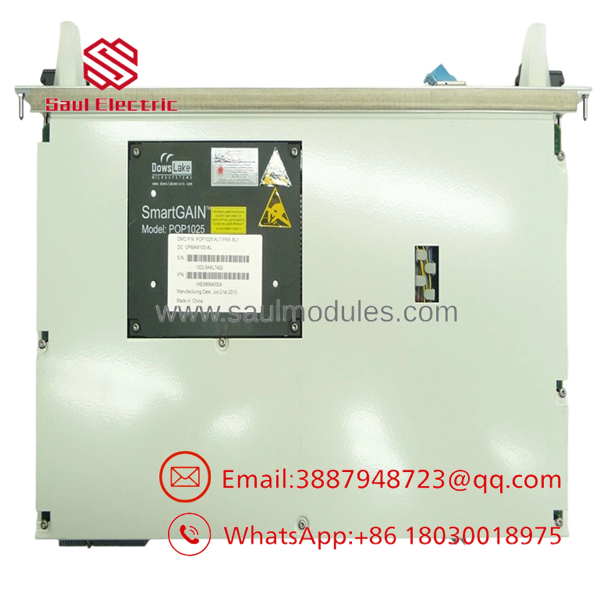
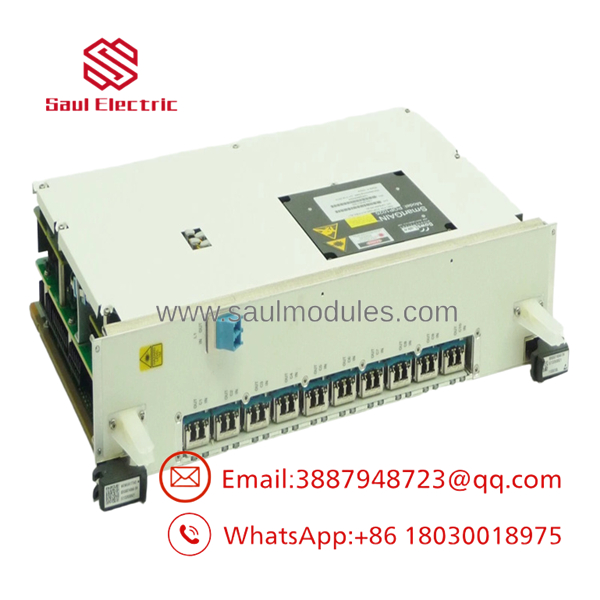
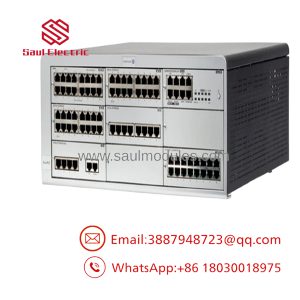
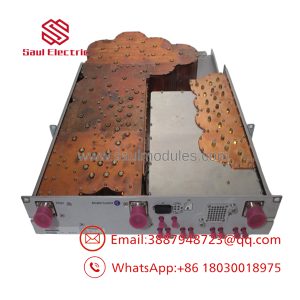
The Alcatel-Lucent 8DG60740AA 02 is a high-density optical line interface card engineered for the Alcatel-Lucent (Nokia) 1830 Photonic Service Switch (PSS) platform. Built to support Dense Wavelength Division Multiplexing (DWDM) and Optical Transport Network (OTN) architectures, this module executes payload framing, optical cross-connection, and high-throughput signal grooming across long-haul and metro transport rings.
Hardware Revision 02 incorporates upgraded onboard ASIC timing controllers and refined trace-layer thermal distribution compared to earlier board revisions. These enhancements prevent thermal drift during heavy multi-channel traffic loads in packed chassis environments. If you are maintaining mission-critical 1830 PSS-16 or PSS-32 nodes, stocking a tested 8DG60740AA 02 card ensures rapid recovery when an optical channel loses framing or locks up.
Key Technical Specifications
| Parameter | Specification / Value |
| Part Number | 8DG60740AA |
| Hardware Revision | 02 |
| Manufacturer | Alcatel-Lucent / Nokia |
| Platform Compatibility | Alcatel-Lucent 1830 PSS Series (PSS-4 / PSS-16 / PSS-32) |
| Module Type | Optical Transponder / Muxponder Interface Board |
| Bus Interface | Proprietary High-Speed Backplane Interconnect |
| Power Supply | Dual Redundant -48V DC Backplane Feeds |
| Power Consumption | ~30W to 55W (Depending on optic loading) |
| Operating Temperature | 0°C to +45°C (32°F to 113°F) |
| Form Factor | Full-Slot Chassis Board Assembly |
| Status Indicators | LED (STAT, CRIT, MAJ, MIN, ACTIVE) |
Application Scenarios & The “Trench” Experience
It is 2:40 AM on a freezing night. Your central Network Operations Center (NOC) flashes a critical alarm: a primary optical link between two data centers dropped frame synchronization, causing a loss of signal (LOS) on Node 7. Traffic instantly flipped to the secondary path, but your DWDM ring is now running completely unprotected at 92% capacity. You drive to the remote site, connect your laptop to the 1830 PSS shelf manager, and find an unrecoverable internal framer fault on an aging line module in Slot 3. When an OEM quotes a 16-week lead time for legacy parts, having an exact-match replacement card ready to slide in is the only thing standing between a minor ticket and a massive customer SLA violation.
Target Applications
- Metro Core & Regional DWDM Rings: Transporting high-capacity Ethernet and OTN payloads across regional fiber transport loops.
- Data Center Interconnect (DCI): Maintaining low-latency, protocol-agnostic optical channels between enterprise cloud hubs.
- Utility SCADA & Teleprotection: Routing critical operational control feeds, voice channels, and power grid automation data over resilient fiber backbones.
- Government & Enterprise Backhaul: Securing high-density optical cross-connections across municipal and campus networks.
Field Case Study
A regional service provider suffered an optical signal degradation issue on a core 1830 PSS transport node following a power grid fluctuation. The active transponder module in the shelf degraded, throwing thousands of bit errors per second. The original vendor quoted months for a build-to-order unit. We dispatched a fully bench-tested, factory-sealed surplus 8DG60740AA 02 board overnight. The site engineer swapped the module, restored port provisioning via the craft interface, and cleared all bit-error alarms in under 15 minutes.
8DG60740AA 02
Transparency SOP: Quality Assurance & Testing
We do not ship unverified hardware. Optical transport boards undergo rigorous bench testing before entering inventory:
- Inbound Visual & Microscopy Inspection: Inspecting all high-density connector pins, surface-mount components, trace layers, and structural ejector latches for thermal fatigue or physical wear.
- Chassis Live-Rig Handshake: Inserting the card into a fully powered Alcatel-Lucent 1830 PSS chassis to verify backplane powering, EEPROM readout, and shelf controller identification.
- Traffic Load & Signal Integrity Testing: Executing bit-error rate testing (BERT) across ports to ensure zero frame dropping, stable timing synchronization, and clean optical spectrum processing under continuous load.
- Firmware & Revision Audit: Reading internal EEPROM fields to record serial numbers, hardware revisions, and FPGA code blocks to match your site configuration requirements.
- ESD-Safe Packaging: Cleaned with anti-static solution, sealed in static-shielding bags, and packed with high-density custom foam for global shipping protection.
The Veteran’s Tech Trap Guide (Crucial Value-Add)
⚠️ 1. Software Release & Revision Compatibility
Never assume an 8DG60740AA 01 board will drop seamlessly into a slot provisioned for Revision 02. Revision 02 includes updated power regulation and timing components. If your shelf software release mandates exact card profiles, plugging in an unapproved hardware revision can trigger a PROV-MISMATCH or EQPT-FAIL alarm.
❗ 2. Respect the Backplane Pins
The 1830 PSS backplane relies on high-density pin array connectors. When inserting the 8DG60740AA 02, keep the module perfectly aligned with the guide rails. Never force the faceplate ejector handles. If you feel firm resistance before the module sits flush, pull it back and inspect the backplane for bent or damaged pins using a flashlight.
⚠️ 3. Always Backup the Shelf Database First
Although the 1830 PSS shelf controller (FLC) stores board configurations, inserting a replacement line card can occasionally trigger an automatic parameter sync that resets port settings to default. Export a fresh database backup using your Craft Terminal or NMS before pulling or seating cards.
❗ 4. Mandatory Grounding (ESD Protection)
The optical processing ASICs on this card are highly vulnerable to static discharge. An unseen ESD shock might not kill the card right away, but it will degrade input capacitors, causing intermittent bit-error rate (BER) spikes weeks down the road. Always clip a grounded ESD wrist strap to the chassis ground lug before handling the module.
Frequently Asked Questions (FAQ)
Q: Is the 8DG60740AA 02 card hot-swappable?
A: Yes, the hardware supports hot-swapping while the 1830 PSS chassis is powered up. However, you should administratively lock or unprovision the module in your management software before physical removal to prevent generating false optical alarms on protection channels.
Q: Why buy a legacy surplus card instead of upgrading our system shelf?
A: Upgrading a complete transport shelf requires significant capital expenditure, fiber re-splicing, re-licensing, and lengthy maintenance windows. Replacing a single line card restores full network redundancy immediately at a fraction of the cost.
Q: Can I use Revision 02 as a direct replacement for Revision 01?
A: In most operational scenarios, yes. Revision 02 is backward-compatible with systems running earlier card revs. However, verify that your shelf software release supports Hardware Revision 02 to avoid software-hardware mismatch alarms.
Q: How do you verify these modules are authentic Alcatel-Lucent hardware?
A: We inspect physical PCB etchings, OEM component layouts, barcode structures, and internal EEPROM manufacturing records. We never buy or sell third-party clone boards.
Q: What warranty is included with this module?
A: Every 8DG60740AA 02 module comes backed by a 12-month advance replacement warranty. If a board fails functional or traffic checks during normal operation, we dispatch a replacement unit immediately.

 Start Chat


