





Description
Product Introduction & Engineering Value
Accurate analog measurements are often the difference between stable process control and hours of unnecessary troubleshooting. When pressure transmitters, flow meters, or level sensors begin reporting inconsistent values, engineers frequently replace field instruments only to discover that the analog input module was introducing the error.
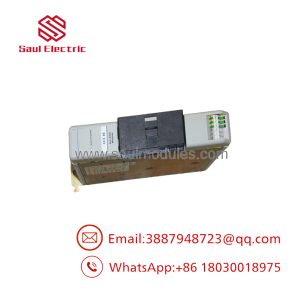
The Allen-Bradley 1746-NI4 is a 4-channel differential analog input module for the SLC 500 PLC platform. Each channel can be independently configured for voltage or current measurement, allowing a single module to support multiple signal types within the same control system. Its 16-bit conversion and differential input design help improve measurement stability in electrically noisy industrial environments.
Technical Specifications
| Parameter | Specification |
|---|---|
| Manufacturer | Allen-Bradley / Rockwell Automation |
| Model | 1746-NI4 |
| Product Family | SLC 500 |
| Product Type | Analog Input Module |
| Number of Inputs | 4 Differential Channels |
| Supported Signals | Voltage or Current (Selectable per Channel) |
| A/D Resolution | 16-bit |
| Conversion Method | Delta-Sigma Modulation |
| Channel Bandwidth | 10 Hz |
| Step Response | 60 ms (95%) |
| Repeatability | ±1 LSB |
| Non-Linearity | 0.01% of Full Scale |
| Common Mode Voltage | -20 V to +20 V |
| Common Mode Rejection | 105 dB @ 60 Hz |
| Normal Mode Rejection | 55 dB @ 60 Hz |
| Backplane Current | 35 mA @ 5 VDC, 85 mA @ 24 VDC |
| Isolation | Not individually isolated between channels |
Field Application & The “Trench” Experience
A chemical dosing skid began adding significantly more treatment chemical than required. The PLC consistently displayed a flow signal approximately 8% higher than the value measured with a calibrated portable flow meter.
Technicians replaced the transmitter, recalibrated the 4–20 mA loop, and inspected the wiring without success. The actual fault was traced to a deteriorating 1746-NI4 analog input module. After installing a replacement module and restoring the original channel configuration, the flow indication returned to within calibration tolerance and chemical consumption immediately dropped.
Typical application scenarios include:
- Differential pressure transmitter monitoring
- Boiler drum level measurement
- Variable frequency drive speed feedback
- Flow, pressure, and level instrumentation
- Process temperature transmitters with 4–20 mA outputs
Transparency SOP: QA & Testing
Every New Surplus or professionally Refurbished 1746-NI4 is subjected to a documented validation process.
- Verify catalog number, hardware revision, and serial identification.
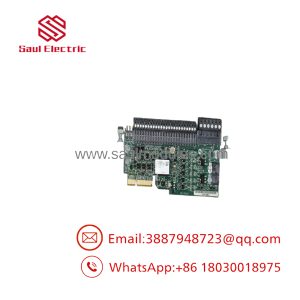
- Inspect the PCB, terminal block, and edge connector for mechanical damage.
- Install the module in a compatible SLC 500 chassis and verify backplane communication.
- Inject calibrated voltage and 4–20 mA current signals into all four channels.
- Confirm A/D conversion accuracy, channel repeatability, and diagnostic operation.
- Verify configuration changes between voltage and current modes.
- Package the module using ESD-safe materials with complete inspection records.
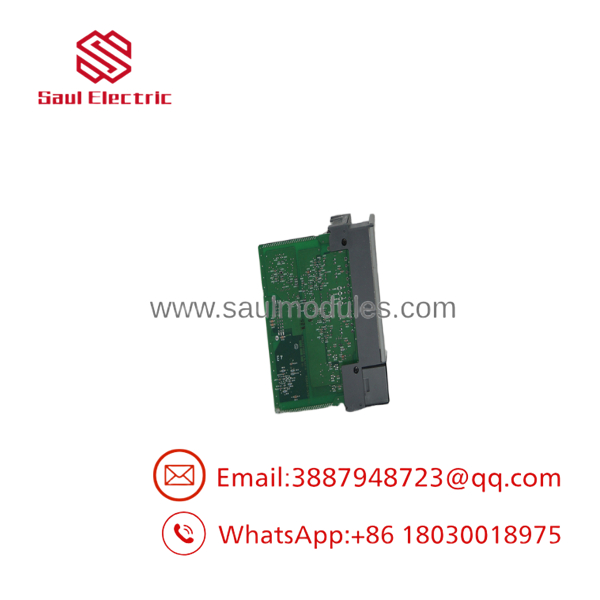
- 1746-NI4
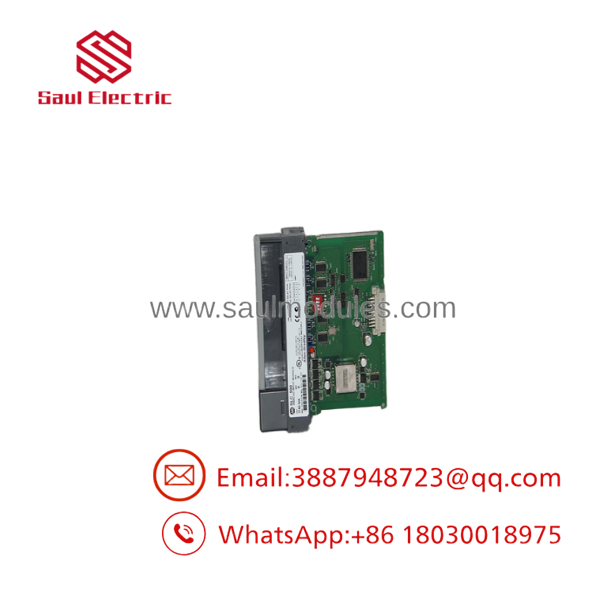
- 1746-NI4
The Veteran’s Tech Trap Guide
⚠️ Don’t assume every channel uses the same signal type. Each input channel can be configured independently. Replacing a module without restoring the original channel configuration can produce incorrect engineering values even though the wiring is correct.
⚠️ Differential inputs still require proper grounding. Although differential measurement reduces common-mode noise, poor shield termination or improper analog common wiring can introduce unstable readings.
PRO TIP: Before replacing the module, connect a precision signal calibrator directly to the input terminals. If the displayed value remains inaccurate with a known reference signal, the problem is likely within the analog module rather than the field transmitter.
PRO TIP: Keep analog wiring physically separated from motor leads, contactor wiring, and VFD output cables. Electrical noise remains one of the most common causes of unstable analog measurements in legacy SLC 500 systems.
Dynamic FAQ
Q1. What types of input signals does the 1746-NI4 support?
The 1746-NI4 accepts both voltage and current analog signals. Each of its four differential channels can be configured individually for the required input type.
Q2. How many analog channels are available?
The module provides four differential analog input channels, making it suitable for monitoring multiple process variables such as pressure, flow, level, or temperature within a single SLC 500 slot.
Q3. What resolution does the module provide?
The 1746-NI4 uses a 16-bit Delta-Sigma A/D converter, providing high measurement resolution for industrial process applications.
Q4. Are the input channels individually isolated?
No. The channels are differential inputs, but they are not individually isolated from one another. Proper wiring and grounding practices are essential to minimize electrical interference.
Q5. How is New Surplus authenticity verified?
Every module is verified by confirming the catalog number, inspecting hardware condition, testing all four analog channels with calibrated voltage and current sources, validating conversion accuracy, and confirming successful communication in a compatible SLC 500 chassis.
Q6. Is the 1746-NI4 still used in industrial automation?
Yes. Although the SLC 500 platform is a legacy control family, the 1746-NI4 remains widely deployed in process industries where long-established PLC systems continue to control production equipment. Replacement units are commonly supplied as New Surplus, professionally Refurbished, or repair-tested inventory.

 Start Chat


