





Description
Product Introduction & Engineering Value
Stepping up from the base SLC 5/01 platform, the Allen-Bradley 1747-L524 (SLC 5/02) introduces crucial capabilities like advanced math instructions, indirect addressing, dynamic bit manipulation, and structured subroutines. Installed in Slot 0 of a 1746 chassis, it provides 4K of program memory along with enhanced fault-handling routines.
Engineers rely on the 1747-L524 for multi-chassis control setups requiring message-handling instructions across DH-485 networks or interfacing with specialty analog and high-speed counter modules that early processors couldn’t support.
Technical Specifications
| Specification | Parameter Value |
| Processor Type | SLC 5/02 |
| User Memory | 4K Instructions (Program & Data File Storage) |
| Execution Time | 4.8 µs per instruction (typical) |
| Onboard Comm Port | DH-485 (RJ-45 connector) |
| Max Local I/O Capacity | 4,096 discrete I/O points (up to 3 chassis / 30 slots max) |
| Backplane Current (5V DC) | 350 mA |
| Backplane Current (24V DC) | 105 mA |
| Program Backup Options | Capacitor back-up (lithium battery required: 1747-BA) |
| EEPROM Options | 1747-M1 or 1747-M2 memory modules |
| Operating Temperature | 0°C to 60°C (32°F to 140°F) |
Field Application & The “Trench” Experience
When an aging material handling conveyor system suffered an unexpected CPU fault during peak production, diagnosing revealed thermal memory corruption on the existing SLC 5/02 unit. A technician replaced the faulty unit with a bench-tested 1747-L524 in Slot 0. After inserting the 1747-BA backup battery and downloading the RSLogix 500 project file using a 1747-UIC converter over DH-485, the processor synchronized across the main chassis and two remote expansion racks, bringing the entire conveyor line back online within 30 minutes.
- Multi-Chassis Material Handling Systems: Controlling long-distance roller beds and sorting diverters split across multiple expansion racks.
- Analog Batching & Mixing Skids: Executing scaling formulas and PID loop logic for liquid batching operations.
- Pneumatic Transfer Machinery: Managing indexed assembly stations utilizing indirect addressing and advanced subroutine jumps.
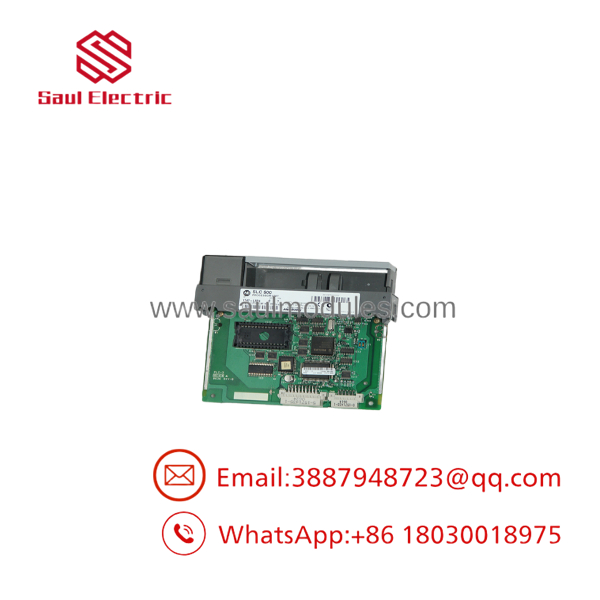
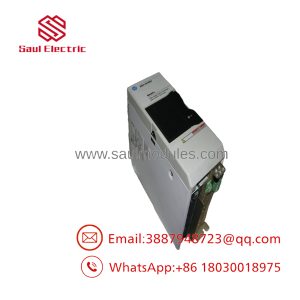
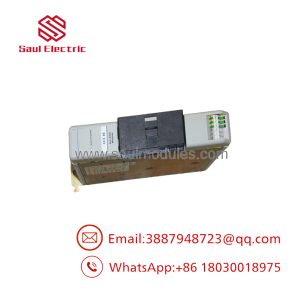
- 1747-L524
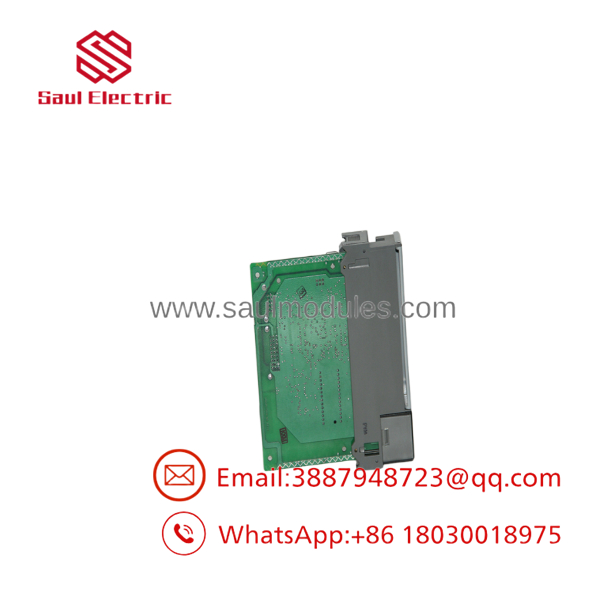
- 1747-L524
Transparency SOP: QA & Testing
- Hardware & Edge Connector Inspection: Checking backplane gold contacts, motherboard solder traces, RJ-45 communication pins, and battery clip contacts.
- Expansion Backplane Verification: Mounting the module in Slot 0 of an expanded multi-chassis configuration to test backplane power regulation and ribbon cable communications.
- Firmware & Subroutine Stress Test: Loading complex RSLogix 500 test logic containing indexed addressing, math functions, and active subroutines to verify execution integrity.
- DH-485 Polling Diagnostics: Running continuous 19.2 kbps serial polling over the RJ-45 comm port to verify clean, packet-loss-free operation.
The Veteran’s Tech Trap Guide
- ⚠️ RJ-45 Port Electrical Danger: The RJ-45 connector on the 1747-L524 carries DH-485 signals and internal 24V DC power, not Ethernet! Connecting a standard computer Ethernet port or switch will cause permanent electrical damage to your PC card or the processor’s comm channel. Always use a proper DH-485 isolation interface (such as the 1747-UIC USB converter).
- PRO TIP: Battery Current Draw & Retention: Unlike some later processors with longer capacitor holdup times, the 1747- relies heavily on a healthy 1747-BA lithium battery to preserve RAM through extended power cycles. Always install a fresh, unexpired battery when swapping in a replacement unit.
- ⚠️ Instruction Set Thresholds: While the SLC 5/02 is far more capable than an SLC 5/01, it still lacks native floating-point math support and online programming capabilities (both introduced in the SLC 5/03). Ensure logic created in RSLogix 500 does not attempt floating-point calculations or online edits while connected to an .
Dynamic FAQ
Q: Can I upgrade a 1747-L514 (SLC 5/01) panel to a 1747- (SLC 5/02)?
A: Yes. The 1747- fits into the exact same Slot 0 physical footprint, uses the same DH-485 port connector, and is fully backward-compatible with SLC 5/01 code while offering broader instruction set capabilities.
Q: What memory module does the 1747- use for permanent program storage?
A: The 1747- supports the 1747-M1 (EEPROM) or 1747-M2 (UVPROM) memory sockets for non-volatile logic backup.
Q: How do I clear a hard CPU fault on a 1747-?
A: You can clear major faults by cycling panel power, clearing the fault word in RSLogix 500 via the DH-485 port, or disconnecting the 1747-BA battery for several minutes to clear volatile RAM.
Q: Are replacement 1747- modules tested before shipping?
A: Yes. Every unit undergoes live chassis testing, full memory read/write cycles, and active DH-485 communications verification prior to dispatch.

 Start Chat


