





Description
Product Introduction
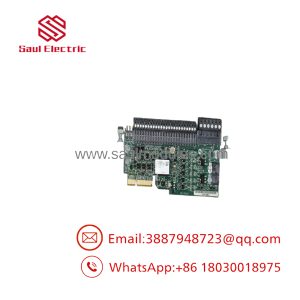
The Allen-Bradley 1756-EN2TR is a dual-port ControlLogix EtherNet/IP communication card designed to handle heavy industrial data traffic across ControlLogix chassis. It serves as a vital bridge between ControlLogix CPUs, remote I/O chassis, drive systems, and HMI nodes over copper media.
Unlike single-port legacy interfaces like the 1756-ENBT, the 1756-EN2TR includes an integrated two-port Ethernet switch that supports Device Level Ring (DLR) topologies. This hardware-level switching capability eliminates the need for external managed switches inside the enclosure, dropping cabling costs and preventing total network dropouts if a single cable gets cut or pulled.
Key Technical Specifications
| Parameter | Value |
| Communication Rate | 10/100 Mbps (Auto-negotiating) |
| Ports | 2 x RJ45 Category 5 Copper, 1 x USB 1.1 (programming) |
| Supported Topologies | Device Level Ring (DLR), Linear, Star |
| TCP/IP Connections | 128 |
| CIP Connections | 256 (Implicit + Explicit) |
| Backplane Current | 1.0 A @ 5.1V DC, 3 mA @ 24V DC |
| Power Dissipation | 5.1 W |
| Isolation Voltage | 30V continuous (Basic Insulation Type, Ethernet-to-Backplane) |
| Operating Temperature | 0 °C to 60 °C (32 °F to 140 °F) |
| CIP Unconnected Messages | 128 + 128 (Backplane + Ethernet) |
Application Scenarios & The “Trench” Experience
We’ve all been there: It’s 2 AM on a Sunday, and a fork truck clips a conduit on the main packaging line, snapping an Ethernet line. On a standard star topology, three remote I/O racks immediately go dark, dropping the line, killing production, and triggering a cascading safety fault. If that line had been configured on a DLR ring via a 1756-EN2TR, the network would have healed itself in under 3 milliseconds, leaving the line running while maintenance fixed the damaged drop.
- Automotive Stamping Lines – High-density remote I/O clusters – Requires dual-port DLR functionality to prevent single-point cable failures from halting the transfer press.
- Water/Waste Treatment – Distributed pumping stations – Uses 128 TCP connections to route data reliably from remote telemetry units back to central ControlLogix processors.
- Material Handling & Warehousing – High-speed sorting systems – Utilizes explicit messaging and CIP Motion bridging to synchronize drive arrays without packet delay.
- Chemical Batching Plants – Redundant ControlLogix racks – Necessary for bridging real-time process data to supervisory DCS systems while maintaining electrical isolation.
Field Case Study: A tissue converter in Georgia suffered a catastrophic failure on their unwinder rack when a line surge fried an older 1756-ENBT module. The plant was losing $12,000 an hour in downtime. We overnighted a replacement 1756-EN2TR, helped the shift technician verify the rotary IP switches, dropped it in the rack, and had the line wrapping rolls again before daybreak.
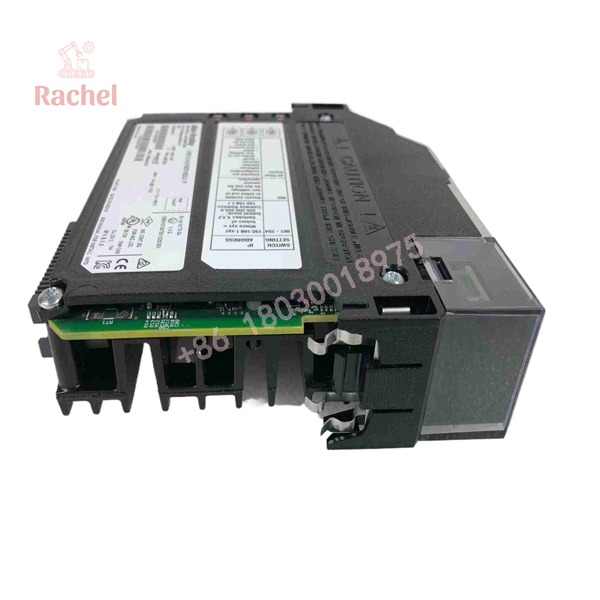
1756-EN2TR
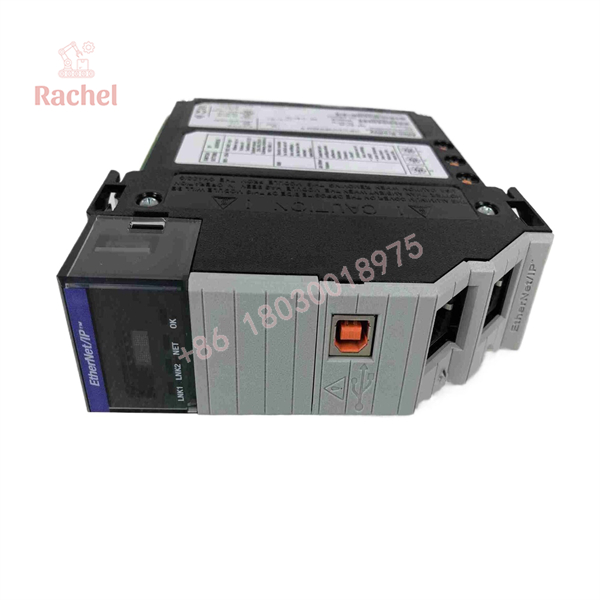
1756-EN2TR
Transparency SOP: Quality Assurance & Testing
We don’t just ship boxes; we test them on actual Allen-Bradley ControlLogix racks. Every 1756-EN2TR undergoes our strict 5-stage bench verification process:
- Inbound Physical Inspection: Verification of factory seals, PCB traces, port pins, side rail locking tabs, and anti-counterfeit label markers.
- Live Rig Power-On Testing: Card is inserted into a energized 1756-A10 chassis to pass Self-Test (OK LED solid green).
- Communication Handshake & Load Check: Both Ethernet ports (Port 1 and Port 2) are connected to a test switch. We run active DLR traffic and ping tests over sustained 100Mbps transfers to check connection retention.
- Firmware Logging & USB Port Audit: Connecting via Studio 5000 / RSLinx over the front USB port to verify chip health and log exact firmware revisions (e.g., v10.007 or v12.001).
- ESD Cleaning & Static Packaging: Cleaned with isopropyl solution, stored in static-shielding bags, and packed using custom foam inserts.
The Veteran’s Tech Trap Guide (Crucial Value-Add)
- ⚠️ DIP Switch / Rotary Switch Settings: Take a photo of the 3-digit rotary switches on the top of the old card before pulling it out! If the old module used hardware IP addressing (like
192.168.1.xxx), setting those switches wrong on the new module will cause IP conflicts or leave the card stuck at000waiting for a DHCP server. - ❗ Firmware Revision Mismatches: If you are replacing a Series A or B card with a newer Series C module, check your Studio 5000 I/O tree module definition. If your electronic keying is set to “Exact Match,” the PLC processor will reject the new module until you either flash the card’s firmware to match or change keying to “Compatible Module.”
- ⚠️ DLR Switch Supervisor Configuration: If this card is part of a Device Level Ring, check whether it was set up as the Ring Supervisor. Replacing a card that was acting as the active Ring Supervisor without setting the new module’s supervisor mode in Studio 5000 can cause ring instability if a break occurs.
- ❗ Duplex / Auto-Negotiation Glitches: When plugging the 1756-EN2TR into older unmanaged switches, do not force the switch port to fixed 100Mbps Full Duplex while the module is set to Auto-Negotiate. You will cause a duplex mismatch, resulting in dropped packets and intermittent CIP communication drops.
Frequently Asked Questions (FAQ for Conversion)
Q: Is the 1756-EN2TR hot-swappable (RIUP)?
A: Yes. The module supports Removal and Insertion Under Power (RIUP). You can pull a damaged card and insert a new one while the backplane is energized without damaging the chassis or processor. However, pulling it will sever all active network traffic traversing that card.
Q: Can I use the 1756-EN2TR as a direct drop-in replacement for a 1756-ENBT?
A: Electrically and functionally, yes—it fits the same 1756 ControlLogix slot. However, the 1756-EN2TR offers double the connection capacity and higher packet processing capabilities. You will need to update your Studio 5000 project’s hardware configuration if you want the project file to reflect the EN2TR instead of the ENBT, though “Compatible Module” keying can sometimes bridge the gap temporarily.
Q: What is the difference between the 1756-EN2T and the 1756-EN2TR?
A: The “R” stands for Ring. The standard 1756-EN2T has only one Ethernet RJ45 port and does not support Device Level Ring (DLR) network structures. The 1756-EN2TR has two embedded Ethernet ports specifically designed for DLR and linear topologies.
Q: Why should I buy New Surplus from you instead of direct from Rockwell/Distributors?
A: Lead times from primary OEM distribution channels can sometimes stretch out for months. We source original surplus modules globally, test them in-house, and ship immediately. You get genuine Allen-Bradley hardware without the factory backorder delay, usually at a lower price point.
Q: What happens if the module arrives and has the wrong firmware for my project?
A: The 1756-EN2TR firmware can easily be flashed up or down using ControlFLASH or ControlFLASH Plus over the front USB port or across the backplane. If you need a specific firmware revision pre-flashed prior to shipment, just let our team know when placing the order.
Q: What kind of warranty comes with this module?
A: We back all our New Surplus and Refurbished 1756-EN2TR modules with a full 12-month replacement warranty. If the card fails under normal operating conditions within a year, we swap it out.

 Start Chat


